The Brisbane Times is reporting Queensland Greens, swelled by the newly enrolled, plan on ‘doing a Northcote’, and it appears that the Palaszczuk Government’s star performer, Deputy Premier Jackie Trad, remains at risk of losing her seat of South Brisbane to Greens candidate Amy MacMahon. Ms MacMahon has observed:
“There is a clear sense that people have had enough of the big parties.”
For many people this does appear to be the case, but that does not mean the Greens are a sensible alternative. From time-to-time, I have disagreed with particular policies advanced by the major parties, but the major parties are generally “wrong within normal parameters”, borrowing a phrase from P.J. O’Rourke. The Queensland Greens have no idea what those normal parameters are.
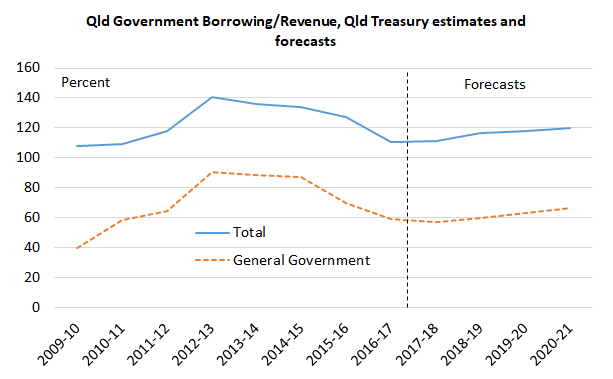
The Queensland Greens are putting forward a policy platform that, in the extremely unlikely event it would ever be enacted, would increase State government spending by at least $8-9 billion (or 13-14%) and result in either (a) a blow out in the budget deficit and total State debt of over $100 billion or (b) massive increases in taxes and charges on ordinary Queenslanders, and not just on the property developers and big corporations the Greens would like to target (see my 12 November post). And note my previous post was written before the Greens announced a child care plan that would cost at least an additional $1 billion annually. In its media release on its utopian child care plan, the Greens again identified property developers and big corporations as candidates for higher taxes:
“Our ambitious plan would cost $5.4 billion over five years. We would make property developers and big corporations pay for 200,000 Queensland kids to get access to free, universal high-quality childcare and kindergarten.”
I should note the Greens’ child care plan amounts to $5,400 per child annually, which seems like an under-estimate of what it would cost to offer free child care to each child, even it were only 3 days per week for 3 and 4 year olds, and 1 day per week for 2 year olds, as the policy states. Assuming annual out-of-pocket child care costs of around $15,000 for child care five days per week (see this Courier-Mail article), I would estimate that the Greens’ child care policy would cost at least $7,000 per child annually, meaning the policy would cost $7 billion over five years, rather than the Greens’ estimate of $5.4 billion.
Along with their other policies, the new child care policy suggests the Queensland Greens are living in an economic fantasy land. They can increase spending in the order of $10 billion p.a., at the same time as massively cutting the charges of its government-owned energy businesses and sacrificing billions of dollars of revenue each year, so they can promise lower power bills, while claiming that property developers and big corporations will pay for it all. This is pure fantasy.
In no way would it be feasible for a State Government, which lacks income tax powers, to increase its revenue by the $10 billion or more required to fund Queensland Greens’ policies annually. The Greens would need to massively increase taxes and charges to achieve a 60% increase in Queensland Government own-source tax and royalty revenue (currently around $17 billion) at least.
To illustrate how nonsensical the notion is that the Greens can raise a huge amount of money to fund their extravagant election promises by further taxing property developers, consider that the ACT Government has consistently failed (and massively so) to deliver the forecast amounts of revenue from its Lease Variation Charge (a 75% tax on the value uplift of a property as a result of a rezoning decision). I expect this charge would serve as a model for a Queensland Greens’ tax on property developers. These Canberra Times reports demonstrate the practical failure of the ACT’s special tax on property developers:
ACT government to review controversial developer tax, amid spike in applications
Development Tax raises nowhere near the amount predicted
At best, the ACT’s Lease Variation Charge was expected to raise $24M in one year. Scaling that up to Queensland suggests that a new aggressive tax on property developers might raise $300M p.a. if implemented effectively, and if it did not discourage development, but that is only a tiny fraction of the $10 billion+ of extra revenue the Greens would need annually to pay for their policies without sending Queensland on the path to $100 billion of debt.
A hypothetical Queensland Greens government might consider massively increasing royalty rates on resources, but given royalty revenue is currently around $3-4 billion per annum, while the Greens would need at least twice that amount in additional revenue each year, those rates would have to be increased to such high levels they would start compromising the viability of mining operations, jeopardising thousands of jobs. Clearly the Greens are yet to offer a realistic and sensible alternative to the major parties.

 Queensland Economy Watch