Townsville Bulletin report on funding feud: Brisbane economist “under fire”

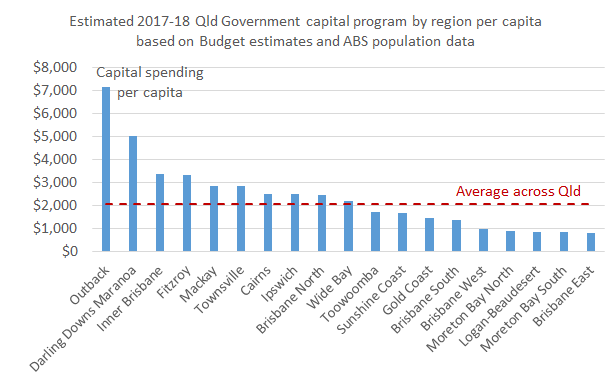
Tony Moore’s recent Brisbane Times article featuring my chart on per capita State Government capital spending by region has prompted responses from the Townsville Mayor Jenny Hill and Queensland Treasurer Curtis Pitt. As reported in Domanii Cameron’s article Feud over Townsville Funding (pay-walled, alas) in today’s Townsville Bulletin:

A BRISBANE economist has come under fire for claiming regional centres received an “excessive” amount of funding at the State Budget compared with the southeast corner.

In an article published by the Brisbane Times on Thursday, economist Gene Tunny said a “strong case” could be made for considering that some areas in the southeast were underfunded.

More than $20 billion was allocated to the regions during May’s 2017-18 Budget for the next four financial years.

Mayor Jenny Hill hit back.

Cr Hill said Mr Tunny, who is Adept Economics’ principal, had made calculations off a one-time snapshot.

“I don’t know why they’re saying they get nothing,” she said.

“I could do an interesting one (story) based around three years ago when we hardly saw any money spent outside the southeast corner,” she said.

“Don’t show me one year’s budget, show me 10 years.”

Treasurer Curtis Pitt said the Palaszczuk Government had always supported regional communities not transitioning to a post-mining boom economy as strongly as others.

“I make no apology for that, it’s what any responsible government would do and puts Labor in stark contrast to the hack and slash ideology of the LNP that pushed our economy to the precipice,” he said.

Regarding the Townsville Mayor’s criticism, I accept it would be desirable to examine the data over a longer time period, and indeed I did so in a July QEW post:

Is North Qld under-funded by the State Government relative to the South East?

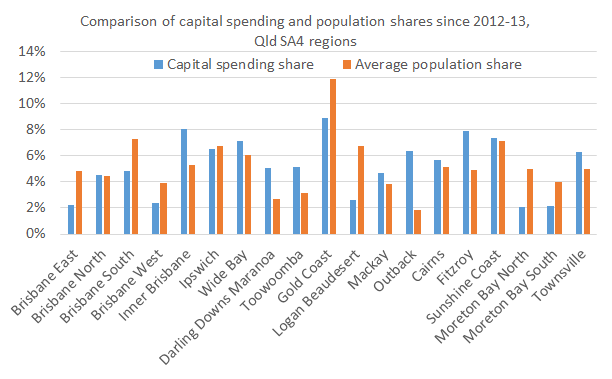
I wasn’t able to do this for ten years, as official Treasury estimates based on the new ABS statistical areas only appear to be available back to 2012-13. My calculations based on the official figures reveal Townsville has received a higher share of State Government capital spending than its population share since 2012-13 (see chart below).
Regional_shares_Chart2

I accept there are many issues with this simple comparison, including the issue of economies of scale, and it is important to consider the economic contribution of each region as well. I intend to explore these issues in more depth in the future. So it is important not to read too much into the figures at this stage. That said, it appears to me that the traditional complaint about North Queensland being under-funded is inconsistent with the available data at the broad regional level (i.e. Townsville and Cairns regions). Of course, there may be specific localities with high needs within these broad regions.

Also on this issue, see the Tropic Now article:

Economist says TNQ gets more state funding than South-East corner
Posted in Townsville, Uncategorized | Tagged , , , , | 2 Comments

My comments in Brisbane Times on Qld Government regional CAPEX

Brisbane Times journalist Tony Moore has written an interesting piece based on a QEW post of mine from June on the regional distribution of Queensland Government capital spending in the 2017-18 Queensland State Budget:

Analysis shows booming south-east is losing funds to north Queensland

The article includes quotes from my June QEW post and some quick comments I made over the phone to Tony on Wednesday afternoon:

Mr Tunny said he believed the Queensland government was nervous of the regions and needed to win seats in in those regions to hold office.

“What I make of the figures is that the government is certainly overly conscious of feelings in the regions that they are being ripped off by George Street and over the past couple of years that is blatantly incorrect,” he said.

“However I think, on the basis of the figures I have seen, there are regions in the south-east corner that are being under-funded and I don’t think that is fair.

“There are the fast-growing areas that are not getting the funding that they need.”

Regional_capital_spend

Posted in Budget, Uncategorized | Tagged , , , | 4 Comments

Qld economy traveling nicely based on June quarter National Accounts data

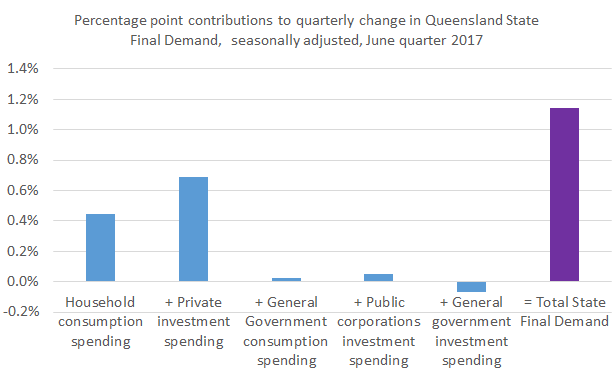
Just a quick update on the June quarter National Accounts released by the ABS today. GDP growth was a healthy 0.8 percent in the June quarter, or around 3.3 percent in annualised terms, which I suspect is around the sustainable trend growth rate of the national economy. And the Queensland result was very positive, with State Final Demand increasing 1.1 percent in June quarter, driven by an encouraging boost in business investment and household consumption (see my chart decomposing the State Final Demand growth below).

Decomp_Jun17

Here’s the ABS’s very good summary:

Queensland’s state final demand increased by 1.1% in the June quarter and follows a 0.2% increase in the March quarter. Private gross fixed capital formation drove the increase, in turn driven by an increase in total machinery and equipment. Household final consumption expenditure also contributed strongly to growth. There was a marginal increase in government final consumption expenditure although this was partially offset in state final demand by a weak fall in public gross fixed capital formation.

You might also be interested in this excellent podcast from Michael Knox, Chief Economist of Morgans, released prior to the National Accounts this morning:

Why the Australian economy will turn around

Posted in Macroeconomy, queensland, Uncategorized | Tagged , , , , | Leave a comment

Qld Budget, economy and polls will give Premier confidence to call election this year

The Australian reports this morning that the Palaszczuk Government is polling well in two-party preferred terms (53% for ALP vs 47% for LNP). The strong result is largely due to One Nation smashing the LNP primary vote. It does not appear to be a huge vote of confidence in the Government, which is polling at around the same level as it was at the time of the last election (37% vs % 37.5% for the ALP primary vote). That said, in the upcoming election campaign, the Government will be able to point to a strengthening State economy (e.g. see this post of mine from July) with reasonable jobs growth and economic growth higher than in the rest of Australia. It will also benefit from recent good fortune regarding the State Budget.

The Queensland State Budget has been bolstered this year by elevated coal prices and a surge in wholesale electricity prices that increased the earnings of government-owned power generators. It was revealed yesterday that the State Government has unexpectedly shifted more than $1 billion of expenses back into the 2016-17 financial year, allowing it to take advantage of the elevated revenue in that year, and to improve the forward budget estimates (see Steven Wardill’s informative article in today’s Courier-Mail). This type of budget re-profiling is engaged in by all governments from time-to-time. It is tricky and misleading, but nowhere near as egregious as the shifting of debt onto government-owned business in 2015 or the superannuation assets raid of 2016.

In my view, the biggest challenge for the Government, and the biggest threat to its re-election, is the ongoing “rail fail”, with another incident of delays yesterday afternoon. In my recent Future Brisbane opinion piece for the Courier-Mail, I noted that one of the areas the globally influential Monocle magazine identified for improvement in Brisbane was public transport. Let us hope the next time they visit Brisbane the Monocle correspondents stay somewhere in the inner city, perhaps at the ultra-hip Johnson Hotel where my office is located, and Uber around and avoid QR City Trains. Otherwise Brisbane may drop out of Monocle’s top 25 global cities list!

In my Courier-Mail opinion piece I offer a few suggestions for improving Brisbane’s liveability and the city’s appeal to international visitors, including:

  • repealing the compulsory bike helmet law, which would result in a big increase in City Cycle utilisation,
  • scrapping the ridiculous ID scanning law which almost saw Prince Frederik of Denmark denied entry to Jade Buddha,
  • deregulating retail trading hours far beyond the Government’s timid response to the Mickel review, and
  • tapping into Federal Government support to increase tree coverage in the CBD and inner city.

The Government may want to have the next election before another Christmas-New Year period, which could see another major rail fail, as many drivers take annual leave. Taking this into account, and the current good fortune for the Government mentioned above, expect the Premier to call an election in the next month or so, probably very soon after the NRL Grand Final on Sunday 1 October. So expect an election in early November.

Monocle_cover

Let’s hope the Monocle correspondents avoid the trains when they next visit Brisbane

Posted in Brisbane, Budget, Queensland Government, Uncategorized | Tagged , , , , , , , , , , | Leave a comment

Interview on Buy Qld with Dave Pellowe

The State Government’s new Buy Queensland policy giving local firms extra weighting in procurement processes came into effect yesterday. I recorded an interview over Skype on the policy yesterday afternoon with Dave Pellowe for his new Youtube channel Pellowe Talk:

Also, you can hear me on Radio NZ earlier this week commenting on the policy (at 1’06”):

Qld changes trade rules, exporters unhappy

You might also be interested in the article from Nick Behrens that I mentioned in the interview:

Would you gamble $41 to win $3? – The Buy Queensland policy does

Posted in Industry policy, Queensland Government, Uncategorized | Tagged , , , , , | Leave a comment

Comments to Radio NZ on Buy Qld policy

I had a nice chat with Radio New Zealand yesterday afternoon regarding the State Government’s new Buy Queensland policy, which I have previously criticised as protectionist and parochial and not in our State’s best interests. The policy comes into effect tomorrow, 1 September, and the Kiwis are very angry about it, as you can see in this Radio NZ article which quotes me:

Qld trade policy ‘really bad’ for NZ firms

The article includes this quote from me, in which I first comment on the prospect of trade retaliation from NZ:

“It’s definitely a genuine concern,” Brisbane economist Gene Tunny said.

“I’m a former Australian Treasury bureaucrat and this sort of thing, it’s just hard to fathom why Queensland … is making difficulties for the federal government in the trade arena.”

I also received a brief mention on Radio NZ’s 6am news bulletin (at 1 minute, 47 seconds).

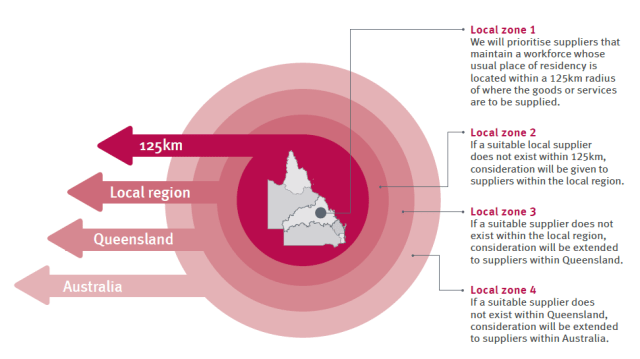
Buy Queensland is bad policy which will result in a higher procurement bill for the Queensland Government and could even unfairly discriminate against Queensland businesses competing for work in regions outside of their own in the State (see diagram below). That is, it may make it harder for many Brisbane-based businesses to win State Government work in Townsville or Cairns, for example.

Buy_Qld

See my previous post on Buy Queensland:

Protectionist Buy Qld policy unlikely to survive in current form

Posted in Queensland Government, Trade, Uncategorized | Tagged , , , , , , | Leave a comment

Go Brisbane! My comments in today’s Courier-Mail on Brisbane’s economic future

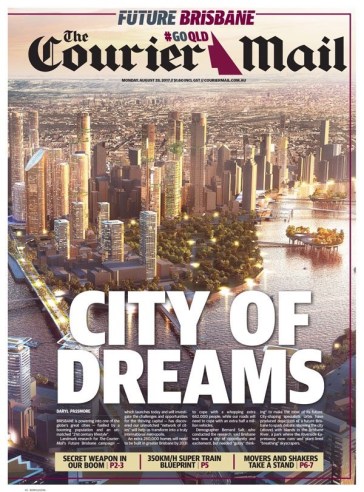
Well done to the Courier-Mail for reviving its “Go Queensland” campaign, this time with a focus on Brisbane, which today’s front page is labeling as the “City of Dreams.” Today’s paper features excellent articles (which are pay-walled, sorry) by demographer extraordinaire Bernard Salt, Future Brisbane, and the Courier-Mail’s own Paul Syvret, Greater Brisbane economy to become as big as NZ. I had a nice wide-ranging chat with Paul last Thursday and I’m very happy that many of my comments have been included in his article today. For example:

According to independent economist Gene Tunny “the one unavoidable trend is demographic change … what we will see is a continuing expansion of aged and health care, combined with NDIS investment, being a huge driver of employment into the future”.

The other significant ingredient for growth in Brisbane over the next 15 years will be the pace of technological change, and our ability to embrace the advances being made in the tech sphere.

For the rest of my comments, please read the article online.*

Finally, I should also note the growing importance of international education to Brisbane’s economy, which I am constantly reminded of while walking to and from my new office at the Johnson at Spring Hill, a suburb home to two campuses of a major English language training college. Incidentally, the Brisbane City Council appears to be indirectly subsidising this English language training, as the college’s students are heavy users of the free Spring Hill Loop bus operated by BCC. I trust BCC is benefiting from hefty rates bills on the properties utilised by the college.

City_of_dreams

* Update: It appears I am not directly quoted in the print edition, only in the online version.

Posted in Brisbane, Uncategorized | Tagged , , , , , , , , | 2 Comments

Podcast on my upcoming Qld Infrastructure Summit presentation on infrastructure banks

IAQ5509_Logo_Final_Colour-350pxw

I have recorded a short podcast with Pop Up Radio Australia regarding my upcoming presentation (next Tuesday) to the IAQ Queensland Infrastructure Summit, in which I will be considering the pros and cons of so-called infrastructure banks:

Podcast on my upcoming presentation to IAQ Qld Infrastructure Summit

This is extremely topical given the recent establishment of the Canada Infrastructure Bank and the Asian Infrastructure Investment Bank. The concept of an infrastructure bank has been raised in Australia previously, most notably during the financial crisis, and is currently in the Australian Greens’ policy platform (see Australian Infrastructure Bank). Regular readers probably won’t be surprised by my assessment of the pros and cons of infrastructure banks, and I will make my presentation available after I have delivered it on Tuesday.

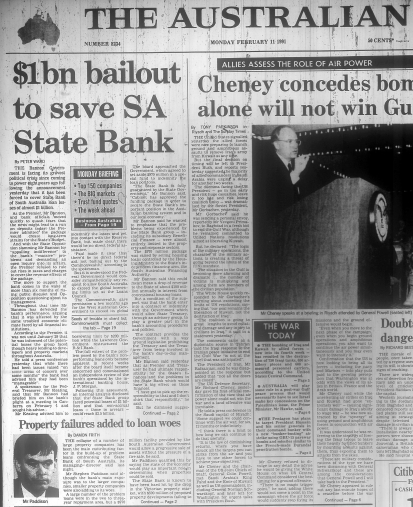
For the record, I certainly won’t be proposing the establishment of state banks similar to what we once had in Australia. Those readers who can remember the late 1980s and early 1990s in Australia will recall the troubles of State Banks in Victoria and South Australia. Who can forget the troubled merchant banking arm of the State Bank of Victoria, the wonderfully named Tricontinental? The troubles of the State Banks were all over the TV, radio and newspapers. Below is a front page from the Australian from February 1991, for example. A reminder of those challenging years of bust following the colossal boom of the 1980s.

Australian_11_Feb_1991

Finally, you may also be interested in Kirsty O’Connell’s podcast on her upcoming presentation on community engagement regarding infrastructure.

Posted in Infrastructure, Uncategorized | Tagged , , , , , , | Leave a comment

Rising workforce participation reflects improved jobs market in Qld

I have been commenting on Queensland’s improving labour market for several months now, and the July labour force data released by the ABS yesterday have confirmed that trend is continuing. The State’s unemployment rate remained stable at 6.3 percent in trend terms, significantly higher than the national average of 5.6 percent, but employment has grown at a faster rate than the national average, at 2.7 percent through-the-year to July in Queensland compared with 2.2 percent nationwide (See Qld Treasury’s brief and Pete Faulkner’s post Qld notches up another positive jobs report).

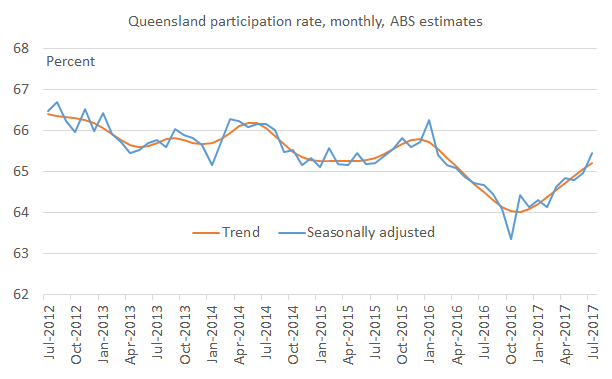
Queensland’s unemployment rate would be closer to the national average if it were not for the strong recovery in the workforce participation rate over the last year (see figure below). This is actually a good sign of the underlying strength of the labour market, but it means that people previously not looking for work have entered or re-entered the labour market and are competing for jobs with the unemployed. So many new jobs will go to new entrants or re-entrants, instead of to the existing unemployed.

LF_July17_Chart1

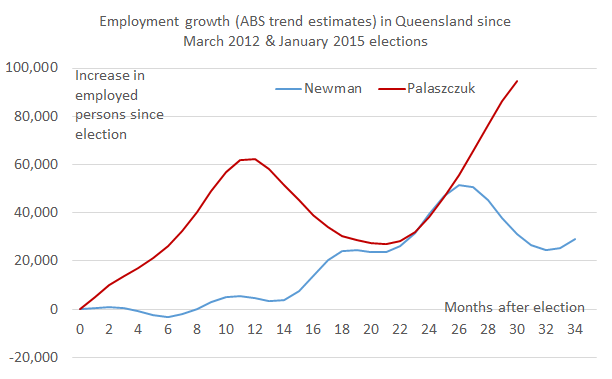
The Queensland Government was quick to note that the July labour force data show “94,500 net new jobs created under Labor’s economic plan”. The extent to which the Government can take credit for this jobs growth is debatable, but it is certainly correct about the increase in employment in Queensland since the last election (see chart below).

LF_July17_Chart2

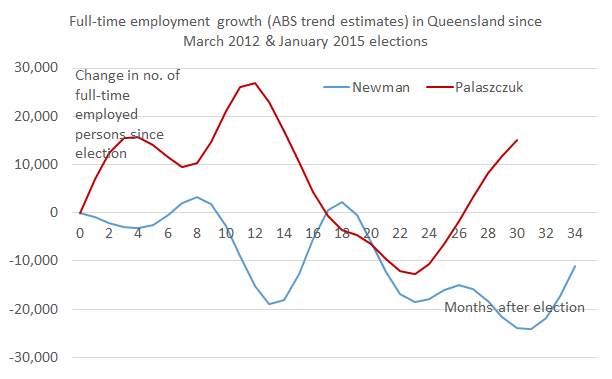
That said, as I have noted on this blog before, the bulk of this jobs growth is part-time, with a much smaller increase in full-time positions since the last election (see chart below).

LF_July17_Chart3

Nick Behrens yesterday commented on the strong growth in part-time jobs and the related problem of under-employment:

The surge of Qld part-time employment continues-July 2017

I expect reasonable employment growth (much of it part-time, though) to continue over the remainder of 2017, due to favourable trends in the tourism, education (particularly international education) and the health, disability and aged cared sectors. Some offsetting loss of jobs will be associated with contracting residential construction activity, now that apartment construction is declining.

Posted in Labour market, Uncategorized | Tagged , , , , , , , , , | Leave a comment

Improved economic conditions may give Qld Gov’t confidence to call early election

Queensland political observers were stunned today when State Government Ministers started giving what appeared to be end-of-term wrap up speeches in Parliament, raising the possibility of an early election in September or October. With some of the Government’s recent announcements, and the heavy campaigning by both sides on social media, it certainly feels like an election will be called soon.

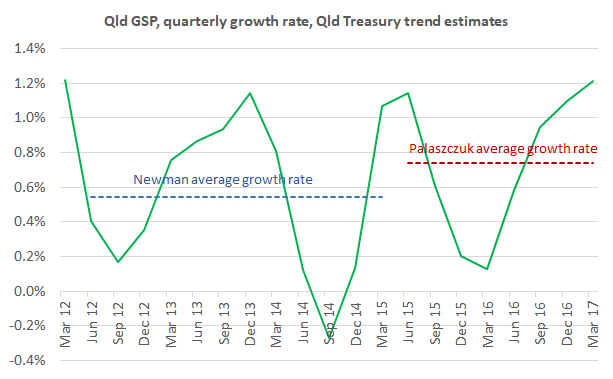
The Government may be motivated to call an early election because, as I have noted previously (see this post from July), economic conditions have been improving, and will allow the Government to contrast its performance with that of its predecessor (see chart below based on Queensland Treasury’s latest State Accounts data released earlier this week). The Newman Government had the misfortune of governing during the end of the mining investment boom, when large falls in investment spending detracted substantially from economic growth. The Newman Government’s public service cuts and budget restraint also detracted from growth, although such restraint was arguably necessary to slow down the accumulation of State debt.

Growth_rate_comparison_Mar17

The higher average economic growth rate under the current government—an annual average growth rate of around 3.0% compared with 2.2% under the previous government—may be due as much to good luck as to good management, but the economic growth data will nonetheless serve as ammunition in the Government’s upcoming election battle with the Opposition.

On the latest Queensland State Accounts, also see Pete Faulkner’s post:

Exports lead as QLD economy grows 3.9% y/y, 2.5% ann

Finally, I should note that Queensland citizen journalist David Marler has previously given good reasons why an early election may not be optimal for the Government (see his post At her discretion). The Government could just be playing mind games with the Opposition. But my feeling is that the Government is sensing it should call the election soon, while the economy is performing reasonably well and before a political crisis, such as another “rail fail”, eventuates.

Posted in Macroeconomy, Uncategorized | Tagged , , , , , , , , | Leave a comment