Working from home during & after the pandemic with Alison Pennington – podcast interview

Earlier this week I interviewed Alison Pennington, Senior Economist at the Centre for Future Work at the Australia Institute, about the opportunities and risks of working from home during this time of COVID-19. Alison has been getting a lot of media coverage lately about a briefing paper she co-authored with Jim Stanford Working from Home: Opportunities and Risks. I’ve now published my conversation with Alison as EP35 of my Economics Explained podcast.

Use these (approximate) timestamps to jump right to the highlights:

  • 5:40 – productivity impacts discussion
  • 8:30 – how social isolation can impair cognitive ability
  • 12:00 – discussion of the view expressed in the paper that “working from home will likely become more common in coming years. For millions of workers, indeed, it will become the ‘new normal.’”
  • 16:30 – how workplaces can adapt – an end to hot-desking, a return to pods, and staggered start times
  • 28:05 – discussion of employee surveillance by employers – 70% of employees subject to at least one type of digital surveillance and there is a risk this can extend into people’s homes if working from home becomes the new normal
  • 32:20 – reference to how the Australian Taxation Office (ATO) has tried to make working from home easier (check out the ATO page Working from home during COVID-19)

Economics Explained Logo

Posted in Productivity, Uncategorized | Tagged , , , , , , , , , , , , , , | 2 Comments

Economic impact of COVID-19 – upcoming QUT/QAAS webinar

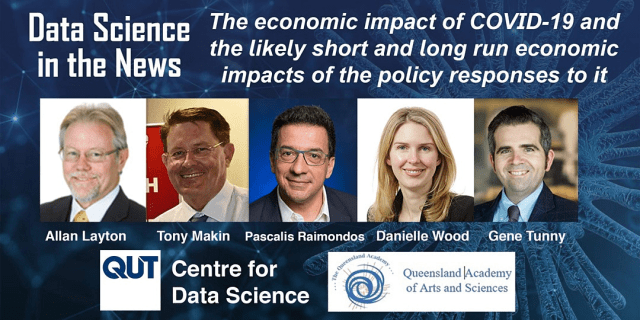
I’m a panellist on an upcoming webinar on Friday 22 May on The economic impact of COVID-19 and the likely short and long run economic impacts of the policy responses to it. The webinar is free and is part of a series of webinars on Data Science in the News organised by QUT’s Centre for Data Science and the Queensland Academy of Arts and Sciences. The webinar will be moderated by USQ Emeritus Professor Allan Layton, a world-renowned economist who co-authored a celebrated study which demonstrated the effectiveness of Queensland’s compulsory seat belt law in the 1970s. My fellow panellists will be Griffith Professor Tony Makin, QUT Professor Pascalis Raimondos, and incoming Grattan Institute CEO Danielle Wood. I’ll be covering the impact of COVID-19 on Queensland’s regional economies, and you can read summaries of what all the panellists will be covering at the link above.

Webinar_image

Incidentally, I’ve previously interviewed Danielle and Pascalis for my Economics Explained podcast:

Antitrust & “Hipster Trustbusters” with Danielle Wood from Grattan – Economics Explained EP22

Panama papers & multinational tax avoidance Economics Explained episode with QUT’s Prof. Raimondos

Posted in Macroeconomy, Uncategorized | Tagged , , , , , , , , , , , | Leave a comment

Premier’s 2016 Lodge dinner remark to Turnbull highlighted Vertical Fiscal Imbalance problem

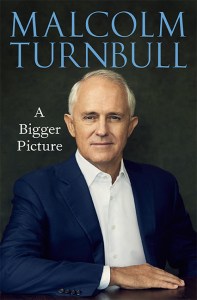
I started reading Malcolm Turnbull’s autobiography A Bigger Picture on the weekend, and it’s much better than I expected, with lots of interesting revelations and insights into the last couple of decades of Australian politics. One of my favourites is the revelation of a remark made by Queensland Premier Annastacia Palaszczuk to then PM Turnbull at a 2016 dinner at the Lodge regarding Turnbull’s idea to partly hand over income tax to the states. In my view, this was Turnbull’s best idea of his reign as PM, and I recall speaking in favour of it on Brisbane ABC radio at the time. It would help reduce the vertical fiscal imbalance (VFI) in our federation which encourages the blame game between levels of government, as I discussed in my 2018 book Beautiful One Day, Broke the Next.

Here is former PM Turnbull describing the Queensland Premier’s reaction to the proposal on p. 324 of the book:

When I pursued the proposal with the premiers directly and collectively at a dinner at The Lodge on 31 March, the Labor premiers were all outright opposed. Annastacia Palaszczuk said that coming to Canberra for money was too good to pass up. ‘It suits us perfectly. We get all the credit for spending the money, and you get all the blame for raising it. And when we can’t spend enough, we blame you!’

Well said, Premier. Palaszczuk perfectly described the problem of VFI and displayed her political deftness. It’s the type of thing Sir Joh would have said, and probably did say at one time. Regrettably, the political interests of state governments result in a poor outcome for the federation, as VFI encourages politicians to dodge accountability and play the blame game. You can read more about VFI and Turnbull’s part-solution in Chapter 28, “Tax reform and other indiscretions”, of his autobiography.

MT

Overall, A Bigger Picture is much better than you’d expect based on all the negative media coverage it has received. Sure, Turnbull tells tales out of school, but they make for very interesting reading.

Posted in Tax, Uncategorized | Tagged , , , , , , , , | 2 Comments

Qld needs new Treasurer and budget update

The Sunday Mail Editorial is calling for a new Queensland Treasurer to be appointed to replace Jackie Trad, who has had to temporarily stand aside during a Crime and Corruption Commission investigation into her conduct, this time relating to the appointment of a high school principal.* This is the right call from the Sunday Mail. Premier Palaszczuk has enough to deal with right now in overseeing the state’s coronavirus response and participating in National Cabinet, without having to take on the immensely complex Treasury portfolio, too.

Whoever the new Queensland Treasurer is, he or she should start planning for the release of a budget update immediately. It was reasonable for the Government to abandon its plan to release the budget in late April given the radical uncertainty associated with coronavirus. But it is unreasonable not to produce a budget before the election to be held on 31 October, which the Opposition Leader has alleged is the Government’s intention (see Qld Premier ‘drunk on power’ for not handing down budget: Opposition Leader).

As we start to lift restrictions and the economic damage becomes clearer, the Treasury should be in a position to produce reasonable budget estimates and publish them, even if just in a mini-budget or budget update rather than a full set of budget papers. Indeed, no doubt the Treasury has its own up-to-date, internal-use estimates of the operating and fiscal budget balances which a new state Treasurer could consider releasing immediately, with a cautionary message about how unreliable the estimates are at this time of crisis, of course.

Longer-term, Queensland may need to consider greater oversight of our elected governments. One option, which I discussed in my 2018 book Beautiful One Day, Broke the Next, is the restoration of Queensland upper house. In Chapter 10, I wrote:

The lack of a Queensland upper house has arguably led to poorer governance ever since its abolition, as it entrenched the power of the government winning election to the lower house…One may conjecture that, to some extent, the poor governance outcomes experienced in Queensland in recent decades, including corrupt government ministers and officials, and multiple crises in the provision of utilities and public services, may be related to the lack of an upper house of review.

Of course, an upper house means more politicians and who wants that, so some type of citizens panel or jury, as Nicholas Gruen has been advocating for, may be a better option. Check out Nicholas’s Mandarin article:

Detox democracy through representation by random selection

Whatever the mechanism, we need much greater oversight of our state government than we currently have.

*Update: The Courier-Mail is reporting Jackie Trad has resigned and Cameron Dick has been appointed the new Queensland Treasurer.

Posted in Budget, Uncategorized | Tagged , , , , , , , | 3 Comments

Benefits of going cashless in addition to social distancing

Regular QEW reader Denise alerted me to an article on the New Normal in Dining (in this time of coronavirus) in the Murdoch papers this week, which reported:

Restaurants and Catering Australia said many measure that are in place currently will continue even after restaurants reopen, such as a strong takeaway offering, maintaining social distancing, using disposable cutlery, crockery and glassware, zero cash payments and limited interaction between staff.

Avoiding the use of cash is a good idea, and certainly people are becoming accustomed to cashless transactions in this time of coronavirus. Indeed, there are benefits to doing away with physical cash in addition to the social distancing benefit. In his excellent book The Curse of Cash, published in 2016, former IMF Chief Economist Ken Rogoff makes a compelling case for abolishing large denomination bills. In developing one of his main arguments against large currency notes, Rogoff notes (on p. 2):

There is little question that cash plays a starring role in a broad range of criminal activities, including drug trafficking, racketeering, extortion, corruption of public officials, human trafficking, and, of course, money laundering. The fact that large notes are used far more for illegal activities than legal ones long ago penetrated television, movies, and popular culture.

So, in Australia, there is a strong case for abolishing $100 notes. In 2018, UNSW economist Professor Richard Holden and Opposition MP Dr Andrew Leigh advocated Australia should do so, as reported by ABC News:

$100 note should be dumped to starve black economy, economist and Labor suggest

Rogoff’s other main argument for abolishing large-denomination notes is that it would provide greater flexibility for monetary policy. He notes (on p. 2):

…phasing out paper currency is arguably the simplest and most elegant approach to clearing the path for central banks to invoke unfettered negative interest rate policies should they bump up against the “zero lower bound” on interest rates. Treasury bill rates cannot fall much below zero, precisely because people always have the option of holding paper currency, which at least pays zero interest.

So arguably we should welcome the fact we are becoming accustomed to going cashless and we should look at eventually abolishing paper currency. Senior Business columnist for the Sydney Morning Herald Stephen Bartholomeusz wrote last month:

The coronavirus will accelerate the trend toward a cashless society

There are obviously some transitional issues to think about, such as what it would mean for charities reliant on cash donations, but the benefits of a cashless society appear substantial, and it is definitely an option we should consider.
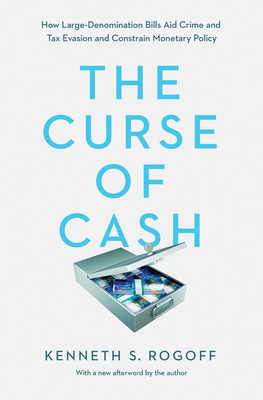
Curse_of_cash

Posted in Macroeconomy, Uncategorized | Tagged , , , , , , , , , , | 3 Comments

State and regional unemployment rates in this time of COVID-19 with Pete Faulkner

Mission Beach-based economist Pete Faulkner from Conus Consulting has been in the news recently with his estimates of the massive adverse impacts that measures to combat coronavirus are having on Queensland’s regional economies (e.g. see the InQueensland report Jobless numbers blow out in the southeast, Gold Coast to hit 17 per cent). I spoke with Pete this afternoon about his latest set of forecasts, although I should note that, given the announcement from the Premier today regarding a relaxation of restrictions from next weekend, Pete will have to update these estimates over the next couple of days, so they should be a bit less awful in the second half of the year. You can listen to the interview here:

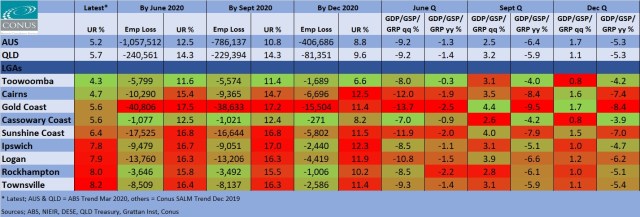
And here’s a snapshot of Pete’s most recent estimates:

forecast table 200508

Highlights of the interview include:

  • 4:30 – Pete explaining the methodology underlying his forecasts
  • 6:40 – why Queensland is disproportionately affected by restrictions to combat the virus
  • 9:00 – discussion of regional impacts (Gold Coast, Cairns, Townsville, etc.)
  • 17:30 – why the recovery may look like a Nike swoosh
  • 21:00 – how a sharply rebounding China could make Australia the lucky country
  • 24:00 – impacts on balance sheets and the economic contribution of JobKeeper

Check out Pete’s Conus Blog post on the forecasts.

Posted in Cairns, Gold Coast, Labour market, Macroeconomy, North Queensland, Townsville, Uncategorized | Tagged , , , , , , , , , , , , | Leave a comment

Highlights of recent coronavirus-related podcast episodes

In my latest Economics Explained podcast episode, I review some of the big issues covered in recent episodes on coronavirus. Brisbane-based businessman Tim Hughes of Urban Ergo and I react to excerpts of recent episodes and discuss the important policy issues regarding coronavirus.

Use these (approximate) timestamps to jump right to the highlights:

  • 1:40 – radical uncertainty around coronavirus impacts, featuring an excerpt from EP33 with Prof. John Kay CBE
  • 11:40 – discussion of issues around re-opening economies and whether we’re “putting a price tag on human life”, featuring an excerpt from EP32 with Dr Dan Mitchell
  • 20:00 – discussion of QUT Professor Benno Torgler’s paper on certified corona-immunity (check out EP30 with Prof. Benno Torgler)
  • 24:10 – discussion of an excerpt of my conversation with Joe Branigan on how we’ll pay for the coronavirus response (EP31 with Joe Branigan)
  • 30:10 – reference to the Quantity Theory of Money
  • 33:40 – discussion of Dr Dan Mitchell’s views on bailouts
  • 43:10 – discussion of Australia’s COVIDSafe app

Other recent coronavirus-related episodes include:

EP28 with Dr Nicholas Gruen on coronavirus policy responses

EP27 with Michael Knox from Morgans on coronavirus, machine trading & financial markets

Economics Explained Logo

Posted in Health, Macroeconomy, Uncategorized | Tagged , , , , , , , , , , , , , , | Leave a comment

Catch up with CCIQ Chief Economist on dreadful business conditions & huge budget deficits

Yesterday afternoon I caught up with CCIQ Chief Economist Dr Marcus Smith for a phone interview on the coronavirus-induced recession/mini-depression, and you can listen to the recording here:

Highlights include:

  • 3:50 – discussion of forecasts for double-digit unemployment rates in Queensland and Australia (e.g. see Pete Faulkner’s forecasts of a state unemployment rate of 12.4% by June and unemployment rates of 15-16% in the tourism-dependent regions of the Gold Coast and Cairns; note that as reported by the Weekend Australian, Treasury Secretary Steven Kennedy has told state and territory leaders that 1.5 million Australians are on the JobSeeker payment, with 900,000 claims in the last six weeks, which suggests the unemployment rate is already over 10% nationally, given there are 13.7 million in the national labour force)
  • 7:50 – discussion of JobKeeper implementation issues and whether the banks are helping with bridging finance so cash-strapped businesses can access the payment
  • 11:30 – impact on Queensland state budget, noting ANZ Research is forecasting Queensland’s state budget has deteriorated by at least $8 billion over this financial year and next, so on ANZ Research’s estimates the state government will have fiscal deficits of $8-9 billion each year in 2019-20 and 2020-21
  • 14:00 – discussion of Radical Uncertainty and the Queensland public service hiring freeze

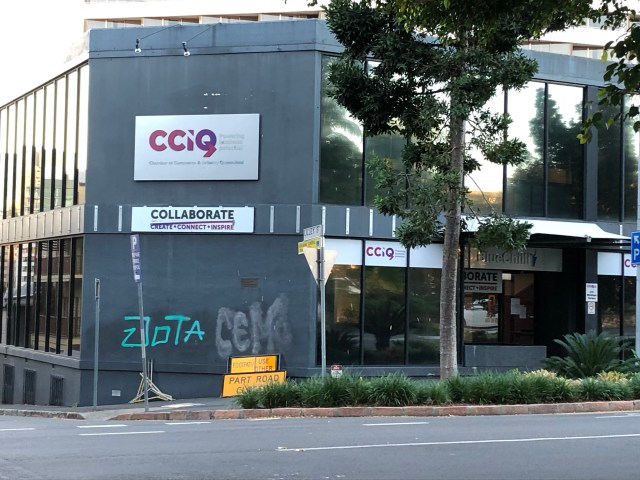
CCIQ

CCIQ HQ on Wickham Terrace, Spring Hill, Brisbane

Posted in Budget, Cairns, Gold Coast, Macroeconomy, Uncategorized | Tagged , , , , , , , , , , , , , | 2 Comments

Qld public service freeze – my Courier-Mail comments

Well done to the Courier-Mail’s Steven Wardill for his scoop on the Queensland public service hiring freeze in today’s paper: Qld public service hiring freeze to rein in budget (pay-walled). I spoke with Steven about the hiring freeze yesterday afternoon and he’s quoted me in his article:

Respected Queensland economist Gene Tunny strongly backed the hiring ban.

“The fact is they are going to have very heavy cash needs in the next six months because of the money going out the door and the hit to revenue they have had, so they are really being prudent not putting on more people,” he said.

However Mr Tunny said the State Budget would have been in better shape had the Government not been so spendthrift.

Check out the Courier-Mail for the full story. For the back story on Queensland’s public finances, check out my 2018 book Beautiful One Day, Broke the Next: Queensland’s Public Finances since Sir Joh and Sir Leo.

59491038_2434373029920036_1178202300586393600_o

Queensland’s Tower of Power, 1 William St, Brisbane. Photo by Jennifer Tunny.

Posted in Budget, Uncategorized | Tagged , , , , , , | 2 Comments

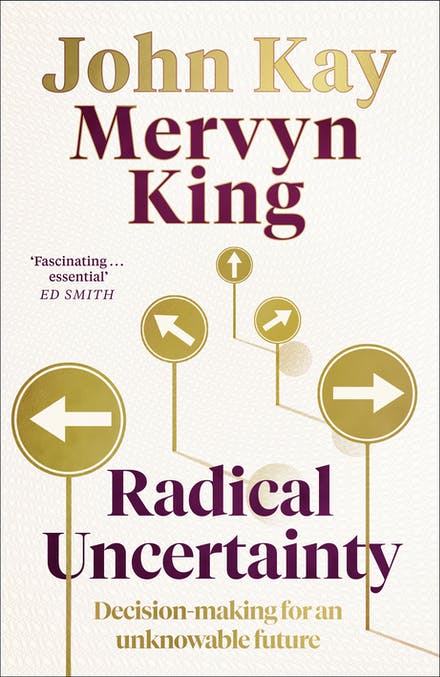
Radical Uncertainty with Prof. John Kay CBE

Radical Uncertainty: Decision making for an unknowable future is a timely new book from eminent British economists Professor John Kay and former Bank of England Governor Lord Mervyn King. I recently interviewed Professor Kay about the book and our conversation is now available as the latest Economics Explained episode.

A transcript of the interview is available on my business website.

Timestamps

Use these (approximate) timestamps to jump right to the highlights:

  • 2:34 – John Kay on what is meant by Radical Uncertainty, beginning with references to Maynard Keynes and Frank Knight
  • 8:40 – discussion of what Kay and King see as the critical question, “What is going on here?”, in the context of coronavirus
  • 14:35 – discussion of non-stationary process
  • 16:25 – discussion of the usefulness of economic models, with me asking John to explain the statement in the book “You cannot derive a probability or a forecast or a policy recommendation from a model…”
  • 26:10 – John explains the importance of robustness and resilience in systems in response to a question referencing climate change

It goes without saying that this book is highly recommended reading. I picked up a copy from Dymocks on Queen St Mall, Brisbane which I expect still has some copies available.

This episode was recorded on Friday 24 April 2020 using Zoom.

Radical Uncertainty book cover

Posted in Macroeconomy, Uncategorized | Tagged , , , , , , , , , , , | Leave a comment