Gold Coast should worry less about its over-reliance on property, tourism and retail

diversitychart

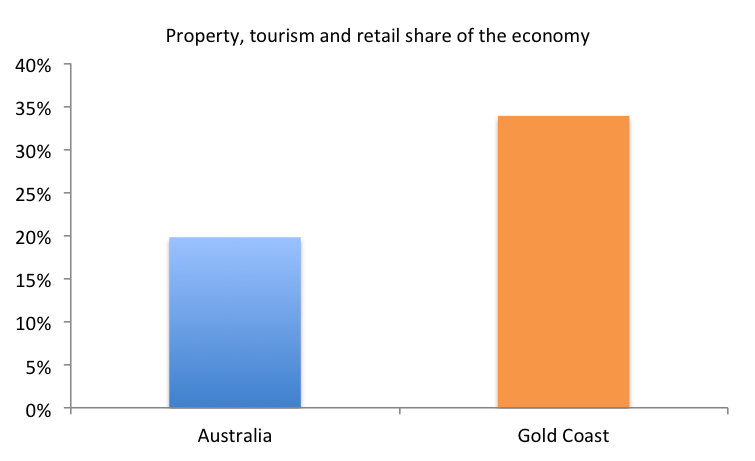
The Gold Coast Draft Economic Development Strategy 2013-2023 expresses concern over the Gold Coast’s reliance on its traditional sectors of property, tourism and retail (see chart above based on data from the Strategy), noting:

The cyclical nature of these industries has left the city vulnerable to boom and bust cycles and has been evident over the past few years with the city impacted by national and global economic shocks.

While it is true that more diverse regional economies have better economic performance on average (see this great article by my former colleagues Bernard Trendle and Gianna Shorney), it’s unclear whether the Gold Coast should deliberately promote the development of particular industries to diversify its economy. The two main points I’d make are:

  • a region’s industry mix will largely be the outcome of decisions made by private businesses about where to locate and invest, based on their understanding of economic opportunities, and it’s unwise for governments and councils to think they know any better and to pick winners; and
  • increasingly, the Gold Coast should be viewed as part of a broader South East Queensland economy – the so-called 200km City – rather than as an individual regional economy that should be worried about its own economic structure independent of the whole region.

Regarding the 200km City, a report by Bernard Salt released yesterday highlights the importance of commuter flows from the Gold Coast to Brisbane and other regions (see Gold Coast Bulletin coverage, Gold Coasters among biggest commuters). Many people live on the Gold Coast for lifestyle reasons and are quite prepared to commute to other local government areas to work.

I’ve previously posted on the 200km City:
Tradies know what it means to live in the 200km City

Planning for the 200-kilometre city

Posted in Gold Coast | Tagged , , | Leave a comment

Paid parking affecting work and play in Brisbane CBD

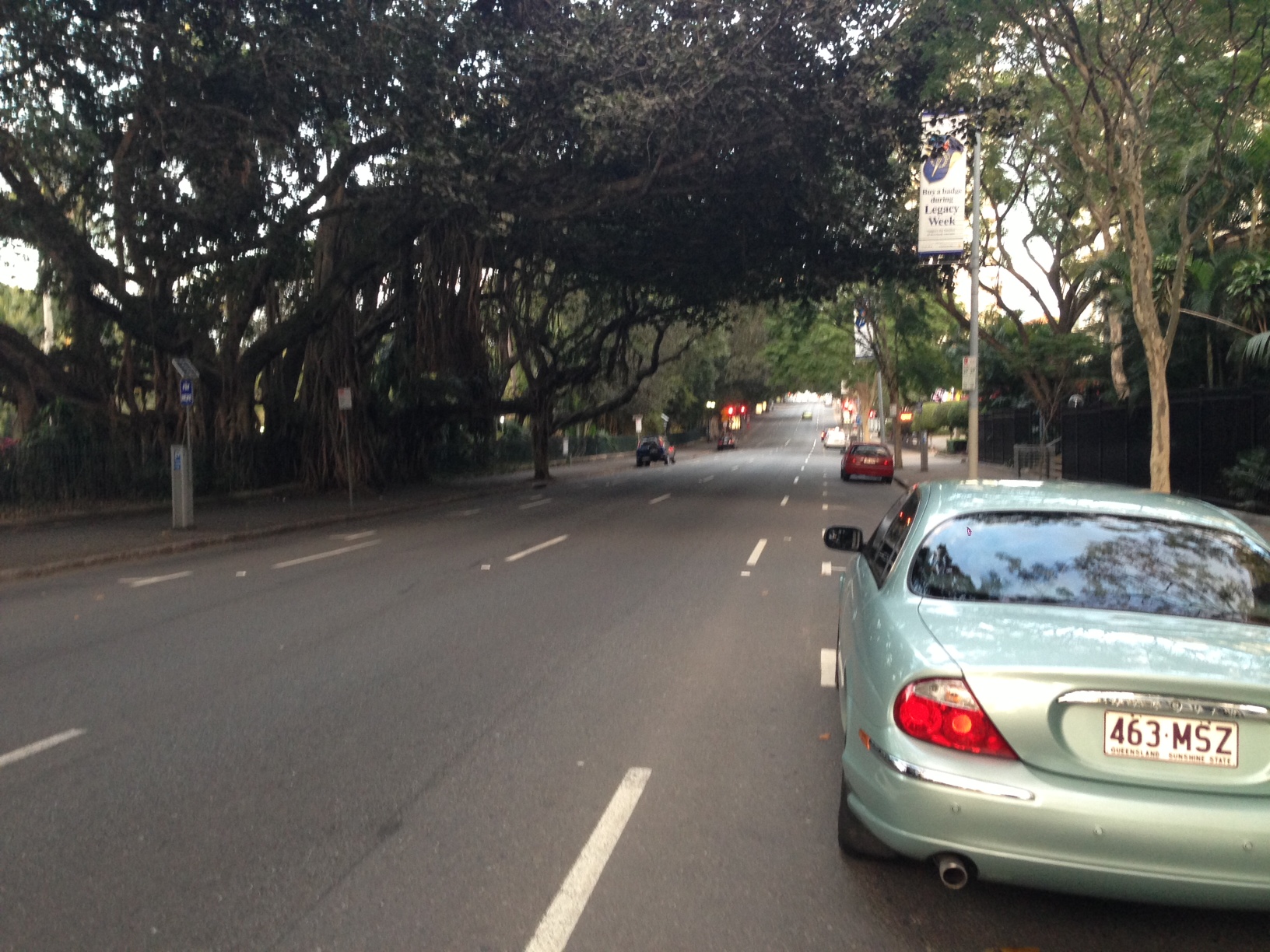
I just noticed Katherine Feeney’s article from last week on the adverse impact the Council’s new paid parking policy is having on businesses in Brisbane CBD (Retailers keep up the fight against Brisbane’s paid parking charges). The extended paid parking hours appear to be having an impact on recreation in the CBD as well. Fewer people are coming into the City to set off for a jog or bike ride on Sunday mornings, judging by the many vacant car spaces on Alice St at 6.30am yesterday morning (see photo below). Usually Alice St has plenty of parked cars at this time.

photo-4

Paid parking starts at 7am, even on a Sunday, and it’s obvious to me that it’s impacting recreational opportunities. This is a real cost to the community. Some people may run, walk or ride less. And, while some people might find other places in Brisbane to run, walk or ride, they may not enjoy it as much as they would in the City, with its excellent bike paths through the Botanic Gardens and along the river, and the possibility of crossing one  of several bridges to get over to Southbank.

I’m not against paid parking, as it makes sense at times when car parks are scarce and in high demand (see this 2011 post: Paid parking and trading hours deregulation would solve carpark woes). But extending paid parking to non-peak times may not be sensible, as the costs it imposes on businesses and residents may be very high relative to the revenue gained. The Council should rethink its paid parking policy.

Update. Steve Austin interviewed me on 612 ABC Brisbane radio this morning regarding this issue:

Gene Tunny on CBD parking

Posted in Brisbane | Tagged , , , | 2 Comments

Trend data best guide to Qld labour market – seasonally adjusted figures too volatile

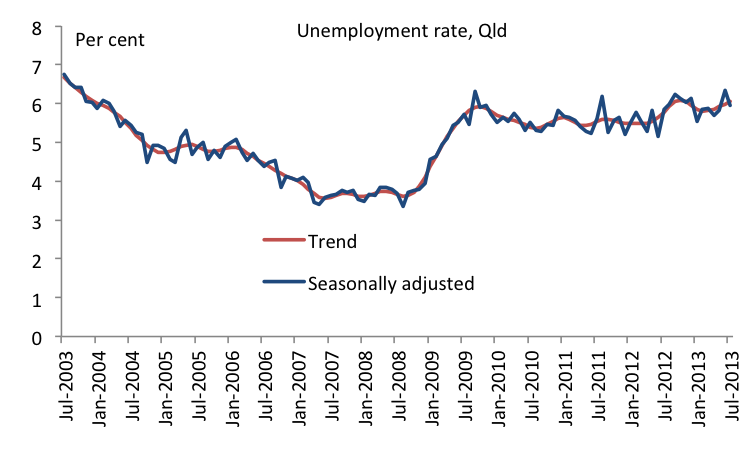
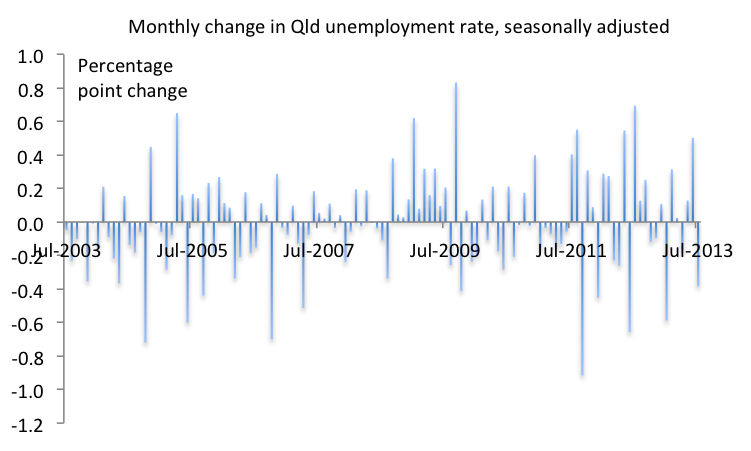
There wasn’t much of great interest in the new ABS Labour Force data for Queensland today. While the seasonally adjusted unemployment rate fell from 6.3 per cent in June to 5.9 per cent in July, I suspect this was just noise in the data, as I was very skeptical about the reported surge in the seasonally adjusted rate in June (see Don’t read too much into one month’s unemployment figures – Qld data pretty volatile). The data show the economy remains sluggish, but there doesn’t appear to be any reason to revise the Queensland Treasury forecast of 6 per cent unemployment over 2013-14 yet, with the trend unemployment rate only increasing marginally to 6.1 per cent from 6.0 per cent. Below are charts of the unemployment rate data and the change in the monthly seasonally adjusted data, illustrating the volatility in this data series.

urate chart

Urate change

For more on today’s unemployment data, see:

Treasury information brief

Unemployment rate stable as jobs are lost

Posted in Labour market | Tagged , , , , , | Leave a comment

Good signs for building industry, but conditions will remain weak this quarter

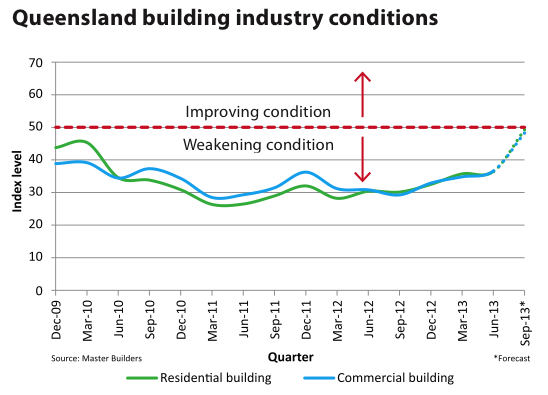
Yesterday’s new ABS data on housing loans were a good sign for the Queensland building industry, as they confirmed strong growth through the year (at 5.8%) in lending for the construction and purchase of new dwellings (also see the HIA media release). Another positive sign is the continuation of positive confidence levels among businesses in the building and construction industry, according to the Queensland Master Builders’s most recent Survey of Industry Conditions. Master Builders is forecasting that the industry continues to recover, with a significant improvement in the September quarter, which runs from July to September (see Master Builders’s chart below). However, as Master Builders notes, “while conditions are expected to rebound further in the September quarter, they will not yet be in expansionary territory.”

bic

Posted in Housing | Tagged , , , , , | Leave a comment

Road trip to Roma

I returned to Brisbane this morning, after a road trip to Roma, and I’m much less worried about the Queensland economy than I was at the end of last week when I saw the Federal Treasury’s revised national forecasts in the Economic Update (It would be great if Queensland Treasury could provide an update to their economic forecasts from the Budget, by the way). While the Queensland coal industry has shed jobs, coal seam gas (CSG) still has a big economic contribution to make over the next few years, with thousands of wells yet to be drilled and LNG exports to commence in the next couple of years, providing a major boost to our gross state product.

I noticed yesterday that the level of activity in Roma is extraordinary, as the influx of fly in-fly out (FIFO) workers has a huge impact on a town with a resident population of around 7,000. Earlier this year, Queensland Treasury estimated there would be 3,120 FIFO workers on shift at 30 June 2013 in the Maranoa Regional Council area, and I expect a large proportion of these workers would have been based in Roma (see Surat Basin non-resident population projections).

This FIFO influx and its impact on the rental market is a big challenge for the Regional Council, which I’ve noticed is responding by promoting a temporary accommodation precinct aimed at Roma residents, particularly key workers doing essential jobs, affected by the surge in rents in the town (see Council addressing Maranoa’s housing concerns).

Thanks to my colleague/navigator Brad Rogers for the photos below.

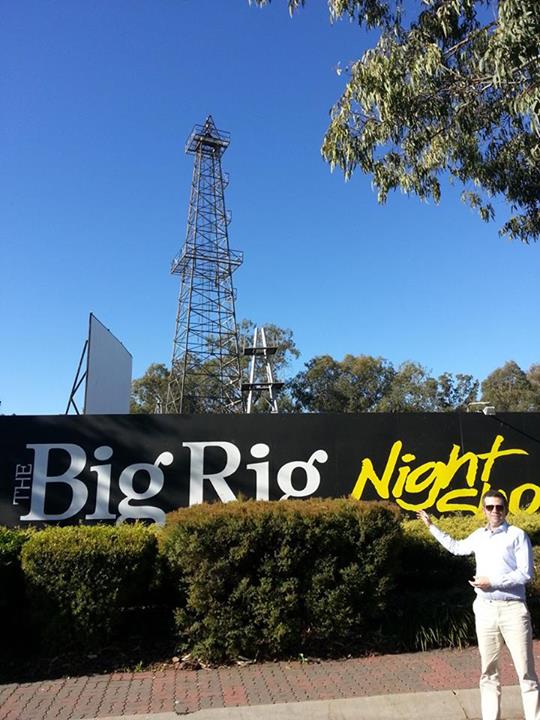
Here I am at the Big Rig tourist attraction in Roma:

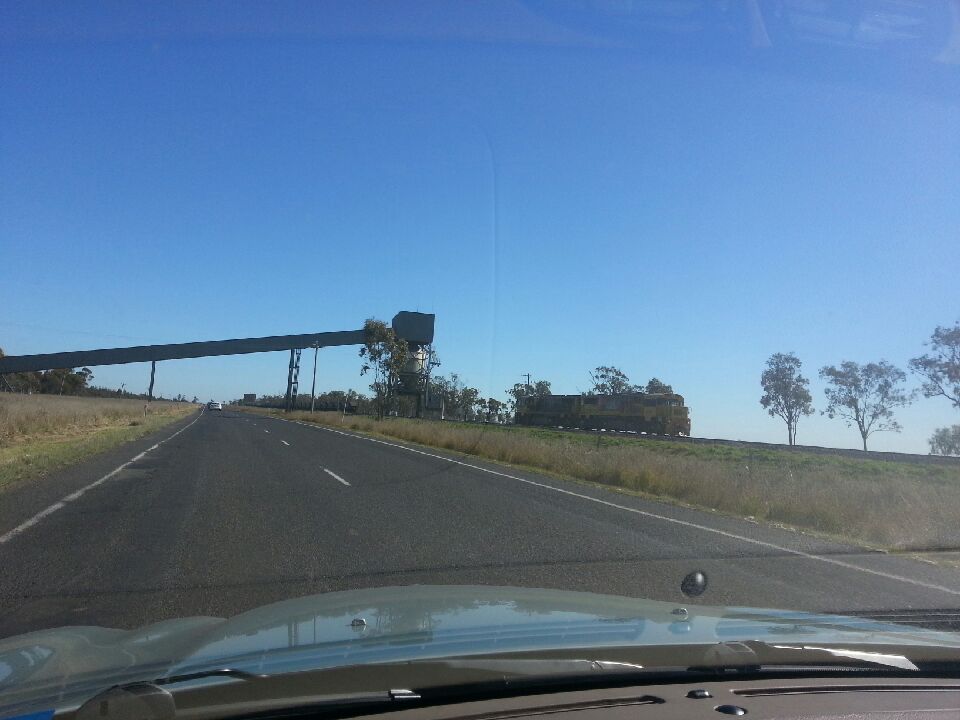
999558_10201077197625602_605948233_nBelow is a coal conveyor belt over the Warrego Highway somewhere near Dalby if I remember correctly. This highway is in absolutely appalling condition and is extremely dangerous to drive on (e.g. see Damning report on Warrego Highway).

20130806_094519

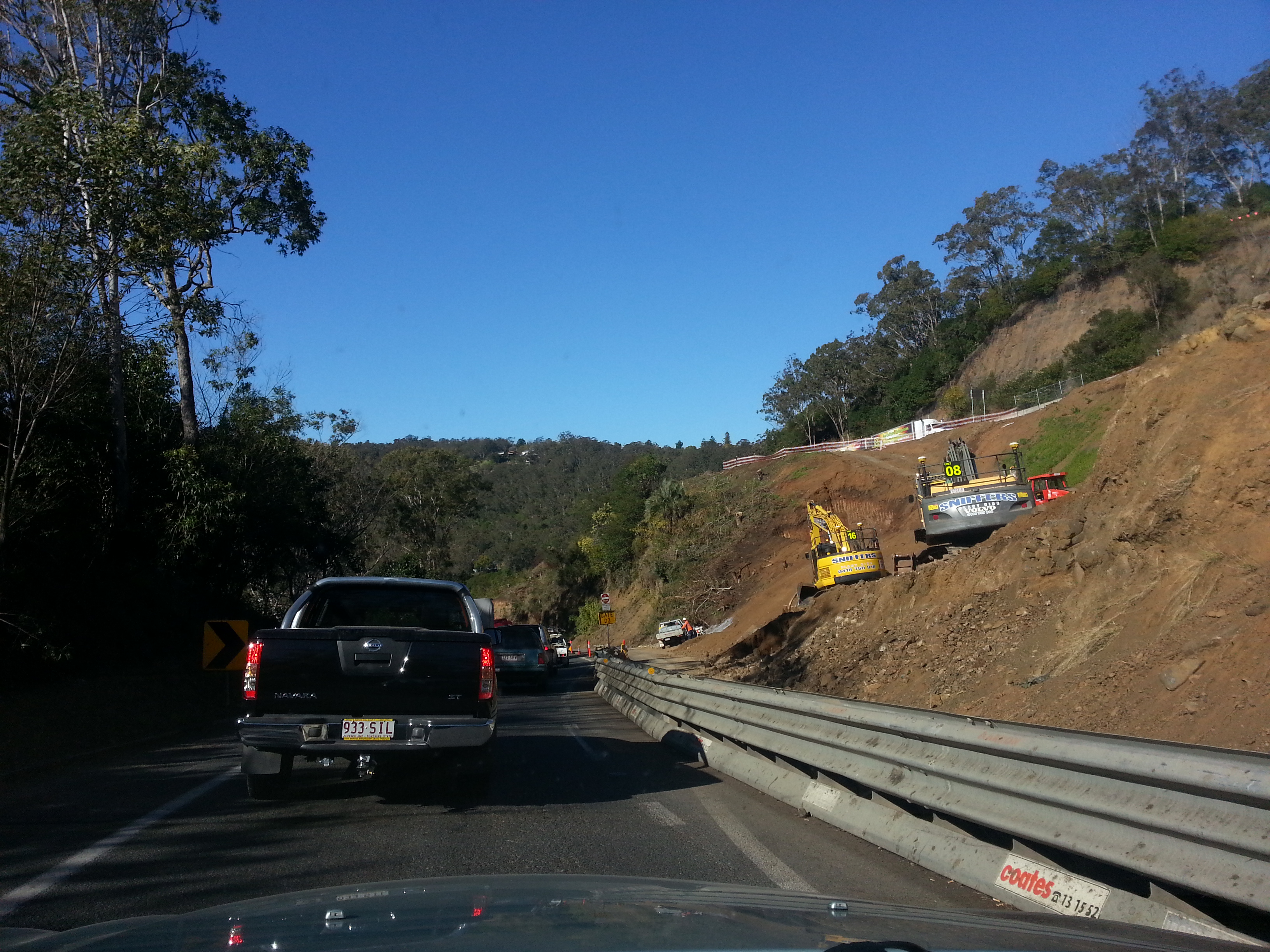
Finally here’s a photo from our slow descent down the range this morning. A second range crossing may be desirable (assuming it passes the cost-benefit test), as mentioned in a previous post.

20130807_091244

Posted in Mining, Toowoomba | Tagged , , , , , , , , | Leave a comment

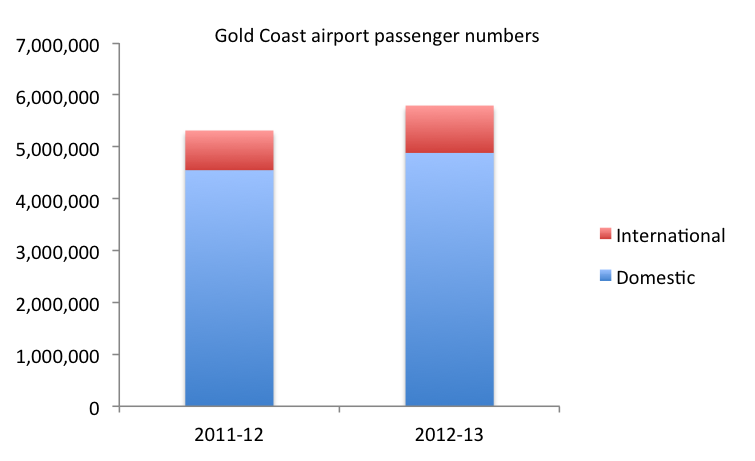
Strong growth in Gold Coast airport passenger numbers in 2012-13

GCpassengersQueensland Airports Ltd, which operates the Gold Coast, Townsville, Mt Isa and Longreach airports, today reported good growth in airport passenger numbers over 2012-13, largely driven by strong growth at the Gold Coast airport (see chart above). The company’s media release notes:

Passenger numbers through the four airports operated by Queensland Airports Limited (QAL) grew by 6.8% over the 2013 financial year…

…“In what has been a challenging year for the Australian economy and the aviation industry in particular it is pleasing to see that our airports at Gold Coast and Mount Isa have achieved greater than 8.5% growth,” said Dennis Chant, Managing Director of QAL.

“Townsville Airport however, experienced a 2% reduction. We attribute this to a slowdown in the resources sector and cost reduction initiatives at the state and federal government level.

The Gold Coast passenger numbers are obviously consistent with the recovery in Gold Coast tourism I’ve previously posted on:

Tourism recovering nicely on Gold Coast, not so elsewhere

Posted in Gold Coast, Tourism, Townsville | Tagged , , , , , , , , | 4 Comments

Hong Kong billionaire backs Cairns – expect confidence boost in Far North tourism sector

In fantastic news for Cairns, very recently reported by the Financial Review (Billionaire’s QLD casino plan gets speed-up):

Hong Kong billionaire Tony Fung’s $4.2 billion international casino and resort project in Cairns has been gazetted by the Queensland government, essentially speeding up the approval process the wealthy ­businessman has been chasing.

Information about the development is available at the State Development website:

Aquis Resort at the Great Barrier Reef Project

This is great news for Cairns residents who have experienced a relatively weak economy since the financial crisis, as a result of a construction slump and a drop in tourism related to the high Australian dollar.

While Cairns is currently recovering, so far it’s only a weak recovery, and I think Rick Carr from Herron Todd White Cairns expressed it nicely in his latest CairnsWatch report, noting “Cairns is continuing to muddle forward…” Hopefully this latest news, along with the downward trajectory of the Australian dollar, will boost confidence and promote further investment in the Far North Queensland tourism industry.

Posted in Cairns, Tourism | Tagged , , , , , | 2 Comments

Benefits of higher urban population density – more cycling and walking to work

I’ve commented before on the need to boost population density across Brisbane to reduce the large costs associated with transporting people long distances to the CBD for work.  The State of Australian Cities 2013 report released yesterday by the Commonwealth Department of Infrastructure and Transport contains the following interesting information, which suggests higher density in the inner city would reduce road congestion in peak times and lead to environmental and health benefits:

Active travel for commutes to work is increasing in Brisbane’s inner suburbs and decreasing in Brisbane’s outer suburbs. In the inner suburbs 20.7% of people walk to work, an increase of 6.8% since 2001. In outer suburbs 1.9% of people walked to work, a decrease of 0.1% since 2001, while in the inner suburbs 3.8% of people cycled to work, an increase of 0.9%. In outer suburbs 0.5% of people cycle to work, a decrease of 0.1% during this period.

The Brisbane fact sheet contains other fascinating facts, such as the average incomes of public transport users versus non-users. Check it out, as you may be surprised.

Posted in Brisbane, Transport | Tagged , , , , | 2 Comments

Growth in cost of living highest for pensioners

Living costs

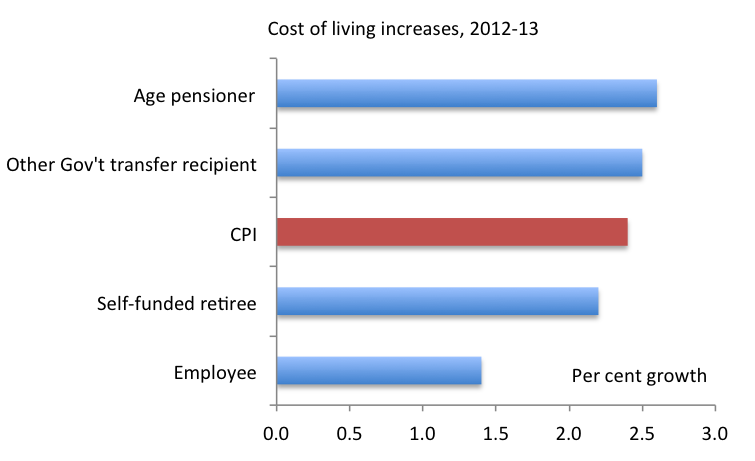
Pete Faulkner has a great post today (Cost of living pressures?) commenting on the new ABS Living Cost Indexes data, some of which I’ve charted above. Pete notes:

Today’s release of the Living Cost Indexes by the ABS should hopefully end any pre-election nonsense about “cost of living pressures” and how everyone is doing it so tough; although obviously it won’t…

…What is plainly clear is that the largest group (ie Employees) are experiencing inflationary pressures well below the headline CPI measure…

If there is a group that has been subjected to more price pressure than most it’s the pensioners; although even here cost of living increases have been below 3% for 6 quarters.

I suspect the living costs of pensioners have risen faster than those of other groups because of the greater share taken by electricity bills in pensioners’ budgets than those of employed people. Also, many employees would have experienced interest rate relief over 2012-13, reducing cost of living pressures for that group.

Posted in Macroeconomy | Tagged , , , , | Leave a comment

Still waiting for building industry recovery

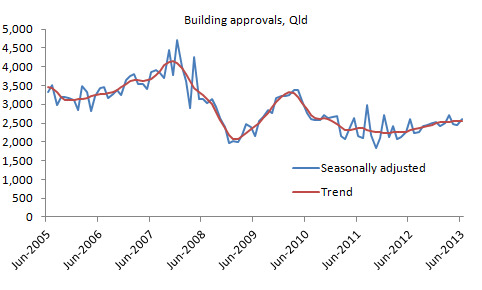
The Queensland building industry will continue to experience lean times over coming months with building approvals remaining significantly lower than they were before the financial crisis (see chart below based on today’s latest ABS data).

Approvals Jun 13While seasonally adjusted building approvals for Queensland grew 7 per cent in June, which might give some cause for optimism, as Pete Faulkner points out (Highly volatile units approvals push total down), the seasonally adjusted data have been bouncing around a lot lately.

MacroBusiness has good coverage of the disappointing national data (Dwelling approvals miss big) and I fully agree with the HIA, which commented today (see media release):

Building approvals data for June 2013 highlight the continued vulnerability of residential construction activity, said the Housing Industry Association, the voice of Australia’s residential building industry…

…For some time, we have been calling for structural impediments on housing activity to be reduced, including the taxation burden, excessive planning barriers and regulatory costs. The forthcoming election provides a real opportunity for solutions to these issues to be advanced,” concluded Shane Garrett.

While there are some positive signs for the building industry (e.g. housing finance commitments and lot approvals in some regions such as Ipswich), the industry will probably only experience a slow recovery, as forecast by BIS Shrapnel recently (see Building industry recovery to be slow).

Posted in Housing | Tagged , , , , , | Leave a comment