Upcoming event – 2015 Qld Third Sector Economics Talks

I’m delighted to be a keynote speaker at the upcoming ProBonoEconos and Young Economists event on the so-called third sector of non-profit organisations and charities on the evening of Thursday 7 May at QUT:

2015 Qld Third Sector Economics Talks – Doing Good Well: Economics for Charities

Third sector organisations are increasingly being seen by governments as the best organisations to tackle social ills – a reflection of dis-satisfaction with big-government welfare-state policies. At the same time, however, cash-starved governments have cut funding to many non-profits in recent years, and non-profits are finding it hard to compete for philanthropic funding against an ever-growing number of other non-profits.

Given that economics is all about the best use of scarce resources, I think economists can make an important contribution to discussions on the future of non-profits, and hence I’d recommend this upcoming event. My fellow keynote speaker Peter Ball has had extensive experience in advising non-profits, and I’m very much looking forward to hearing about impact investment products, which I expect many small-to-medium non-profits would find rather exotic, but which, at the same time, may offer big opportunities.
Posted in Budget, nfps, Queensland Government, Social policy | Tagged , , , , , | 2 Comments

Qld coal exports decline of 5.5% big contributor to total exports decline

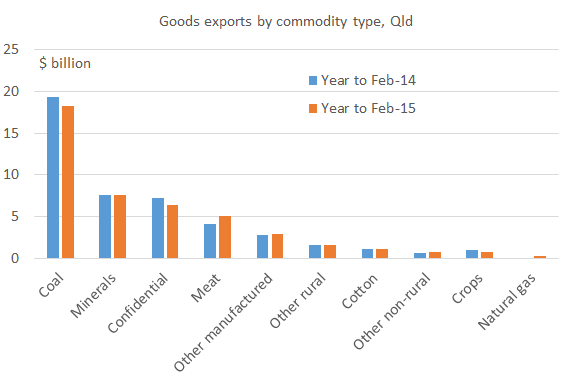
Lower coal prices have translated into a decline in the value of Queensland’s coal exports (by 5.5% in the year to February 2015), contributing to a 1.6% decline in the value of Queensland’s total commodity exports over the same period (see chart below based on Qld Treasury’s latest information brief on goods exports). It’s obvious from charts such as the one below that coal mining is very important to Queensland’s economy. With concerns over pollution in China and climate change, our economy’s significant reliance on coal mining is a substantial risk. The Queensland Government needs to think deeply about our education policy settings to ensure we have a highly skilled and productive workforce that can readily adapt to possible future changes in the structure of our economy.

Qld exports Feb 15

Posted in Mining | Tagged , , , , , | 4 Comments

Upcoming panel discussion – End of the mining boom: What’s next?

Regional_urates

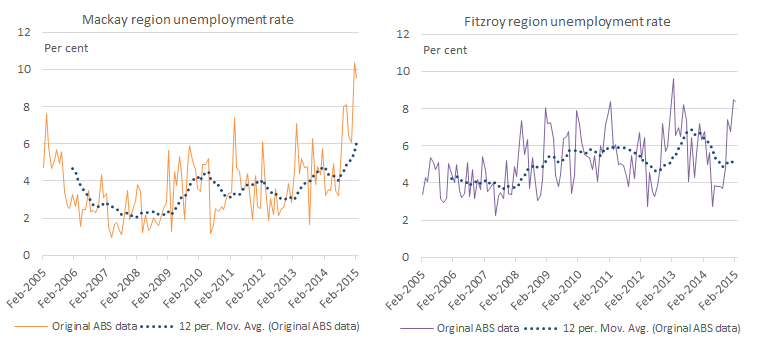
It’s clear the mining downturn is having significant adverse effects, such as large increases in unemployment in regions that are more dependent on mining, such as the Mackay and Fitzroy regions (see chart above, and also see the Courier-Mail report Unemployment doubles in Mackay as mining meltdown hammers town, noting the report uses the volatile original ABS data). Given the profound implications of the mining downturn, it is timely that the Griffith APEC Study Centre has arranged an upcoming interactive panel discussion for Tuesday 5 May in Brisbane:

The end of the mining boom: What’s next?

The panel discussion is being supported by the Queensland branch of the Economic Society of Australia, of which I’m the Secretary. I’ll give a presentation at the event, as will my fellow ESA Qld Committee member Michael Knox, Chief Economist and Director of Strategy at Morgans. I’m very much looking forward to it, and I’d recommend it to anyone interested in the outlook for the Queensland and national economies.

Posted in Macroeconomy, Mining | Tagged , , , , , , , , , , | 1 Comment

RACQ should push for demand management options such as congestion pricing

I was surprised by this view attributed to RACQ Executive Manager Michael Roth in the Brisbane Times article Brisbane drivers spend three days a year stuck in traffic:

Mr Roth said there were two ways to prevent worsening congestion rates – halt growth or build infrastructure.

Mr Roth notes that we certainly don’t want to halt growth so the only alternative is to build infrastructure, noting “congestion will increase unless we build infrastructure”. Unfortunately, the experience of cities around the world is that new infrastructure can provide temporary relief, but congestion returns in time, because the new infrastructure temporarily lowers the travel-time cost of driving and encourages more people to drive.

It has become obvious around the world in recent decades that it is desirable to consider demand management options such as congestion charges – e.g. as seen in Singapore and London – which are designed to manage demand in peak periods on busy roads. Congestion charging will discourage many people who are making low-value, discretionary trips during peak times.

Ideally, congestion charging on roads would be combined with bigger differences in peak and off-peak fares (and possibly a new super-peak-period fare) for public transport to encourage commuters to travel at less congested times. It may take some time to get the exact parameters right, but I’m sure transport demand management options would compare very favourably against the multi-billion dollar infrastructure projects that are typically proposed to deal with congestion.

I’ve previously posted on the desirability of considering transport demand options:

Govt should explore transport demand management options before committing to costly infrastructure

Posted in Transport | Tagged , , , , , , , , , | 14 Comments

Upcoming Young Economists Coffee Connections on taxi regulations and Uber

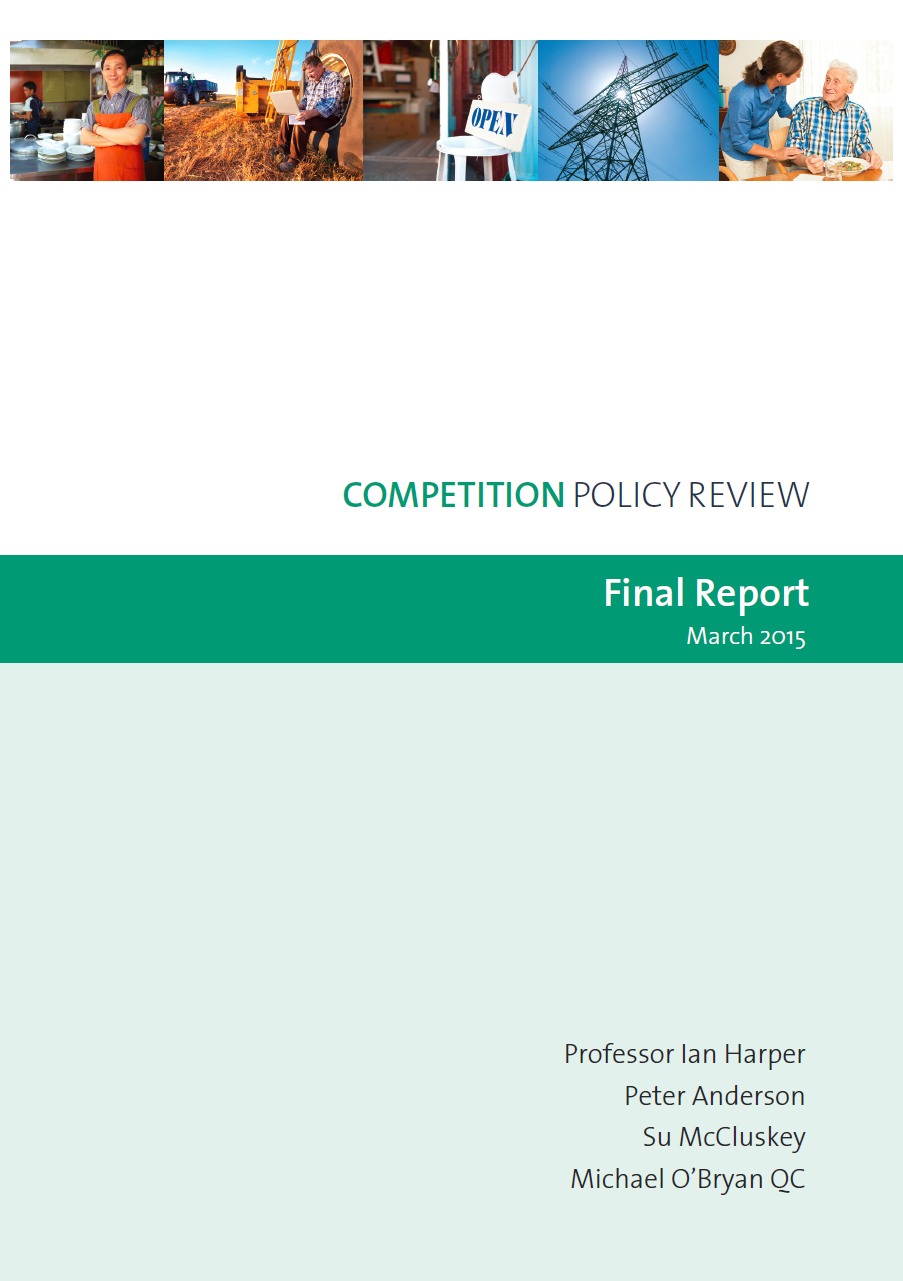
CPRIan Harper’s Competition Policy Review has set a big agenda for the next, long-overdue wave of micro-economic reform in Australia, with recommendations calling for substantial deregulation of retail trading hours, pharmacies, liquor sales, imports of books and second-hand cars, and taxis, among other things. With Professor Harper’s final report having been released yesterday, it is timely that Queensland Young Economists have an upcoming Coffee Connections event on Thursday 9 April on taxi regulation and Uber.

My former colleague Brad Rogers has previously commented on the adverse impacts of restrictions on taxi licences from consumer welfare and public safety perspectives:

Queensland taxi licences and drunken violence

As Brad has noted, there would be large gains to consumers through freeing up the taxi industry, as the current supply restrictions mean higher prices for consumers. The Harper review cites a NSW IPART finding that 15 to 20 per cent of NSW taxi fares are attributable to the supply restriction. That is, a $20 cab fare is up to $4 higher than it would be if supply weren’t restricted.

I expect Uber will promote long-overdue reform of taxi regulation, as the service has shown the clear benefits to consumers of additional competition, and it would be highly desirable to get Uber out of the legal grey area it is currently in.

Update: I’ve revised this post since it was first put up this morning to reflect the fact that Brad Rogers will not be attending the coffee event in an official capacity. Any views of Brad’s that I’ve referred to in this post are not to be necessarily attributed to Brad’s current employer or past employers.

Posted in Transport | Tagged , , , , , , , | Leave a comment

Grattan book City Limits highlights problems with current planning and transport policies

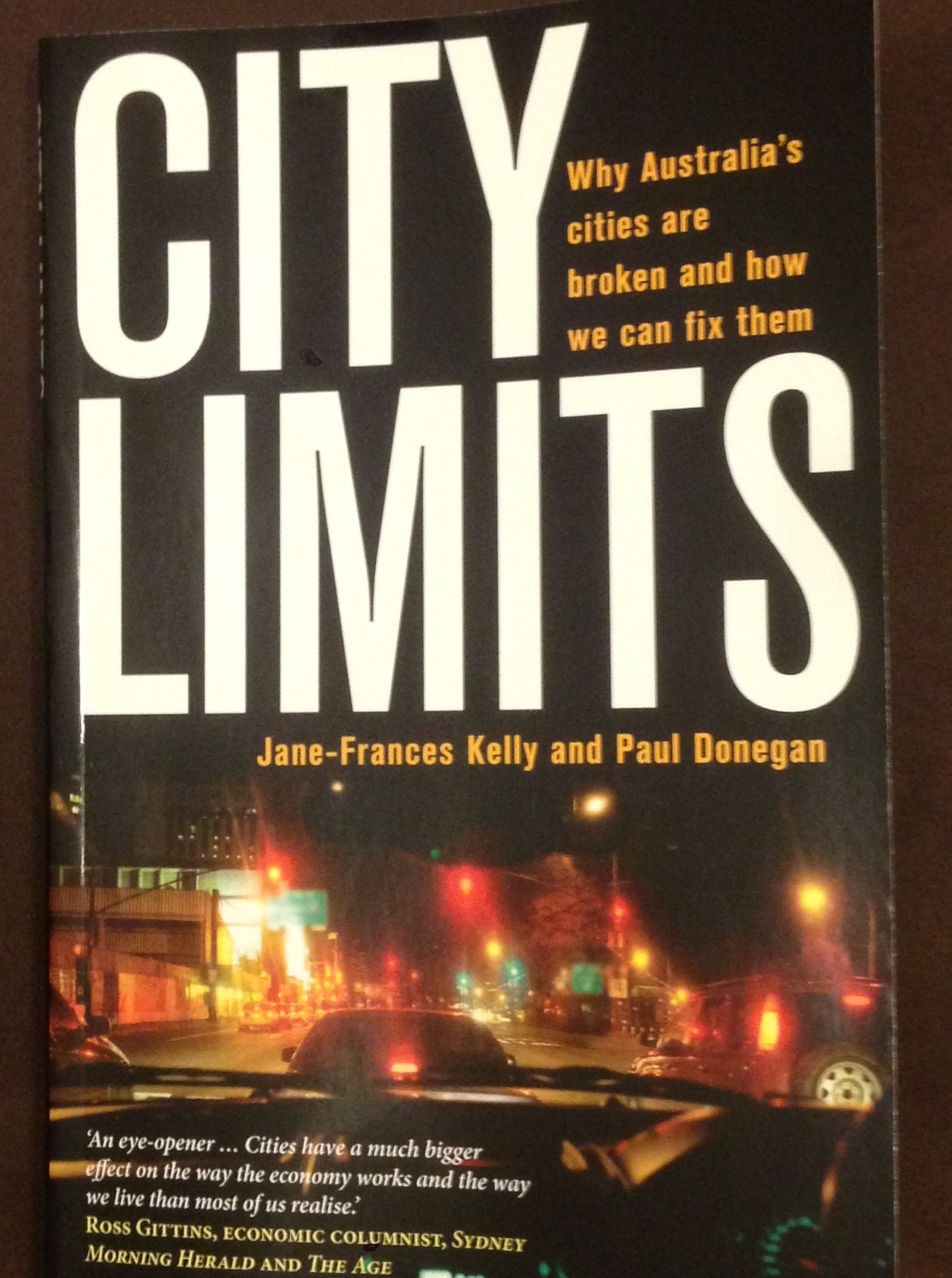
Grattan_bookJane Frances-Kelly and Paul Donegan, formerly and currently of the Grattan Institute respectively, had an excellent book published earlier this month called City Limits, which argues strongly for cutting red tape from town planning processes, introducing congestion charging for roads, and replacing stamp duty with a more comprehensive land tax. These would all be good policy reforms.

These paragraphs from p.85 of the book are damning of our complex planning regulations in Queensland:

 In a 2011 report, the Productivity Commission found ‘the regulations and agencies involved in planning, zoning and development assessments constitute one of the most complex regulatory regimes operating in Australia’. Examples of this complexity are not hard to find…The land use planning rules set by Queensland local councils include confusing jargon such as zones, precincts, precinct classes, area classifications, domains, constraint codes, use codes and planning areas…

…Decisions about how land is used can also be referred to specialist government agencies. These include bodies charged to conserve a state’s heritage or protect the environment…In Queensland, fifty-five different situations can trigger a proposal to be referred to a specialist agency.

I would highly recommend City Limits to anyone with an interest in housing, transport and taxation policies.

Previous posts on this blog on these topics include:

Guest post from Brad Rogers – Old Queenslanders in a new city

Govt should explore transport demand management options before committing to costly infrastructure

HIA wants debate on stamp duty, not negative gearing

Posted in Housing, Tax, Transport | Tagged , , , , , , , , , , , | 1 Comment

Feedback between interstate migration and employment growth

Empl_and_NIM

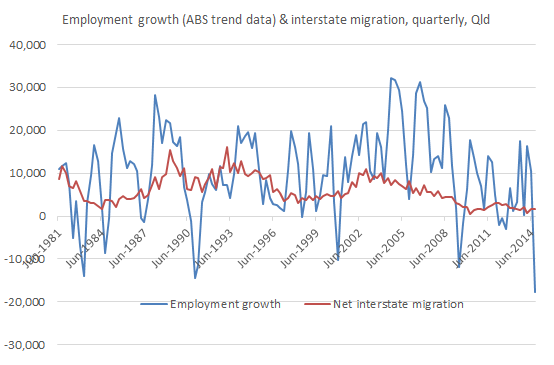
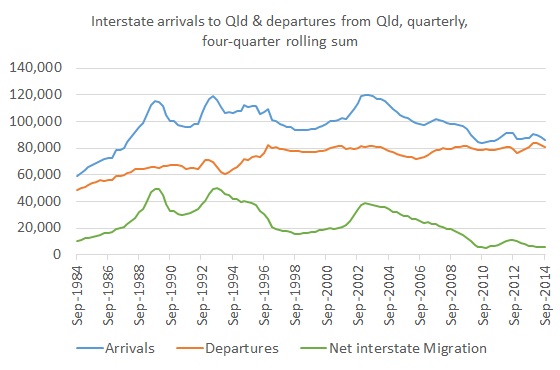
Queensland has, in recent years, experienced relatively low employment growth and low net interstate migration (see chart above). In previous posts (e.g. Victoria continues to lure Queenslanders), I have noted how fewer employment opportunities in Queensland may have reduced the attraction of the State to interstate migrants. I should have been clear that causality can run in the other direction, too, from interstate migration to employment growth, as interstate migrants boost demand in the Queensland economy, for goods and services and for housing. So a fall in interstate migration would result in an adverse shock to demand that may impact employment and economic growth.

This gives rise to the possibility of a feedback effect – e.g. slower employment growth reduces interstate migration which then leads to even slower employment growth (due to slower growth in demand, particularly for construction), which in turn reduces interstate migration, and so on (but with diminishing knock-on effects each round). This occurred to me after regular reader John Craig alerted me to some comments he made a few years ago on the relationship between interstate migration and employment and economic growth (Speculations about Queensland’s economic predicament):

Queensland’s economy (especially that in SE Queensland) has apparently been highly dependent on the ‘migration industries’ stimulated by rapidly increasing population – originally associated with strong interstate migration from NSW and Victoria…Any slowdown in population growth is likely to have the same sort of feedback effect (through reducing job prospects) as rapid population growth did for many years (through increasing job prospects).

There appears to be some evidence of the feedback effect at work in the lack of growth (and indeed a possible decline) in construction industry employment in Queensland in recent years. I’ve no doubt that lower interstate migration adversely affected the building industry. It has taken a long time for Queensland to get back to levels of residential building approvals seen prior to the financial crisis of 2008 (see Apartment & townhouse approvals double in January – catch-up or over-shoot-in supply?).

Posted in Housing, Macroeconomy, Migration, Population | Tagged , , , , | Leave a comment

Victoria continues to lure Queenslanders

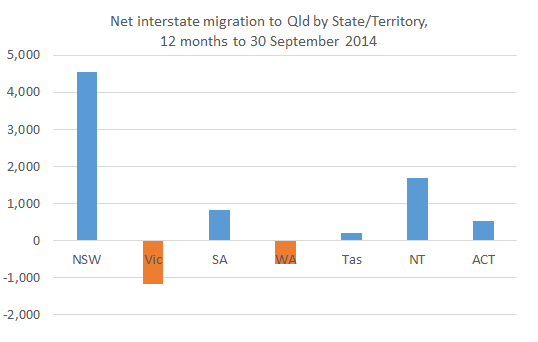
NIM_by_State_Sep_14Yesterday I wrote about how net interstate migration to Queensland remains low, and today I’ve had a closer look at the new ABS data, breaking down Queensland’s net gain of 5,942 people over the 12 months to 30 September 2014 by State/Territory (see chart above). As I’ve commented before (see Queenslanders moving to Victoria), the net loss of people to Victoria is remarkable given Queensland was once the recipient of large numbers of interstate migrants from Victoria. Victorians were once attracted to Queensland because of more favourable economic conditions and cheaper property prices, but Victoria is now performing better than Queensland economically, and Queensland property no longer appears ridiculously cheap to Victorians. Further, I suspect Victoria would be gaining many recent Queensland university graduates, who would be attracted both by the employment opportunities and the cosmopolitan lifestyle offered by Melbourne’s inner city.

Posted in Migration, Population | Tagged , , , , , , , , | Leave a comment

Net interstate migration to Qld remains at low levels

NIM_Sept_14

Yesterday, the ABS reported (see the media release):

Queensland no longer outstripping nation

Queensland’s population growth has slowed to its lowest rate in 15 years, according to figures released by the Australian Bureau of Statistics (ABS) today.

“The sunshine state’s growth rate was 1.5 per cent in the year to September 2014.” said Phil Browning from the ABS. “While this is similar to the national growth rate, it is well below the state’s 15-year average annual rate of 2.1 per cent,”

“This slower growth is due to a nine year low in the state’s net overseas migration and one of the lowest net interstate migration increases in over 30 years.

I’ve been commenting for some time on how the big driver of our slower population growth has been the big fall in net interstate migration to Queensland. People from NSW and Victoria are no longer coming to Queensland in the large numbers they were, as job opportunities in Queensland have declined relative to other States, and the gap between our house prices and theirs is no longer as large.

Previous related posts include:

Interstate migration to Qld remains low – overall gain, but net loss to Victoria continues

When will interstate migration to Qld recover?

Also, Queensland Treasury’s information brief on the latest population data is useful:

Population growth, Queensland

Posted in Population | Tagged , , , , , , , , , , , , | 3 Comments

ABC radio interview on the fiscal challenges facing the new Qld Government

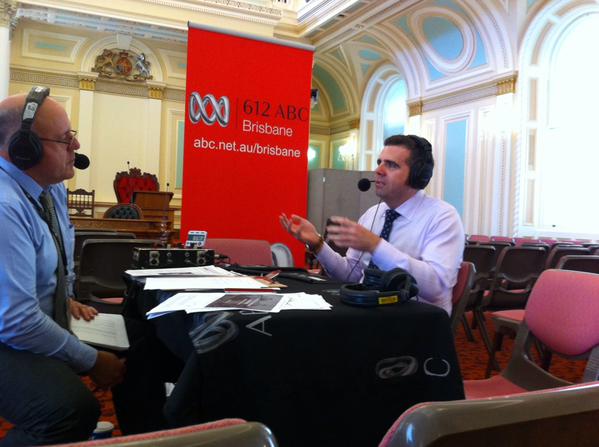
GT at PHChatting with Steve Austin about the fiscal challenges facing the new Government in the Legislative Council Chamber at Queensland Parliament House, Brisbane (Photo: Terri Begley)

On the first day of Queensland’s new Parliament, Steve Austin from 612 ABC Brisbane radio interviewed me regarding the fiscal challenges facing the new Queensland Government:

Queensland’s New Parliament (you’ll need to scroll down the page a bit to find my audio)

In our conversation, Steve and I and discussed points I’ve made in recent posts regarding the volatility and unreliability of royalties revenue and the challenge the Government faces in restraining expenditure growth enough to generate the surpluses it needs to achieve its fiscal strategy. Relevant recent posts include:

Qld Government will find it a big challenge to achieve its fiscal strategy

Queensland Treasury’s forecasting record on royalties

Qld Government increasingly dependent on volatile royalties revenue

Posted in Budget | Tagged , , , , , , , , , , | 2 Comments