Entrepreneurship with Prof. Peter G. Klein – latest Economics Explained episode

My latest Economics Explained episode on entrepreneurship featuring Professor Peter G. Klein of Baylor University is now available.

Many universities now offer courses in entrepreneurship, as students have been inspired by tech entrepreneurs such as Elon Musk and Mark Zuckerberg. But what exactly is entrepreneurship and who qualifies as an entrepreneur? Is entrepreneurship essential for economic growth? To help answer these questions, I invited Professor Peter G. Klein on to Economics Explained. Peter is W. W. Caruth Chair and Professor of Entrepreneurship at Baylor University in Texas. He is also Carl Menger Research Fellow at the Mises Institute.

Use these timestamps to jump right to the highlights:

  • 2:25 – what is entrepreneurship? Entrepreneurship as a mindset
  • 6:50 – Was Donald Trump an entrepreneur?
  • 15:50 – Schumpeter’s theory of creative destruction
  • 19:20 – Peter’s Entrepreneurial Judgment model (check out Peter’s book co-authored with Nikolai J. Foss Organizing Entrepreneurial Judgment and Peter’s Murray N. Rothbard lecture The Present State of Entrepreneurship Research on YouTube)
  • 26:15 – I mentions Cal Newport’s point that Steve Jobs thought the big value add of the iPhone was you could have your phone and iPod in the one device and didn’t foresee just how important all the apps would be (check out Newport’s great book Digital Minimalism)
  • 35:15 – discussion of best places to be an entrepreneur, in which Peter tells me that Australia may not be as bad as he thinks, and Austin, Texas is attracting people who are leaving Silicon Valley
  • 39:05 – Peter says entrepreneurs are “absolutely front and centre in process of economic growth”
  • 44:15 – Peter refers to “the allure of fine tuning the economy” regarding frequent tweaks to R&D tax incentives

The episode was recorded via Zoom video conferencing on the 12th of February 2020.
Economics Explained Logo

Posted in Industry policy, Macroeconomy, Tax, Uncategorized | Tagged , , , , , , , , | Leave a comment

Qld definitely not hot – slides from my Hot or Not talk at the Brisbane Club

Thanks to Ross Elliott from APP Property and Infrastructure Specialists for having invited me to present again at his annual Queensland: Hot or Not seminar at the Brisbane Club yesterday afternoon. It’s very clear the Queensland economy, and the broader national economy, isn’t hot at the moment and isn’t likely to heat up anytime soon. You can check out my slides via this link:

Qld hot or not presentation 18 February 20

Key points I made included:

GT at Brisbane Club

Addressing the Hot or Not seminar in the Edinburgh Room at the Brisbane Club on Tuesday, 18 February 2020

Posted in Macroeconomy, Uncategorized | Tagged , , , | Leave a comment

Fifth anniversary of Palaszczuk Gov’t – my comments in today’s Courier-Mail

Courier-Mail State Affairs Editor Steven Wardill has written a great article on where the Palaszczuk Government is placed on its fifth anniversary today, Premier’s support plunges to same level as Bligh bloodbath, in which he quotes me:

One of Queensland’s most respected economists, Gene Tunny, said voters had been patiently waiting for the Government to steer the state to better times but it hasn’t happened.

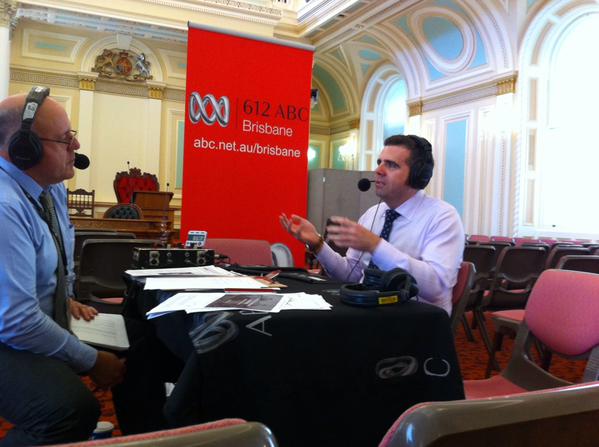
Check out Steven’s article in today’s Courier-Mail for the rest of my comments, although if you’re a regular reader of my blog you won’t be surprised by them. The big problem this government has always had is that it’s been constrained by the existing high state debt and lacked the political cover it could have had to invest much more in infrastructure because, unlike governments in NSW and Victoria, it rejected asset sales/leases. I made this point to Steve Austin when he interviewed me in the Queensland Legislative Council chamber on the first parliamentary day of the Palaszczuk Government in March 2015:

ABC radio interview on the fiscal challenges facing the new Qld Government

GT at PH

Speaking with 612 ABC Brisbane’s Steve Austin on the Palaszczuk Government’s first day of parliament in March 2015.

Posted in Budget, Infrastructure, Uncategorized | Tagged , , , , , , , | 5 Comments

Antitrust & “Hipster Trustbusters” with Danielle Wood from Grattan – Economics Explained EP22

The massive market power of the big tech companies, such as Google, Facebook, and Amazon, has prompted a renewed interest in antitrust laws. To discuss antitrust, I invited Danielle Wood from the Grattan Institute on to my Economics Explained podcast, and I’ve just published the recording. Danielle is Budget Policy and Institutional Reform Program Director at Grattan. Later this year, she will take up the CEO position at the Institute. Danielle is well qualified to talk about antitrust, having once worked as Principal Economist and Mergers Director at the Australian Competition and Consumer Commission (ACCC).

Check out Danielle’s 2019 Inside Story article The hipster trustbusters.

Use these timestamps to jump right to the highlights:

  • 1:45 – what is antitrust?
  • 5:40 – the hipster trustbusters
  • 8:58 – the problem with Amazon
  • 12:20 – the Chicago school view on anti-trust
  • 17:28 – the data the tech companies have on us and network effects as barriers to entry
  • 19:45 – Grattan’s analysis of market concentration in Australia
  • 25:05 – problem isn’t market power per se, but the abuse of it
  • 26:15 – discussion of US Department of Justice-Microsoft case
  • 31:10 – should we break up the big tech companies?
  • 33:29 – ACCC has been good at pushing for new powers, but it hasn’t been successful in mergers cases in the courts in the last 20 years

The episode was recorded via Zoom video conferencing on the 10th of February 2020.

Economics Explained Logo

Posted in Competition policy, Uncategorized | Tagged , , , , , , , , , , , | Leave a comment

CCIQ Coronavirus interview – Chief Economist “very concerned” about potential impacts

The Courier-Mail‘s alarming story on Thursday Coronavirus to cause chaos for Queensland businesses prompted me to get in touch with the Chamber of Commerce & Industry Queensland (CCIQ) to seek a briefing on what they’ve learned from their various information sources. I spoke with CCIQ’s Chief Economist Marcus Smith and Senior Policy Advisor Gus Mandigora at CCIQ’s offices on Wickham Terrace at Spring Hill, Brisbane on Friday afternoon and recorded the following interview…

Continue reading

Posted in China, Exports, Macroeconomy, Uncategorized | Tagged , , , , , , , | 6 Comments

Surveillance Capitalism with Darren Brady Nelson – latest Economics Explained episode

So-called surveillance capitalism was one of the big issues for the 2020s I identified in my first Economics Explained episode this year. Google, Facebook, and other tech giants have massive amounts of data on us and they are using it for commercial gain. In my latest Economics Explained episode, I discuss various perspectives on surveillance capitalism with my good friend Darren Brady Nelson, Chief Economist of LibertyWorks, an Australian libertarian think tank.

Darren’s recently had an article published on the Mises Institute website with the title Surveillance Capitalism: A summary of critics.

Use these timestamps to jump right to the highlights:

  • 4:45 – Darren argues some criticism of surveillance capitalism is simply the latest manifestation of opposition to capitalism in general
  • 11:40 – Darren mentions work by entrepreneur and Austrian economist George Gilder who thinks current tech giants are “going over the hill” (according to this Forbes article) and companies to watch will be in blockchain and quantum computing
  • 25:55 – Darren mentions section 230 of the US Communications Decency Act, often referred to as “The Twenty-Six Words That Created the Internet”
  • 27:30 – discussion of how it’s monarchs or governments which have traditionally created monopolies – e.g. British East India Company
  • 42.30 – mention of recent laws affecting tech companies – EU GDPR (e.g. see this Wired article) and California Consumer Privacy Act (for info, check out this Guardian article)

This is Darren’s second appearance on Economics Explained, and we spoke via Zoom video conferencing on the 18th of January 2020. If you haven’t listened to it yet, check out my first conversation with Darren, the Gig Economy Economics Explained episode.

Finally, a big shout out to previous Economics Explained guest Andrew Leigh MP for including Economic Explained in his list of his favourite podcasts he listens to while running in an AFR article earlier this week:

Andrew Leigh: the virtues of podcasts and why my kids don’t have Xbox

Economics Explained Logo

Posted in Uncategorized | Leave a comment

Coronavirus and the Qld economy

Despite all the bad news on coronavirus, the RBA Board, which left the cash rate unchanged yesterday, and financial markets, which are currently rallying, seem pretty relaxed about the potential economic impacts of the virus. While equity prices are lower than they were before the news broke about coronavirus, markets don’t appear too worried about the potential economic downside (see this AFR report ASX to rise amid global rally). Of course, the markets could end up being badly mistaken.

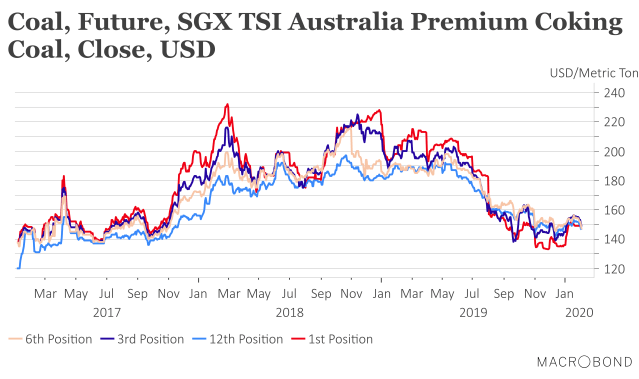
Coronavirus will definitely be a major issue covered in my upcoming Queensland: Hot or Not presentation at the Brisbane Club. We need to be concerned about the impact of coronavirus on our tourism and international education sectors and its impact on the demand for our coal through its impact on the Chinese economy. There have been falls in prices for Australian coking coal futures, but nothing beyond what you might see with normal market volatility yet (see chart below).

The Queensland Government is rightly concerned about the impact of coronavirus on our tourism sector, and Queensland Tourism Minister Kate Jones has observed (as reported by ABC News) that Cairns and the Gold Coast will be most affected:

“In a Queensland context we know Gold Coast and Cairns will be hardest hit when it comes to Chinese travellers, they represent such large contributions to tourism market. I’ve been in constant contact with Gold Coast tourism, they’re already rolling out their campaign,” she said.

Regarding the impact on the Queensland economy as a whole, consider that, as reported by Tourism & Events Queensland in its International Tourism Snapshot, Queensland’s 496,000 Chinese visitors spent $1.552 billion in the twelve months to 30 September 2019.* Let’s say we lose one month’s worth of Chinese visitors to Queensland, which would amount to a loss of around $130 million of spending. According to Tourism Research Australia estimates, the Gross State Product (GSP) impact of a change in tourism spending is almost one-for-one in the short-run, taking into account indirect or multiplier impacts. In March quarter 2020, Queensland’s quarterly GSP should be around $97 billion, so the potential impact of coronavirus via the international visitor channel could be around -0.1% of GSP.

So coronavirus shouldn’t derail the state economy, unless: a) travel restrictions remain in place for a prolonged period and the impact on our tourism sector is ongoing; and/or b) its impact on the Chinese economy is much greater than currently expected and this substantially affects global growth and demand for Queensland coal. Let’s hope that doesn’t turn out to be the case.

Coal prices

*This figure appears to include spending by Chinese international visitors for education.

Posted in Tourism, Uncategorized | Tagged , , , , , , , | Leave a comment

Disappointing that drugs won’t be decriminalised in Qld

As former Queensland Premier Campbell Newman observed early last year, we have lost the war on drugs. So it would appear sensible to consider different approaches, including different degrees of decriminalisation or legalisation. Regrettably, the Queensland Government has rejected a recommendation by the Queensland Productivity Commission for the decriminalisation of drugs, as Steven Wardill reports in today’s Courier-Mail:

Treasurer Jackie Trad last night confirmed the Government had rejected a controversial Queensland Productivity Commission recommendation to decriminalise drugs but would consider the use of more diversionary methods for small-time users.

The diversionary methods by which small-time users could avoid jail time are welcome, but it would have been better to have gone much further, in my view. Economists across the world have long been critical of the high costs and low level of apparent benefits associated with the war on drugs. My good friend and colleague Stephen Thornton of BG Economics and I had a good conversation on this issue in my Economics Explained episode on cannabis, which I recommend you listen to if you haven’t yet.

Incidentally, I have been drafted into the “No” team alongside the Courier-Mail’s Steven Wardill for the Seventh State debate, on whether there should be a separate state of North Queensland, to be held in Brisbane on 20 March 2020.

Another upcoming event I’m appearing at is APP’s Queensland Hot or Not forum on Tuesday 18 February. By that time, we should have a better idea of the likely economic impact of the coronavirus, which could give our very important tourism and international education sectors a big hit.

Posted in Uncategorized | Tagged , , , , , , | 2 Comments

Innovation + Equality with Dr Andrew Leigh MP – latest Economics Explained episode

In my latest Economics Explained episode, I interview Dr Andrew Leigh MP, the Shadow Assistant Minister for Treasury, about his excellent new book with co-author Professor Joshua Gans Innovation + Equality: How to Create a Future that is More Star Trek than Terminator, published by MIT Press in 2019. Our wide-ranging conversation covers a range of issues, including labour market impacts of digital disruption, universal basic income, and how to improve teacher effectiveness, among other issues.

Use these timestamps to jump right to the highlights:

  • 4:20 – impact of AI and automation on jobs
  • 9:50 – criticisms of Universal Basic Income – fiscal critique and the fact work brings meaning – in which Andrew mentions Blanchflower and Oswald study Wellbeing over time in Britain and the USA
  • 11:05 – advises young people not to over-specialise
  • 15:20 – innovation is generally good for the economy and society, so Andrew rejects Bill Gates’s robot tax idea (see this Business Insider article)
  • 19:05 – I ask Andrew about Nicholas Gruen’s idea about public private partnerships for digital public goods (e.g. listen to Economics Explained episode 7)
  • 24:00 – Andrew tells us how you can connect with him, including by listening to his Good Life podcast
  • 24:40 – discussion of how to improve teach effectiveness, in which I ask about teachers’ unions and performance-based/teacher merit pay; check out Andrew’s 2012 paper The economics and politics of teacher merit pay (NB I mangled the end of my question, but Andrew got the gist of it, thankfully)
  • 28:45 Andrew proposes assessing teacher quality policy measures via Randomised Controlled Trials (RCTs)

This episode was recorded on 20 January 2020 via Skype.

Hilary Wardhaugh Photographer

Dr Andrew Leigh, Member of the Australian House of Representatives for Fenner and Shadow Assistant Minister for Treasury

Posted in Uncategorized | Tagged , , , , , , , , , , , , , , | Leave a comment

Queensland 2020 Outlook: Hot or Not? Upcoming event at the Brisbane Club on 18 February

Thanks to Ross Elliot from APP Property and Infrastructure Specialists for inviting me once again to present on Queensland’s economic outlook at the 2020 Hot or Not event at the Brisbane Club on Tuesday, 18 February. You can register for the event via this link:

Queensland 2020 Outlook: Hot or Not?

Here’s the event summary:

APP are pleased to once again host an information and expert opinion backed workshop exploring the outlook for the Queensland economy and Queensland property markets in 2020. Our event last year was very popular and was fully booked, if you’re interested in attending this year’s event please get in early.

Guest speaker on the economic outlook is once again respected economist and author, Gene Tunny of Adept Economics. Gene will be joined by property expert Ross Perkins, Managing Director of m3property.

The event is free to attend, but please register quickly via the link above to avoid disappointment.

BBF-87a


Posted in Macroeconomy, Uncategorized | Tagged , , , , | Leave a comment