People escaping BS jobs (covered in my latest podcast episode) and going into business for themselves

Nine-Fairfax media is reporting Record number of companies launched as COVID drives contractors, entrepreneurs. A couple of things are going on. There are people whose jobs were destroyed by the pandemic and have been forced into self-employment, but there are also people who have reassessed their lives and decided to quit their jobs and become self-employed.

This shift toward self-employment is understandable, given data which suggests that many workers in advanced economies think their jobs are mostly bullshit or pointless, as the late David Graeber, who was Professor of Anthropology at LSE, emphasised in his thought-provoking 2018 book Bullshit Jobs. Graeber nicely identified the five different types of BS jobs: flunkies, goons, duct-tapers, box-tickers, and taskmasters. I’m sure we’ve all known people who could have been characterised as one of these (hopefully not us)!

Even though I strongly disagree with Graeber’s main conclusions (i.e. many of these jobs really are BS from society’s perspective and we need to radically reform our economies), I must say I really enjoyed reading the book and was inspired to record an episode of my Economics Explored podcast on it. So please check out EP95 BS or Pointless Jobs and let me know what you think about the idea of BS jobs and whether you’ve seen people give up BS jobs to become self-employed or start up new businesses.

Please feel free to comment below. Alternatively, you can email comments, questions, suggestions, or hot tips to contact@queenslandeconomywatch.com.
Posted in Labour market | Tagged , , , , , , , , | 4 Comments

Qld CHO’s border advice kept secret – massive failure of governance, record keeping, and transparency

American entrepreneur and podcaster Tim Ferriss has observed that writing can sharpen your thinking. Putting things down on paper, you’re more likely to avoid sloppy thinking and illogical arguments, and you will have to think more carefully about your assumptions, judgments, and evidence. That is why, once upon a time, governments would make important decisions affecting millions of people based on written advice which could be reviewed and contested within government and often outside of government. Based on the news in today’s Courier-Mail about Queensland Health keeping CHO Jeannette Young’s 2020 interstate border closure advice secret, I suspect there was no considered and cogent written advice analysing the public health, economic, and social impacts of interstate border closures and outlining the grounds for her border closure recommendation.

Queensland Health’s excuse for not releasing the CHO’s advice is pathetic. The Courier-Mail reports:

Documents detailing the health advice used by Premier Annastacia Palaszczuk to keep the state’s borders closed have been kept secret by Queensland Health, which says it can’t access chief health officer Jeannette Young’s emails because they “keep corrupting”.

It appears that, despite the tens of millions (I’m guessing) spent each year on Queensland Health’s ICT system, Queensland Health should instead get its bureaucrats Google Workspace and Evernote or Notion subscriptions so they can keep proper records. The Queensland Audit Office should investigate whether the CHO’s office is complying with the Queensland Government’s recordkeeping policy, which notes:

Public authorities are responsible for making, managing, keeping and preserving complete and reliable public records.

Based on today’s Courier-Mail report, it does not appear to be fulfilling that responsibility.

Yes, COVID-19 is a serious disease and the CHO has a huge amount of responsibility. But her decisions are affecting millions and causing great financial and emotional hardship in many cases, and we should be demanding much more justification for her decisions than we have seen to date.

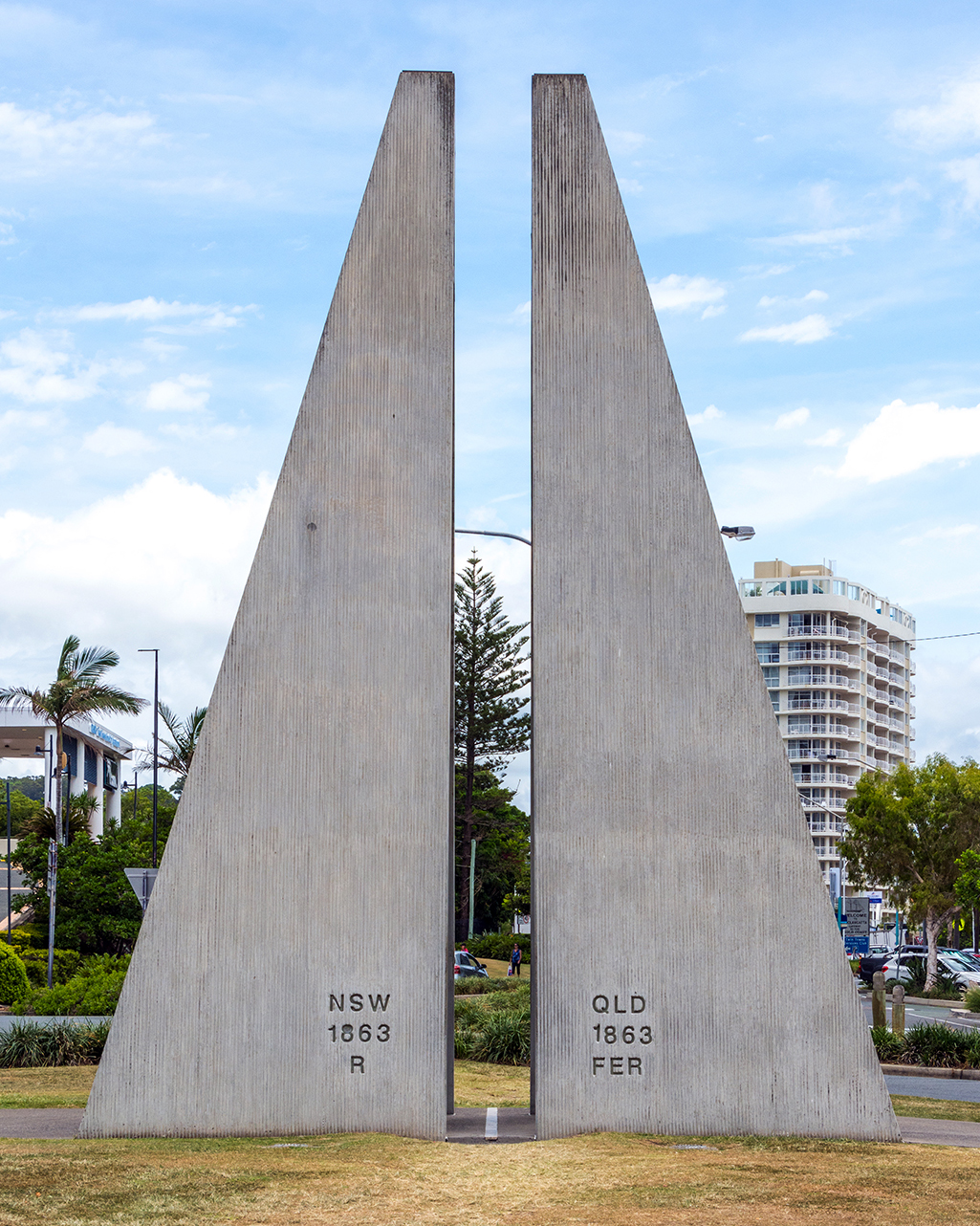
Queensland-NSW border marker at the Gold Coast-Tweed Heads.

Please feel free to comment below. Alternatively, you can email comments, questions, suggestions, or hot tips to contact@queenslandeconomywatch.com.

Posted in Health | Tagged , , , , , , , | 5 Comments

Upcoming Brisbane Big Dialogue on Climate Change

I’m used to seeing cabaret acts or indie bands like Belle and Sebastian at the Tivoli in Fortitude Valley, so it will be a change to attend the Brisbane Big Dialogue on Climate Change on Monday 26 July (assuming we haven’t been locked down again by then). This event has been organised by Brisbane Dialogues, a group which includes prominent Brisbane business identities and which is dedicated to having rational conversations on important and contentious policy issues, something we haven’t really seen since social media filter bubbles started around a decade ago. The topic of discussion is:

“We may never agree on much about climate change – nature, causes, severity, urgency – but what might we agree to do about it in terms of practical policies and grassroots measures, e.g. on energy alternatives, public technology investment, private sector decarbonisation, adaptation, conservation, development aid?”

The discussion will be chaired by former-Deputy-PM-turned-YouTuber John Anderson, and the panel includes the Queensland Chief Scientist Professor Hugh Possingham, state government renewable energy company CleanCo CEO Dr Maia Schweizer, and former Chief Scientist of Australia Emeritus Professor Robin Batterham.

So if you’re free Monday evening 26 July, can get to the Tivoli, and are interested in climate change policy, then please consider attending the Big Dialogue on Climate Change:

A BIG DIALOGUE: CLIMATE CHANGE – WHAT CAN WE AGREE ON?, Fortitude Valley, 26th of July | Humanitix

Street art by Sofles in the carpark for the Tivoli, Fortitude Valley, Brisbane. Photo by Jennifer Tunny (@brisbaneatnight on Instagram).

Please feel free to comment below. Alternatively, you can email comments, questions, suggestions, or hot tips to contact@queenslandeconomywatch.com.
Posted in Climate change | Tagged , , , , | 6 Comments

Economics of New Media – my latest Economics Explored podcast episode

My latest Economics Explored podcast episode (EP94 Economics of New Media) explores how people are making money in the rapidly growing new media or independent media sector. While the internet and social media have badly affected traditional media, they have led to the emergence of a rapidly growing new media or independent media sector.

For instance, leading podcaster Joe Rogan was reportedly paid $100 million to move his hugely popular podcast to Spotify. And independent journalists like Matt Taibbi, Bari Weiss, and Krystal Ball and Saagar Enjeti are making decent livings through Substack and Patreon subscriptions and via revenue from YouTube. It appears there’s big money for the top talent in new media, which is great news. It’s starting to look like that, to some extent, the market really can support independent and high-quality news and opinion.

Chatting about the economics of new media with me in EP94 is a new media start up founder, Matt Wong of Discernable, who is based in Melbourne and is doing great things on various new media platforms. His Discernable program which you can watch on Facebook or YouTube, provides a fresh perspective on current affairs in Australia.

Please feel free to comment below. Alternatively, you can email comments, questions, suggestions, or hot tips to contact@queenslandeconomywatch.com.
Posted in Labour market, Media | Tagged , , , , , , , , , | Leave a comment

RBA would be right to taper its Quantitative Easing program

There’s a nice article by William McInnes in today’s Financial Review, Economists expect RBA to ease stimulus, which begins:

 Economists expect Tuesday’s Reserve Bank board meeting to acknowledge the economy’s surprisingly strong recovery and to signal some tapering of its $200 billion-plus quantitative easing monetary stimulus.

It would make sense to do so, given the RBA’s ultra-loose monetary policy has played a large part in encouraging massive growth in credit for housing and, hence, rapidly rising property prices (up nearly 2% in June and 15% through-the-year in Brisbane-Gold Coast according to CoreLogic). Longer-term, all the additional money in the economy will likely move on from inflating property prices to inflating consumer prices (e.g. as people spend the capital gains from properties they sell).

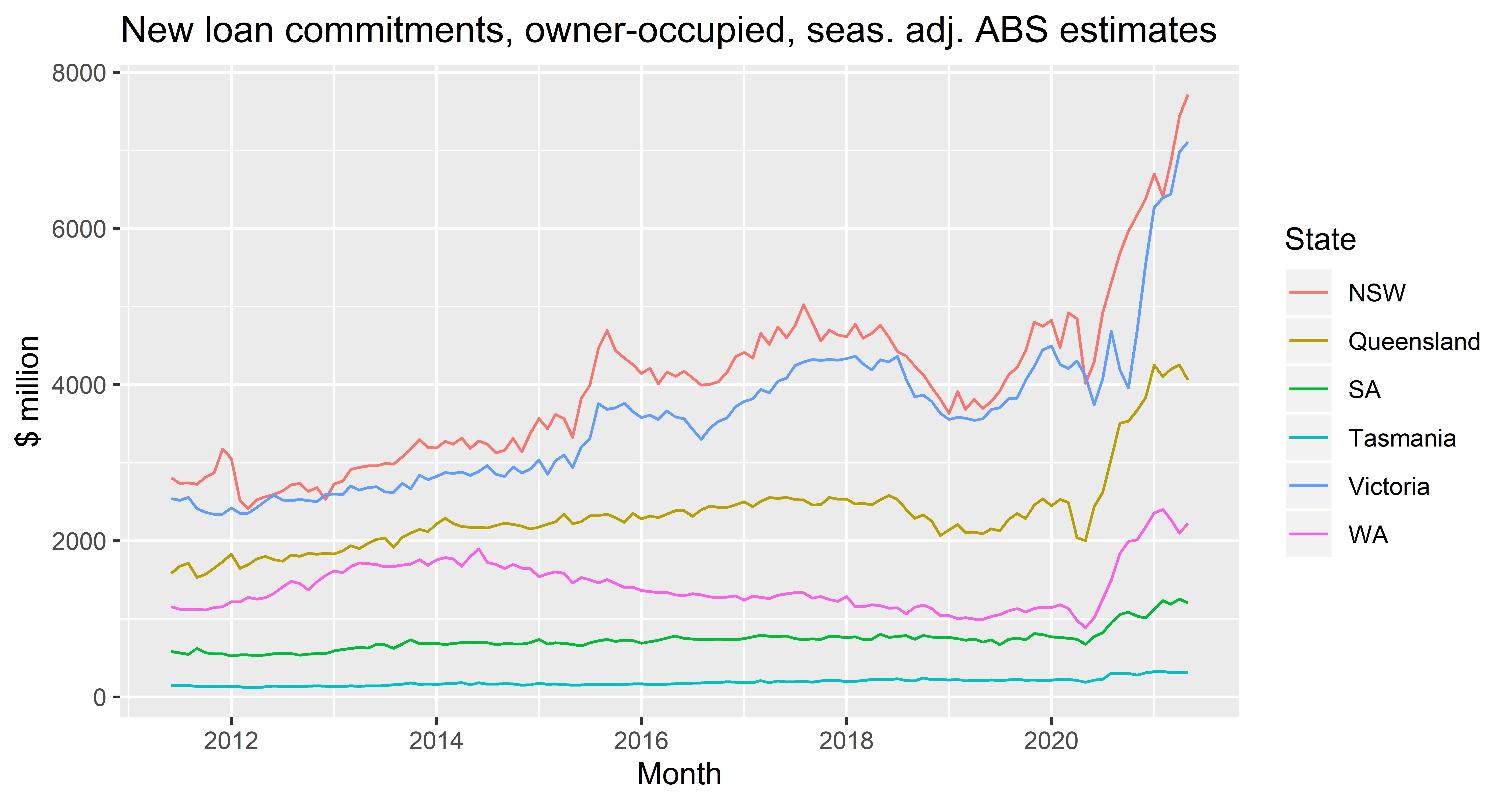
Here’s a chart based on the latest lending indicators data from the ABS showing just how much lending for owner-occupied housing has grown up to May 2021. New loan commitments for owner-occupied housing have nearly doubled since early 2020.

Loans for owner-occupied housing in Australia have nearly doubled since early 2020.

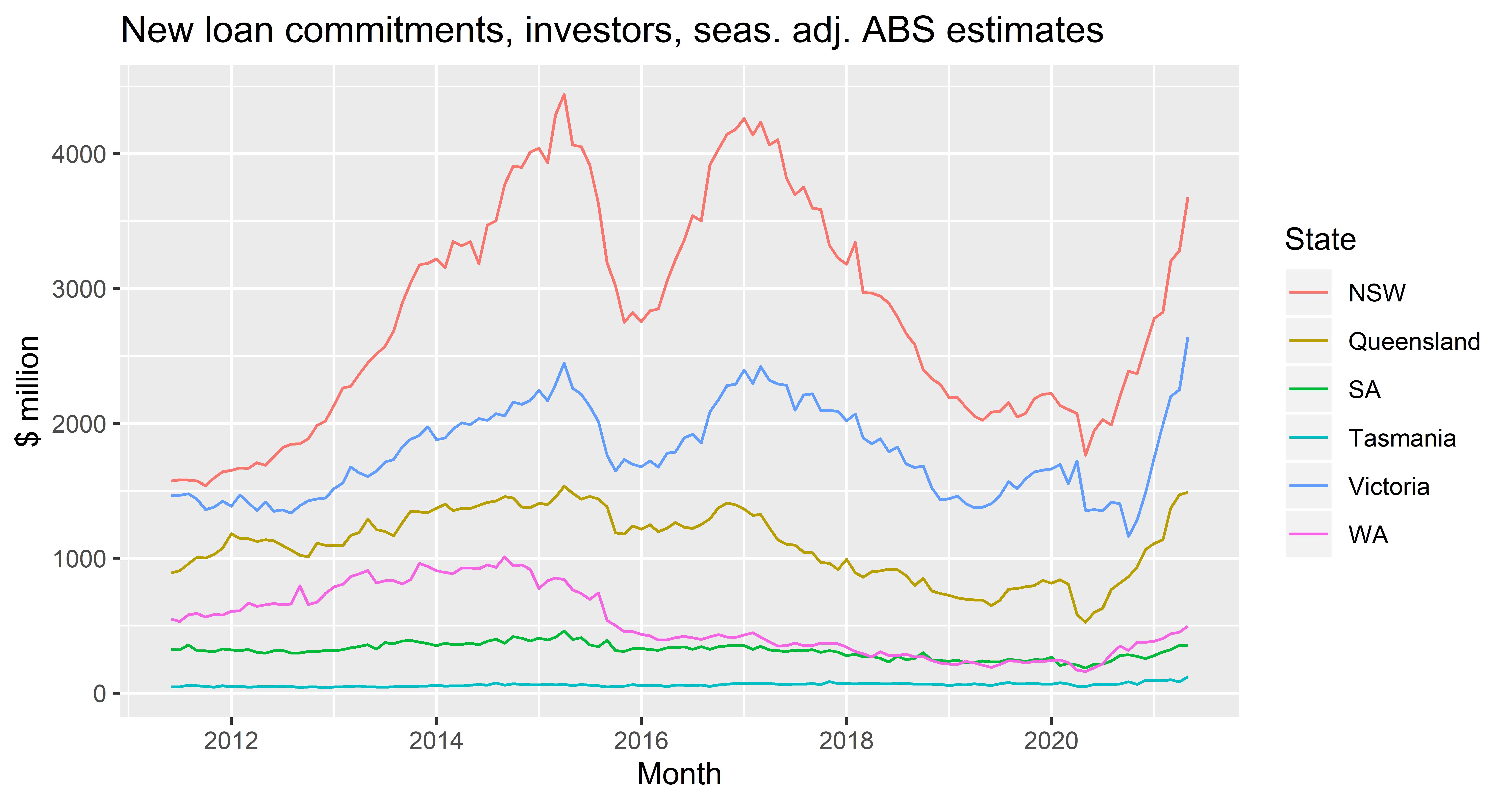
Here’s the same data for loans to investors, the amount of which is similar to what we were seeing during the apartment building boom in the middle of the last decade.

Loans to property investors in Australia are around levels seen during the apartment building boom in the middle of the last decade.

So, the RBA would be on firm ground if it chooses to reduce its QE (i.e. bond buying) program. It should avoid destabilising the economy through an over-heated property market and by encouraging households to take on debts which may become problematic in future years when interest rates rise.

Incidentally, here’s a good summary from Business Insider Australia on what RBA Governor Phil Lowe has previously said about monetary policy and house prices:

The RBA believes there’s no housing bubble just yet, but says it will intervene if Australians go crazy on debt

That article is from February. We should learn this week if the RBA now thinks there is a housing bubble and Australians have gone crazy on debt. It’s difficult to look at the lending and house price data and not worry a little that this is what we are seeing.

Please feel free to comment below. Alternatively, you can email comments, questions, suggestions, or hot tips to contact@queenslandeconomywatch.com.
Posted in Macroeconomy | Tagged , , , , , , , , , , | 2 Comments

Qld’s heavy CAPEX pipeline dominated by public sector projects

First, thankfully the Queensland Government will lift the Brisbane-Moreton lockdown at 6pm tonight, although the threat of future lockdowns remains, making it challenging to plan anything over the next couple of months. I’m really hoping the COVID spread is contained and we don’t have another lockdown, because we don’t want to risk the economic recovery any more. A report from the Property Council and ANZ highlights just how positive things have been looking, as reported by John McCarthy at In Queensland: Employers see big problems with the state’s booming economy (i.e. the big problem is shortages of skilled employees, reportedly).

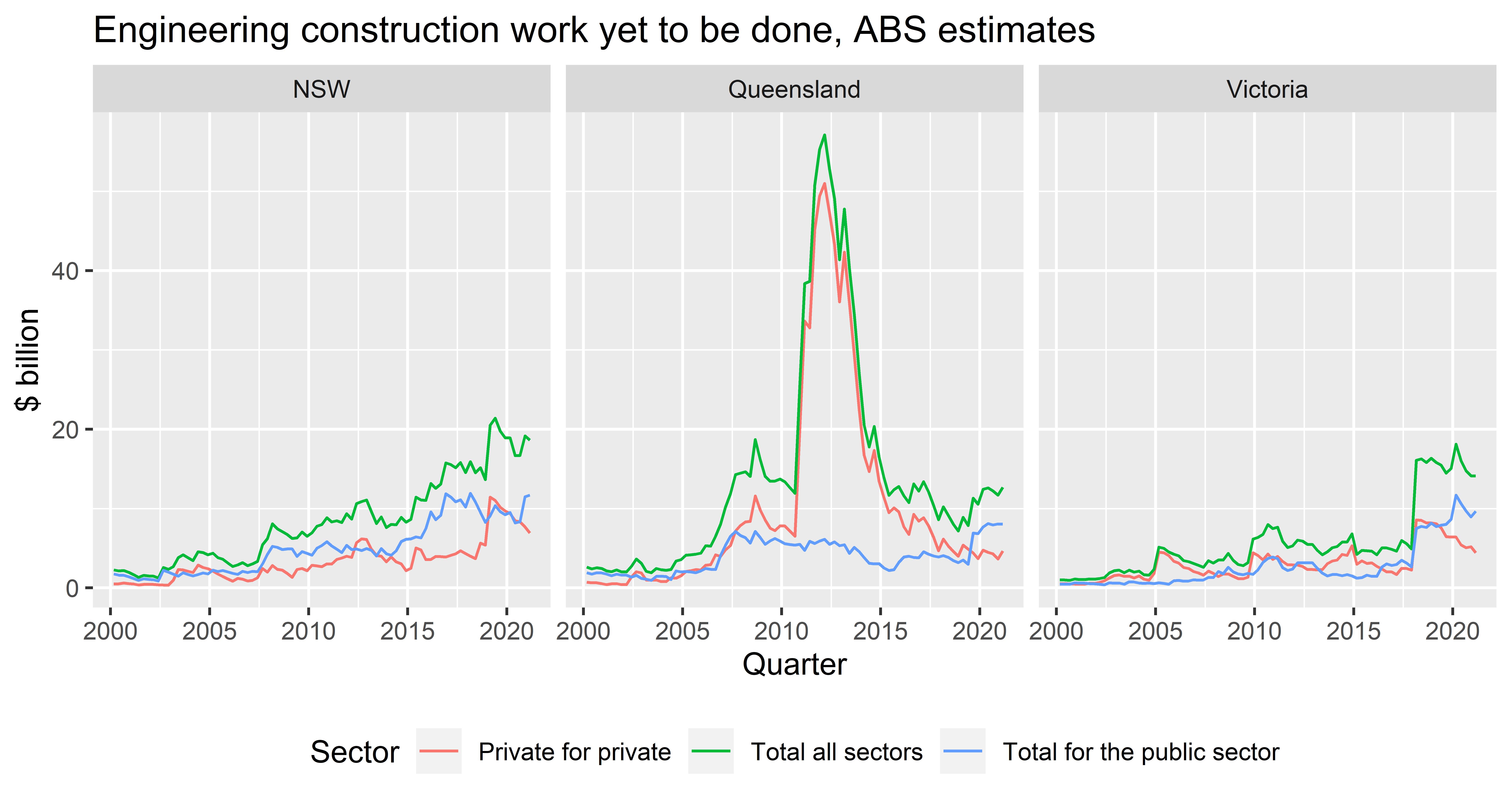
Certainly there appears to be a lot of positive sentiment in the construction industry around the pick up in planned public sector projects over the last year or so, as illustrated by the engineering/heavy construction work yet to be done (as at March 2021) data released by the ABS earlier this week (see chart below). In the three largest states, the infrastructure pipeline (i.e. engineering construction work yet to be done) is dominated by public sector projects (e.g. Brisbane’s Cross River Rail). Nationwide the the disparity isn’t as great due to what must be a reasonable amount of engineering construction work yet to be done for the private sector (most likely for the mining sector) in either WA or the NT (for which all the detailed data aren’t available, alas, so I can’t produce a chart). Nationwide, the infrastructure pipeline for private sector projects is $32 billion compared with $35 billion for the public sector according to my calculations.

A chart showing engineering construction work yet to be done has stepped up in the major states due to a pick up in work yet to be done for the public sector.

As always, I’ll note:

  • Queensland’s engineering construction work yet to be done is far below what it was early last decade when Bechtel was building the $70 billion worth of LNG processing facilities on Curtis Island, off Gladstone; and
  • the state government really should review whether any of its policies, regulations, or processes are holding up much need private sector capital investment in Queensland.

Please feel free to comment below. Alternatively, you can email comments, questions, suggestions, or hot tips to contact@queenslandeconomywatch.com.

Posted in Infrastructure, Macroeconomy | Tagged , , , , , , , | Leave a comment

On whether we should follow bad laws + Public Choice podcast chat with Brendan Markey-Towler

Despite the positive messaging from the Queensland Government yesterday, Brisbane’s lockdown has been extended by at least 24 hours, because of two new cases on the south side, causing considerable angst among more than one million people and ruining weddings and causing florists to throw out flowers and restaurants to throw out food. Luckily for Sunshine Coast residents, the new COVID case in their region was found late in the day, so Sunshine Coast residents are now out of lockdown. Our Chief Health Officer Jeannette Young was so embarrassed over her anti-vaxxer-type comments earlier this week that she couldn’t possibly have embarrassed herself further by reneging on the lifting of the Sunshine Coast lockdown. So Sunshine Coast residents will have at least one or two days of freedom, before they are at risk of lockdown being re-imposed.

In my post last night I noted that even though the COVID laws are bad laws, we need to follow them nonetheless. Up-and-coming Brisbane economist Brendan Markey-Towler made a great comment on LinkedIn on my post which read:

Not quite. Lex iniusta non est lex is a well developed doctrine. It’s really more of a prudential question whether the penalty and consequence is worth the protest.

Lex iniusta non est lex” is Latin for “An unjust law is no law at all”, which according to Wikipedia is associated with St Thomas Aquinas and was quoted by Dr Martin Luther King. That’s pretty heavy backing! Unfortunately, the state government controls the police force so it can enforce its bad laws, even though they may be incompatible with natural law and arguably completely illegitimate. That said, Brendan is correct that it comes down to a prudential question. We may be getting to the point where civil disobedience (e.g. that shown by the Newstead beauty salon owner) to protest these heavy-handed restrictions is justified.

Incidentally, I interviewed Brendan again recently for my Economics Explored podcast on the topic of Public Choice theory, which takes as its starting point the assumption that politicians and bureaucrats are self-interested. In a state where our political leaders are willing to go on a junket to the Tokyo Olympics at the same time as they are restricting our liberties, that seems like an appropriate assumption.

Please feel free to comment below. Alternatively, you can email comments, questions, suggestions, or hot tips to contact@queenslandeconomywatch.com.
Posted in Queensland Government | Tagged , , , , , , , | 10 Comments

End of 2nd day locked down in Qld Police State

If government imposes hard-to-justify and unreasonable restrictions on people, then it shouldn’t surprise us if they don’t fully comply. Based on the amount of people wandering around Brisbane City relative to previous lockdowns, and on various media reports, Queenslanders have been less willing to comply with the current lockdown than previous ones. This is perfectly understandable, and it shouldn’t result in a heavy-handed response from authorities, such as what we saw today, when a Newstead beauty salon owner attempted to defy the lockdown and was shut down by “dozens of police” according to the Courier-Mail. As reported by the Brisbane Times:

Police have surrounded a beauty salon in inner Brisbane after its owner defied Queensland lockdown restrictions by opening her business.

Ok, so she breached the regulations, and we all do need to follow the law, even the bad laws, but surely she could have just been sent an infringement notice with a fine and our police officers could have been put to better use.

Almost as disturbing as the Newstead incident is the prospect of our police putting up barricades so people can’t go to the beach during lockdown, as reported by news.com.au. So much for easy going Queensland! Instead, we have the smack of firm government. Unfortunately, it’s an increasingly erratic, embarrassing, and incompetent state government, one which yesterday almost derailed the national vaccination program.

The state government has had a shocking two days, and amusingly the Deputy Premier undermined the Premier’s case for travelling to the Tokyo Olympics when he criticised the federal government for allowing so much international business travel. The state government is now claiming we may miss out on the Olympics if the Premier doesn’t go to Tokyo, but that may actually be a good thing, given the Government so far hasn’t demonstrated the Olympics would stack up for Queensland, and we all know just how costly some previous Olympics in other cities have been. On the risky economics of the Olympics, check out this article in CPA Australia’s In the Black magazine which quotes me among other economists:

Is hosting the Olympics Games worth the investment?

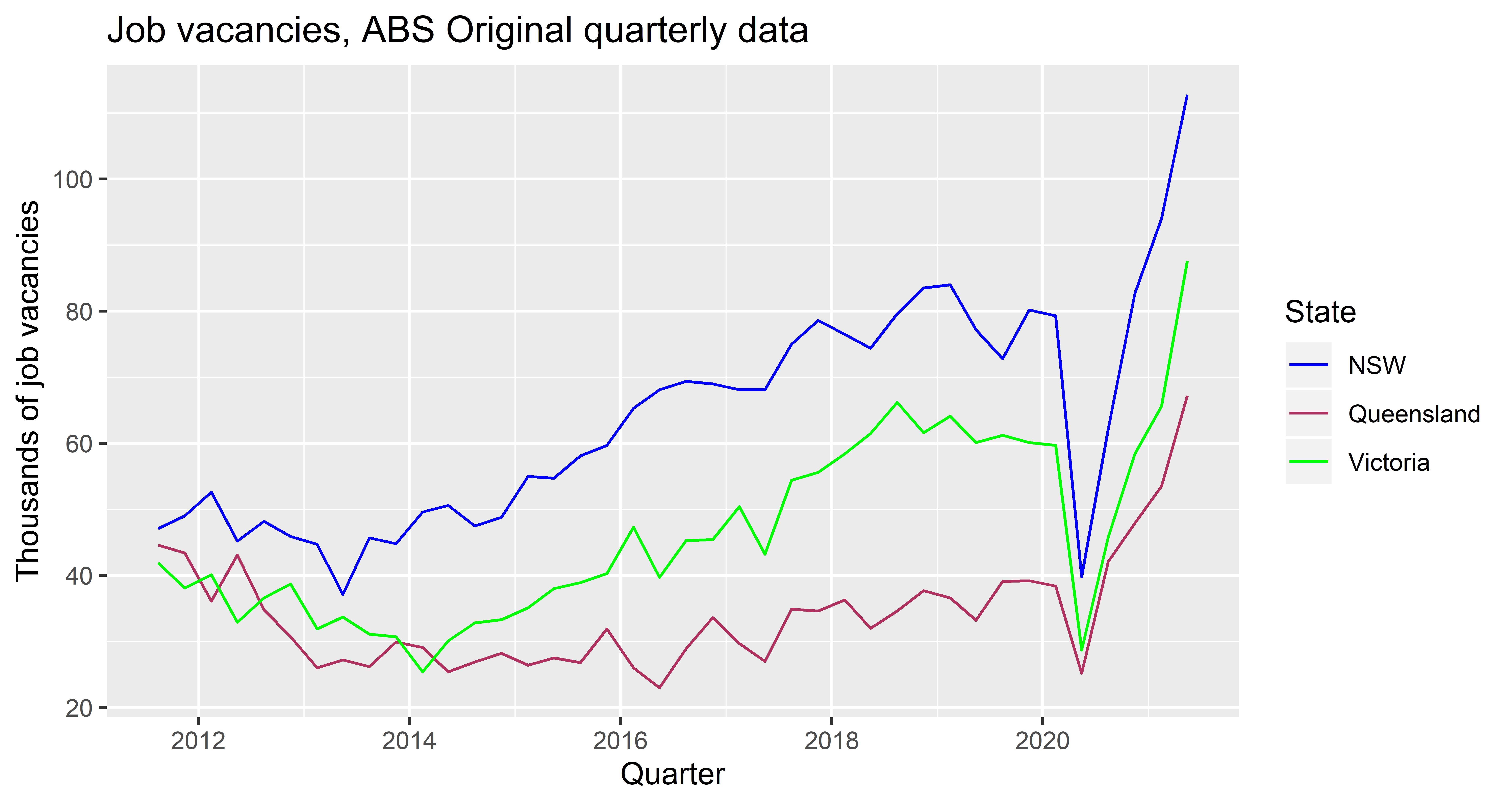
Finally, let’s hope this dreadful lockdown ends tomorrow and we don’t further risk the economic recovery, which, according to the data, appears to continue to exceed expectations – e.g. record job vacancies in May (see chart below).

A chart showing record job vacancies in May 2021 in NSW, Queensland, and Victoria.

Please feel free to comment below. Alternatively, you can email comments, questions, suggestions, or hot tips to contact@queenslandeconomywatch.com.
Posted in Macroeconomy | Tagged , | Leave a comment

Brisbane inner city and Qld outback get highest Qld Gov’t capital spending per person

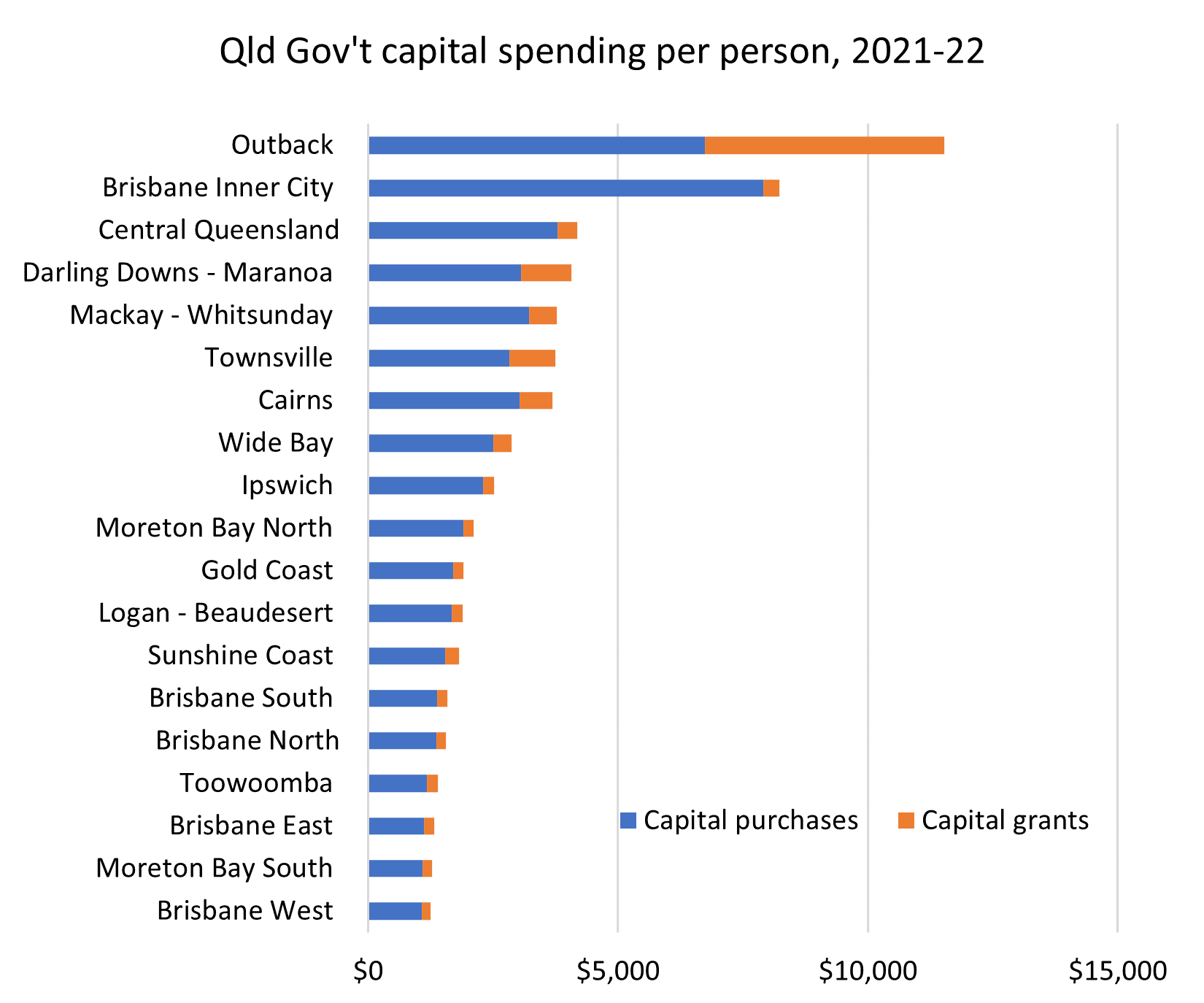
Here’s the latest version of a chart I usually prepare following each state budget on Queensland Government capital spending per person by region (i.e. the ABS SA4 regions). The very high per person spending figure for the Queensland outback is due to it having only 84,000 people in it and having vast distances we need to run roads, pipes, and power lines through. The very high per person CAPEX in Brisbane inner city is due to the dubious Cross River Rail project, which, in fairness, allegedly will benefit areas other than inner Brisbane by improving the efficiency of the rail network. As much as I think Cross River Rail is a waste of money, I must admit the Tunnel Boring Machine (TBM) Tracker is pretty cool, and it looks like they’re making reasonably good progress. I was impressed when I learned that they were tunnelling underneath me when I was walking through the Botanic Gardens a few weeks ago.

A chart showing Queensland Government capital spending per person by region, showing the Queensland outback and Brisbane inner city well ahead of other regions.

In terms of broad regions, I’ve estimated Queensland Government CAPEX per person to be around $2.8k state-wide, $2.95k in the Brisbane City area, $2.3k in SEQ, and $3.8k for the rest of Queensland (i.e. not SEQ). The areas which appear to be missing out the most are those parts of SEQ outside of inner city Brisbane. Estimated Queensland Government CAPEX per person in non-Brisbane SEQ is $1.95k.

Regarding the CAPEX per person estimates, the CAPEX figures are from Queensland Budget Paper 3: Capital Statement 2021-22 and I’ve estimated population figures for 2021-22 based on 2019-20 ABS estimates for SA4 regions and Queensland Budget population growth forecasts for Queensland.

Please feel free to comment below. Alternatively, you can email comments, questions, suggestions, or hot tips to contact@queenslandeconomywatch.com.
Posted in Infrastructure, Queensland Government | Tagged , , , , | Leave a comment

Our slow slide into totalitarianism

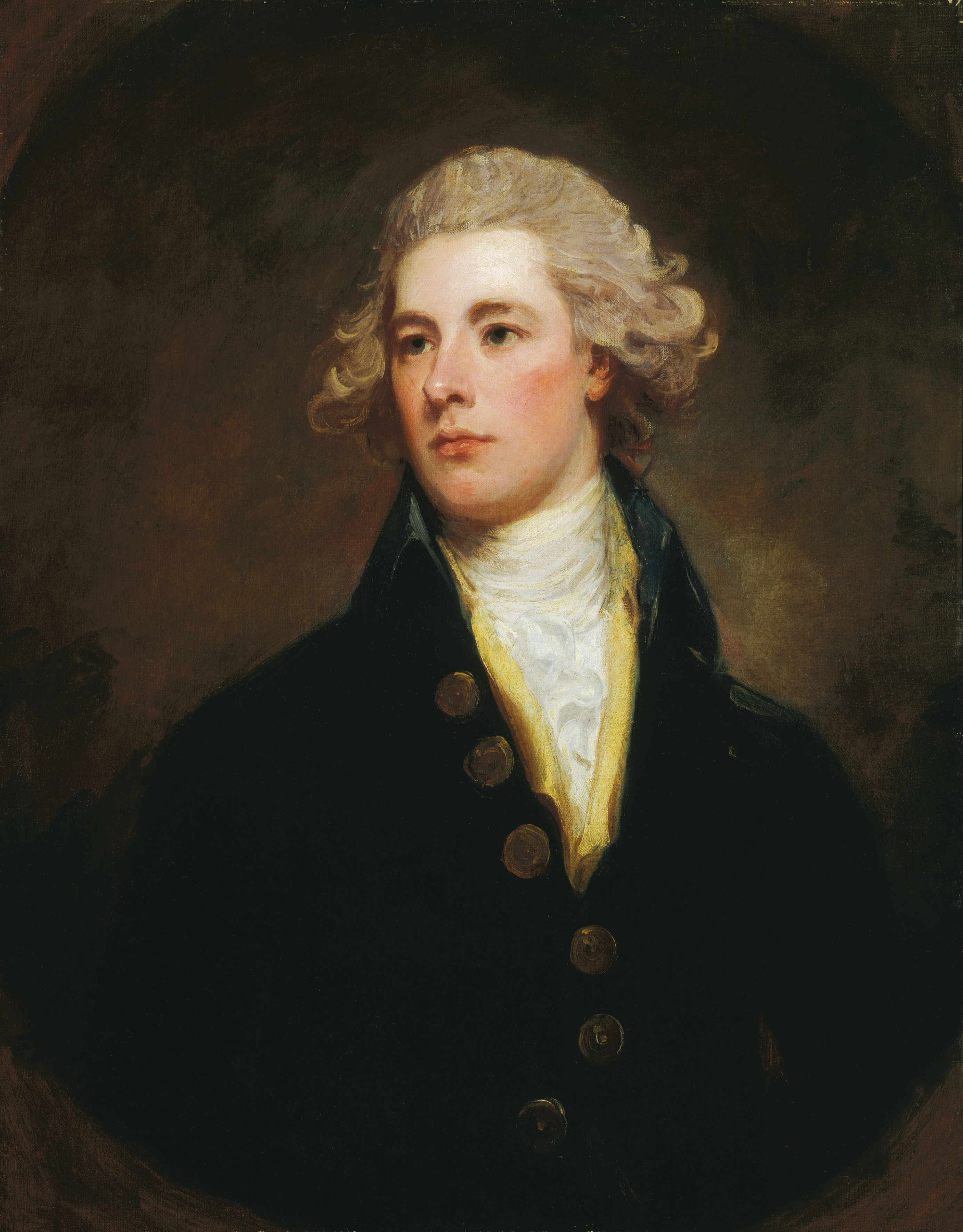
As Brisbane residents wait for news about what seems to be an inevitable lockdown, we ought to recall the words of British statesman William Pitt the Younger (1759-1806):

Necessity is the plea for every infringement of human freedom. It is the argument of tyrants; it is the creed of slaves.

Obviously, COVID-19 is a serious infectious disease, but the measures our governments are implementing to control it are infringing our basic liberties and slowly accommodating the bulk of the population to totalitarianism. By all means, governments should use their powers of persuasion – the Premier has 18 spin doctors after all – to persuade people to wear masks and limit their movements, but please don’t legislate against ordinary behaviour and use the police to enforce draconian restrictions which are causing great social and economic hardship.

A new lockdown seems inevitable. If we don’t do the right thing, the Premier, or rather Chief Health Officer Jeannette Young who may really be the one in charge, will be forced to make us do the right thing, Courier-Mail reporting suggests:

Ms Palaszczuk yesterday said she hoped that Queensland would be spared from “tougher action” by taking the “precautionary measures”.

In the seventies and eighties, street marchers in Brisbane chanted “Queensland Police State”, with some justification. But Special Branch never had access to COVID Check In app data, which Queensland Police are now using according to the Brisbane Times:

Queensland police have used data collected by the Check In Qld app, despite assurances from the state government it would only be used for contact tracing purposes.

Brisbane Times can reveal police accessed check-in details as part of an investigation into the reported theft of an officer’s gun and Taser from a regional pub.

I’m increasingly worried we have leaders with no appreciation of history or philosophy, who don’t appear to realise they are adopting the measures and language of a totalitarian state.

Portrait of William Pitt (1759–1806) by George Romney in 1783.

Please feel free to comment below. Alternatively, you can email comments, questions, suggestions, or hot tips to contact@queenslandeconomywatch.com.

Posted in Brisbane | Tagged , , , | 2 Comments