US libertarian public finance expert Dan Mitchell slams the “global tax cartel” Australia has joined

Last year, Australia signed up to the OECD-led push for a global minimum corporate tax rate of 15%, a measure designed to reduce the profit-shifting to low-tax countries which occurs and disadvantages higher corporate tax rate countries such as Australia, which has a 30% rate (see Josh Frydenberg’s media release G20 endorses global minimum tax rate for details). As a former Treasury man, conscious that we need to pay for an ever-expanding welfare state, my initial impression was the agreement is in Australia’s national interest. As always, I strive to be radically open minded, so I invited arguably the world’s leading opponent of the global minimum tax agreement, renowned US libertarian economist and public finance expert Dr Dan Mitchell, onto my Economics Explored podcast to discuss the deal. Dan calls it a “global tax cartel” which will result in greater tax burdens and less efficient and productive economies in all countries, including Australia, because it reduces the global tax competition that can put downward pressure on tax rates.

Here’s a clip from the video recording of my conversation with Dan in which he explains the “Starve the Beast” strategy associated with US fiscal conservatives since the Reagan administration. Also check out his blog post Yes, Starve the Beast, featuring the clip.

Check out the full conversation by listening via the audio player or the Listen on Google Podcasts badge below. In additional to criticising what he calls the “global tax cartel”, Dan also talks about California’s “economic suicide” which has led to many entrepreneurs and creatives leaving California for lower-tax states such as Texas and Florida. Show notes for the episode can be found in your podcasting app and at the Economics Explored website. It was a great conversation and Dan was in fine form, being on a high after his beloved Georgia Bulldogs triumphed over the Alabama Crimson Tide in the US college football championship game earlier in the week.

Please feel free to comment below. Alternatively, you can email comments, questions, suggestions, or hot tips to contact@queenslandeconomywatch.com. Also please check out my Economics Explored podcast, which has a new episode each week.

Posted in Tax | Tagged , , , , , , , , | Leave a comment

Let’s hope omicron is just a short, sharp shock

Things have worsened quickly with Queensland’s omicron outbreak, and we really hope it is just a “short, sharp” outbreak as many health experts are predicting. The Brisbane Times has reported “University of Sydney infectious diseases expert Robert Booy also forecast the Omicron wave would soar and fall at breakneck speed.” Regarding its economic impact, I expect or rather hope its adverse effect, from suppressed activity in hospitality mainly, is confined to January and early February and it doesn’t detract from the overall economic outlook for 2022, which was reasonably good pre-omicron, as I noted in my post last Thursday, published a couple of hours before I learned Queensland had 10k daily COVID cases. Now the state government is telling people to work from home and to keep school children at home for the first two weeks of school.

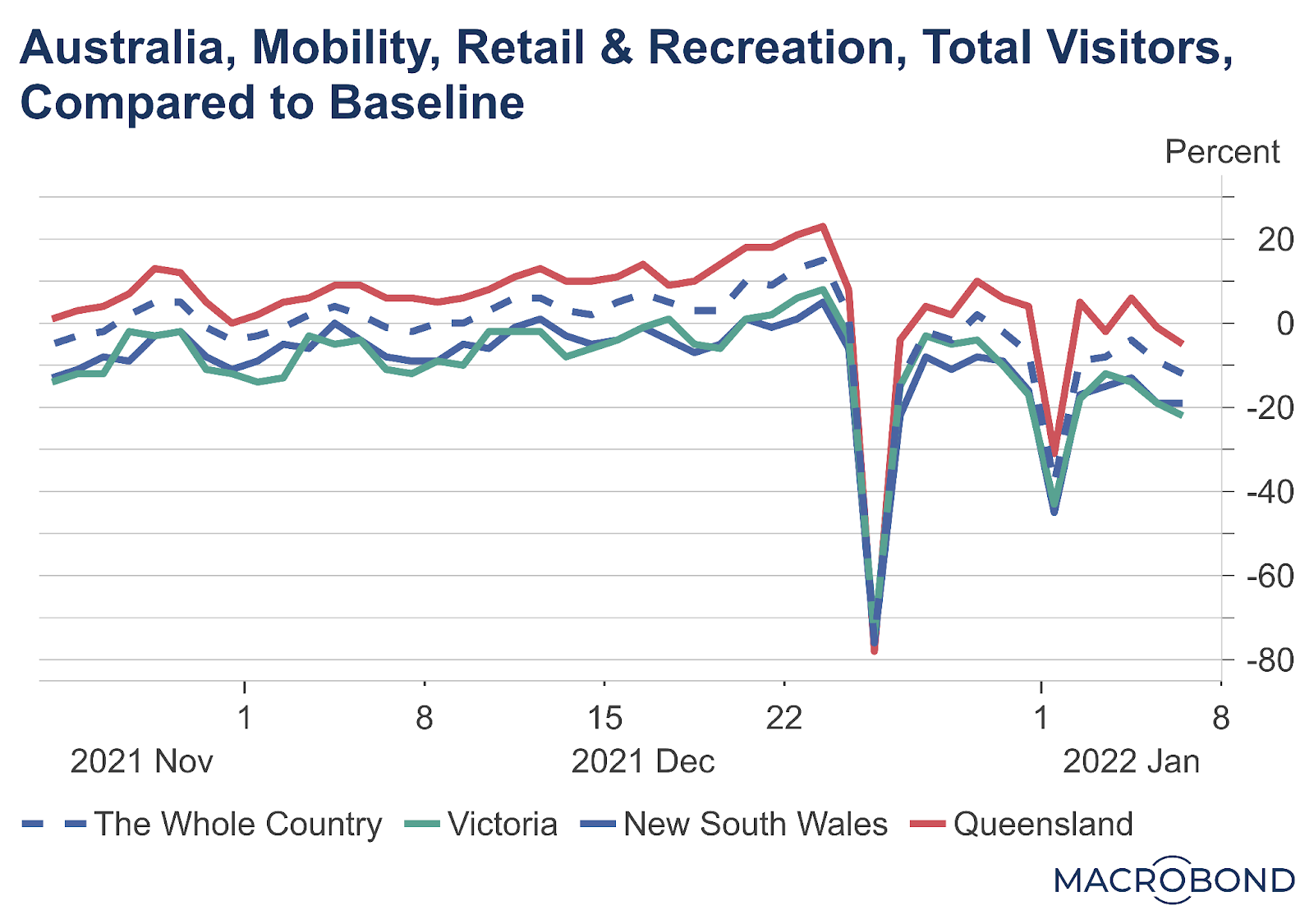
So far, Queenslanders haven’t been limiting our movements, and likely our spending, as much as people in southern states according to Google Mobility data (see chart below which includes data up to Thursday 6 January), but let’s see what happens in coming weeks. No doubt the high COVID case numbers will worry many people and suppress activity, particularly in hospitality, further.  

There is a risk Queensland will see the substantial adverse economic impacts of what is being called a pseudo or virtual lockdown, something which has sharply reduced spending in NSW and Victoria, and, so far, to a lesser extent in Queensland, according to an ANZ Research analysis, which was reported in various places including at news.com.au. I saw somewhere Deloitte Access Economics’ Chris Richardson made a comment along the lines of how we shouldn’t over-interpret one week’s data from an unusual period and I fully concur with that. It may be too soon to tell what’s going on exactly.  

Finally, while nothing is certain and Treasurer Josh Frydenberg has warned the economic recovery is not yet locked in, I’d say it’s reasonably likely the economy will recover quickly from whatever temporary weakness is brought about in the near-term from the pseudo-lockdown, which hopefully will end by early February. After all, pre-omicron leading indicators looked good. Furthermore, the monetary expansion (e.g. a 22% growth in the M3 money supply measure since the end of 2019) associated with the pandemic response means that households and businesses have a substantially higher stock of real money balances and purchasing power, given that inflation has remained relatively low (for now at least).

Please feel free to comment below. Alternatively, you can email comments, questions, suggestions, or hot tips to contact@queenslandeconomywatch.com. Also please check out my Economics Explored podcast, which has a new episode each week.
Posted in Macroeconomy, Retail trade | Tagged , , | 1 Comment

Economists needed to design virtual economy for Splash, metaverse entertainment start-up in Brisbane

Splash, a Fortitude-Valley-headquartered start-up, is looking for two economists to design a virtual economy for its online game in which players create music and perform in virtual venues. Splash’s head of People and Culture reached out to me today to check if I knew anyone who may be interested. Here’s what she wrote about probably the coolest jobs for economists I’ve heard about recently:

…we are hiring two Economists to design and expand our growing virtual economy within Splash across our two games and online virtual marketplace. The positions will focus on user behaviour and satisfaction, pricing strategy and identifying revenue drivers as well as pacing and level up strategy of complex multi-player games. I’ve provided more context about our company below and a link to the job description here.

Our company Splash is building a new creator economy in the Metaverse with our AI-powered music tools and video games. Anyone can perform amazing music to live virtual audiences, build a fan base and earn from their talent. Over 8m players have performed in Splash and we are backed by world leading investors including Amazon’s Alexa Fund. 

We feel someone with a passion for gaming would really thrive in this role and it would be a great opportunity to step into the rapidly growing games industry. We would be open to range of experience including economists that bring a strong amount of commercial experience as well as honours/masters students.

Please pass this onto anyone who may be interested, or, if you’re interested yourself, I’d encourage you to apply via the LinkedIn page for the job linked to above. 

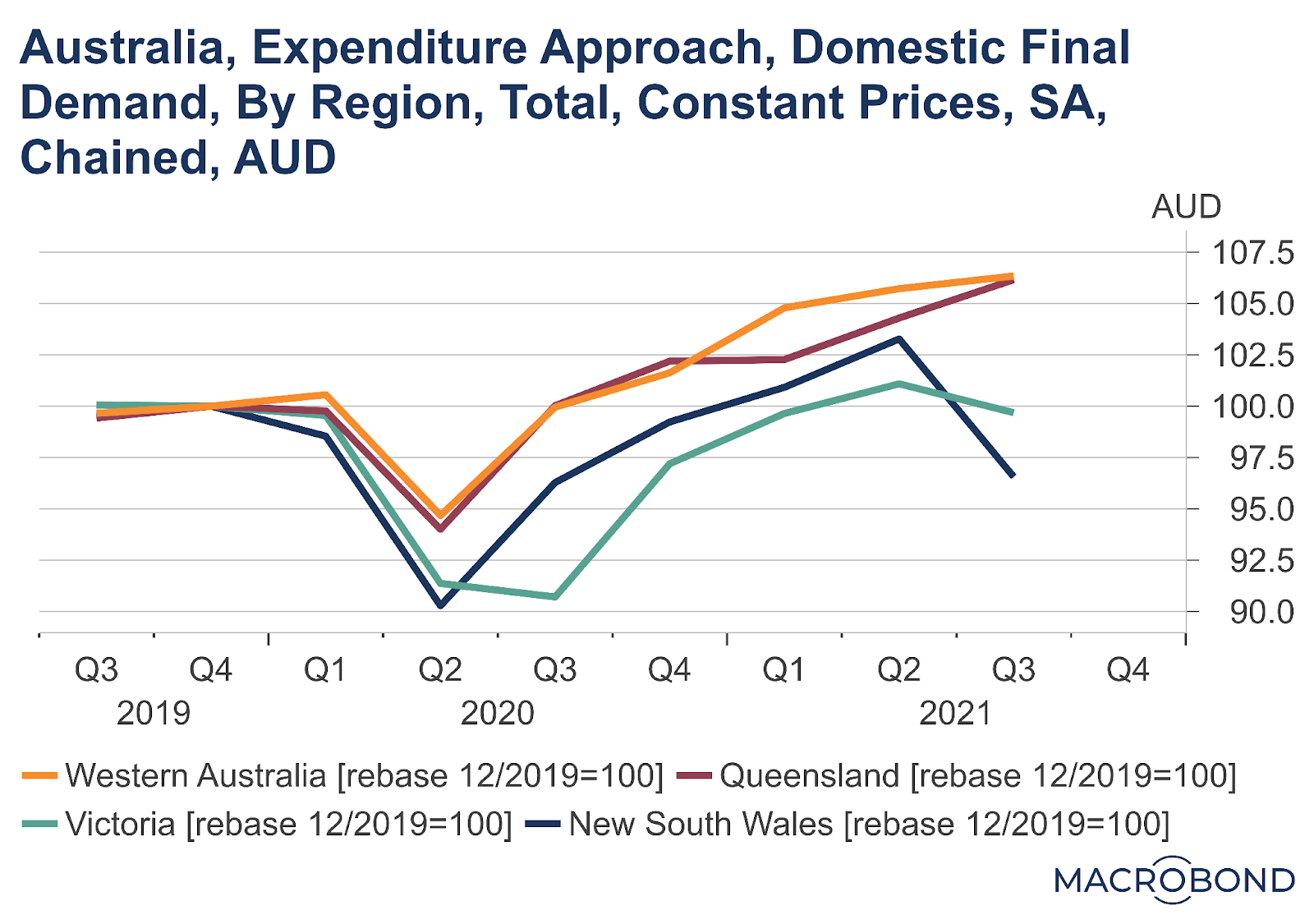
Brisbane’s Fortitude Valley is becoming a hub for startups. 

Please feel free to comment below. Alternatively, you can email comments, questions, suggestions, or hot tips to contact@queenslandeconomywatch.com. Also please check out my Economics Explored podcast, which has a new episode each week.
Posted in Labour market | Tagged , , , , , , | Leave a comment

Qld Economic Outlook for 2022

Prior to the omicron outbreak, I was very confident about the Queensland economic outlook for 2022. I’m still reasonably confident that the state economy will perform well over 2022, but nothing is certain of course. There’s been a bit of worrying news in recent days about hospitality venue closures and shortages of products in supermarkets. Hopefully, those issues are resolved and are only temporary. So much depends on the COVID response, and so far this year the Queensland Government has botched it, alas, with a lack of COVID testing capacity. But let’s assume we get through this COVID wave without a catastrophe that sees people retreat back to their homes and businesses shut down for an extended period. 

For my first post of 2022, I’ll run through the state of play for the Queensland economy and what some of the important leading indicators are saying.  

State of play

The most recent ABS National Accounts data were for the September quarter, in which Queensland obviously performed very well compared with the other major states, NSW and Victoria, which were locked down for extended periods that quarter. As the Queensland Mid Year Fiscal and Economic Review proclaimed, state final demand in Queensland was 6.4% up on its pre-COVID level, compared with only a 1% improvement for Australia as a whole, which was dragged down by negative results in NSW and Victoria (see chart below). 

So Queensland has recovered very nicely from the initial COVID downturn in the first half of 2020. I should note disproportionate contributions to that recovery have been made by government spending and capital investment in renewable energy, as I pointed out in a post last month (Gov’t and renewables making disproportionate contributions to demand growth in Qld). 

Continue reading
Posted in Labour market, Macroeconomy, Mining | Tagged , , , , , , , , | 2 Comments

Poorly thought out regulations for Qld reopening

With its poorly thought out regulations surrounding Queensland’s reopening, the state government is providing lots of instructive examples of adverse unintended consequences of regulations. Among other problems, we have had:

  • overstretched COVID testing centres, here and in other states, although thankfully the Government has now scrapped the fifth day PCR test requirement for visitors here, which should reduce the load in Queensland at least*; and
  • several hospitality businesses having to close during this usually busy time for them due to staff members going into isolation after being identified as contacts of COVID cases, a problem which is expected to worsen as COVID numbers increase (e.g. see today’s Courier-Mail report ‘Be more sensible’: Hospitality industry just ‘days away’ from crippling staff shortages). 

As usual, the Queensland Government has been defensive, with the Premier saying the other day no one could have expected 400,000 people would have wanted to come into Queensland after the borders reopened. This makes me wonder just how many people the Government did expect? Did it get any advice on this from its Treasury or tourism department? The state government would have dozens, if not hundreds of public servants, who could have had a decent go at providing such advice.

The Government obviously hasn’t been doing the back office work in planning for the reopening that it should have been doing. In my view, the underlying problem is that we’ve seen policy on the run, the Government making it up as it goes along, and an abandonment of traditional policy process which, while not always delivering great results, did at least largely prevent governments from doing stupid things. 

Alas, the state government has not been listening to public policy experts who’ve been calling for a restoration of sound policy processes since the middle of last year. In their July 2020 Menzies Research Centre paper Getting Australia Safely Back to Work, Henry Ergas and Joe Branigan wrote:

The worst having been avoided, normal policy evaluation rules should apply…

…Given the significantly reduced health risk from COVID-19, the use of ‘Ministerial Direction’ should cease immediately.

Previous orders should be re-assessed and revoked within a specified timeframe. At the same time, any restrictions that remain in place should be fully subject to the regulation review process, including, where appropriate, through Post-Implementation Reviews.

In September, the state government extended the CHO’s emergency powers to cover the first three months of 2022. Policy is still being made without proper consideration by the broader public service, Cabinet, and the Parliament. One result of this is that we are seeing such poorly thought out regulations which end up having adverse unintended consequences.

The sharp and often unexpected changes we’ve experienced in COVID regulations in Queensland have reminded me of the Green Lantern coaster at Movie World on the Gold Coast. But at least the Green Lantern ride was over in a bit over a minute. Unfortunately, we have at least a few more months left of Queensland’s current COVID emergency policy regime, a regime which is producing some poorly thought out regulations.

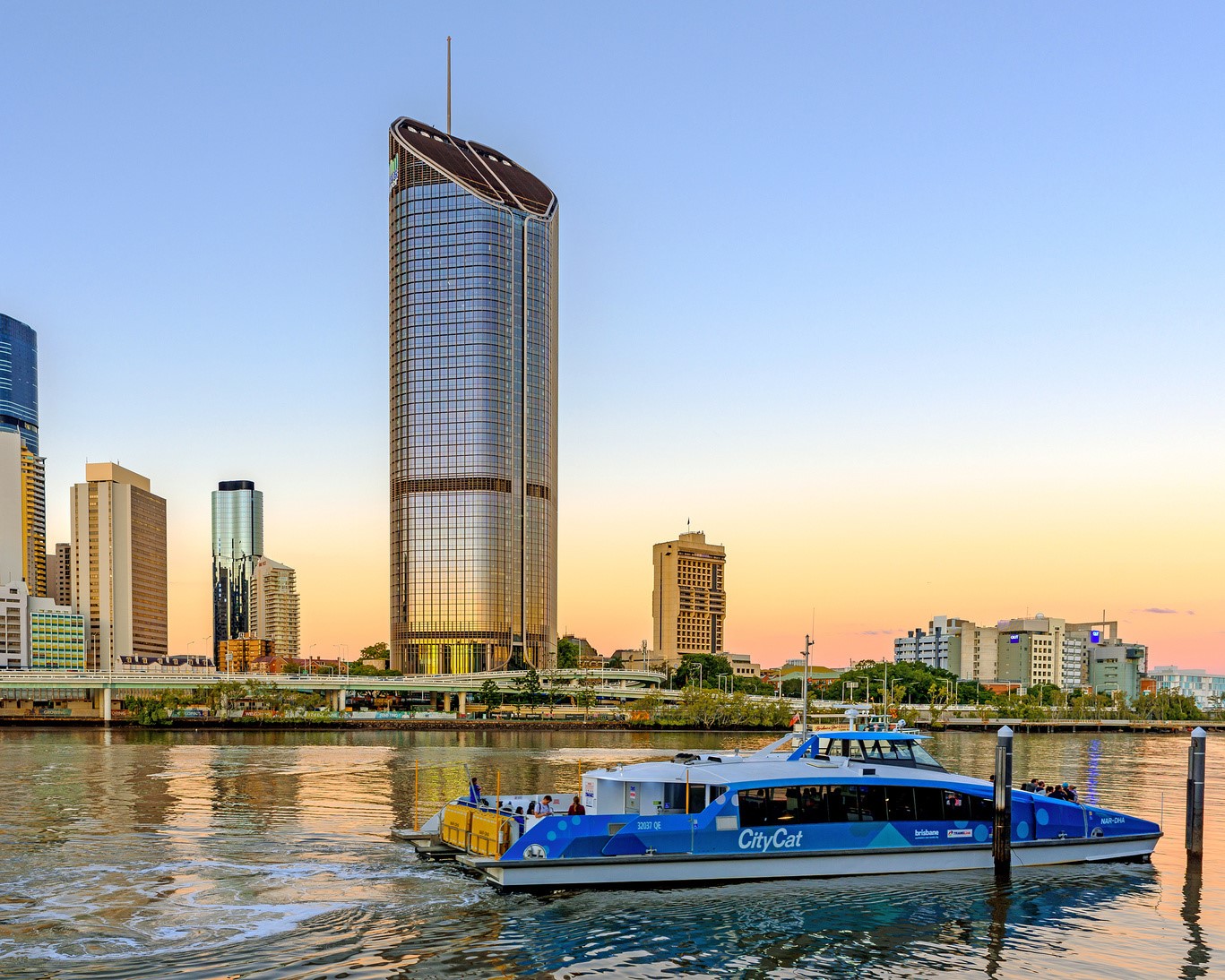
1 William St, the Queensland Government “Tower of Power”.

*While I was drafting this post, the Premier announced the COVID testing requirement will be scrapped for interstate visitors from hotspots from 1 January. So good news there, but why did we have such an unworkable rule in the first place?

Please feel free to comment below. Alternatively, you can email comments, questions, suggestions, or hot tips to contact@queenslandeconomywatch.com. Also please check out my Economics Explored podcast, which has a new episode each week.
Posted in Queensland Government | Tagged , , , , | 2 Comments

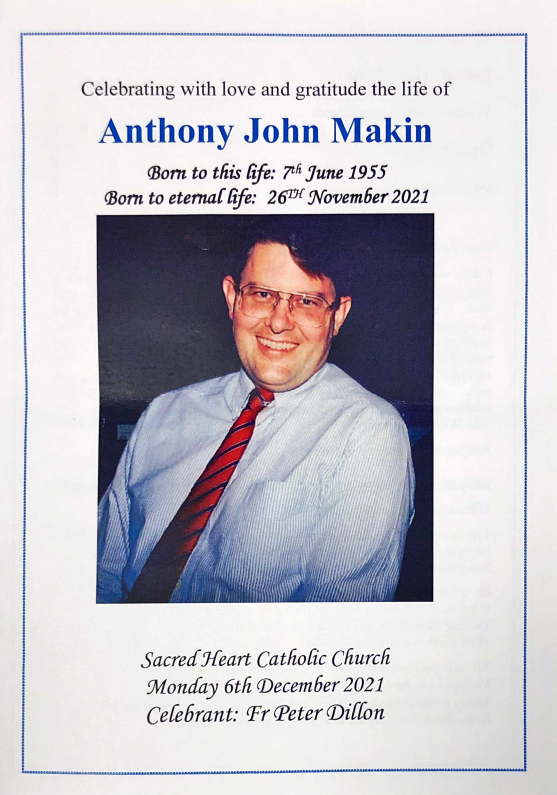
Remembering Tony Makin with ex-Ambassador to OECD Alex Robson

Late last month we lost a great Australian economist, Professor Tony Makin of Griffith University. Episode 119 of my podcast explores Tony’s contributions to the Australian macroeconomic policy debate, particularly his studies and opinion pieces on fiscal stimulus and before that the current account, once the subject of great concern among policy makers in Australia. I spoke about Tony with one of his co-authors and former students, Dr Alex Robson, an Associate Partner at EY, and a former Australian Ambassador to the OECD and former chief economic adviser to the Prime Minister.

Check out the show notes via the link above to find links to the articles Alex and I discuss in the episode.

Please feel free to comment below. Alternatively, you can email comments, questions, suggestions, or hot tips to contact@queenslandeconomywatch.com. Also please check out my Economics Explored podcast, which has a new episode each week.
Posted in Macroeconomy | Leave a comment

Sunny Coast booming | Qld must remain open for business petition

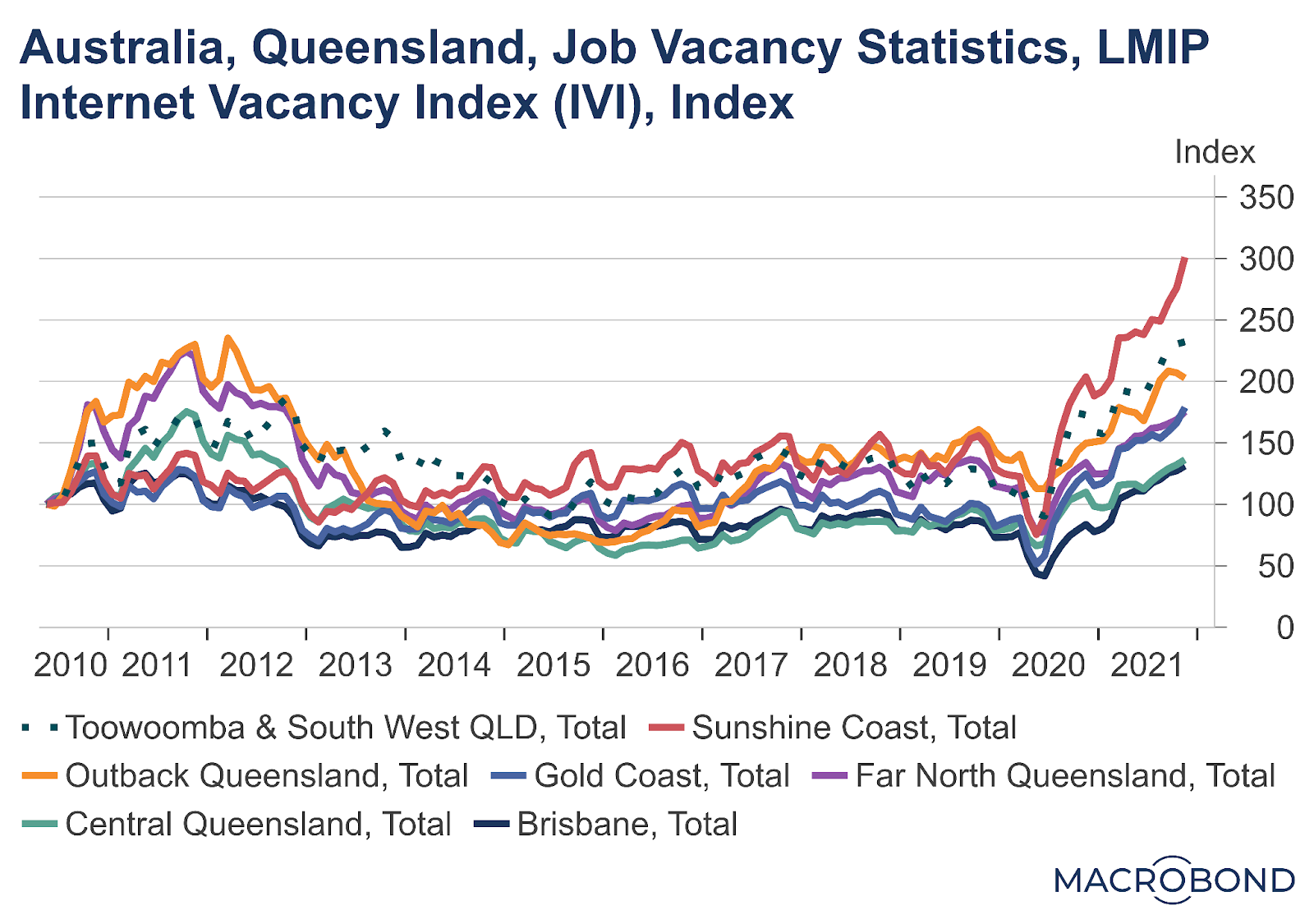
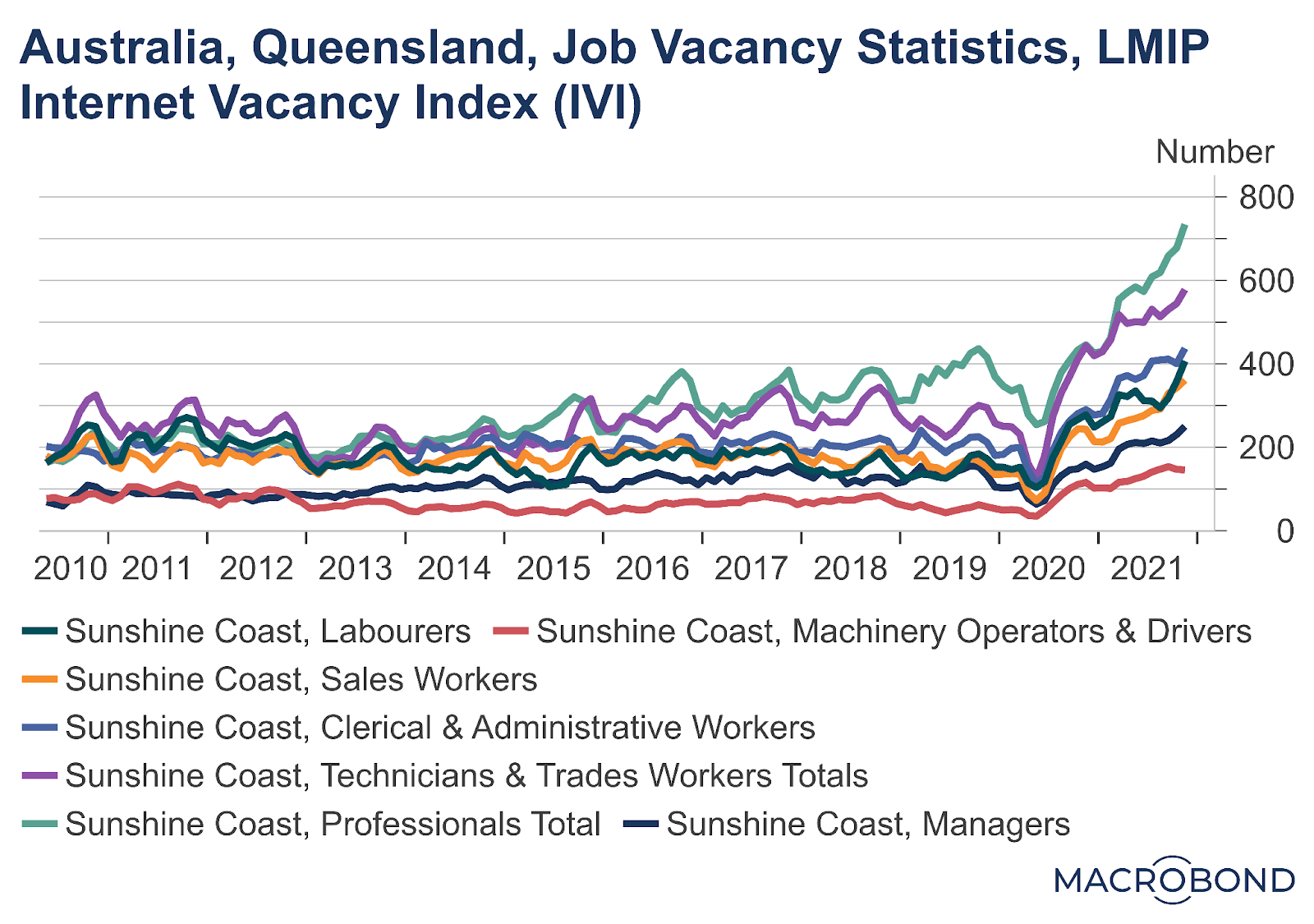
Relative to pre-COVID levels, while all Queensland regions have much higher job vacancies, it is the Sunshine Coast that is well in the lead, according to the National Skills Commission’s internet vacancies data for November 2021, published yesterday (see chart below).* The region is experiencing 2.5-3.5k vacancies at any one time compared with 1-2k vacancies pre-pandemic. The Sunshine Coast has no doubt been benefiting from both interstate and intrastate migration as people opt for a Sea Change. Also I should note there is a major project underway to redevelop the Maroochydore CBD (see Development continues apace at Maroochydore’s new city centre). I’ll aim to explore the drivers of the Sunshine Coast’s strong labour market in a future post very soon.     

By the way, the Sunshine Coast’s job vacancies aren’t all in hospitality (which falls in the Technicians & Trade Workers category for some reason), but, as in many other regions, the category with the largest number of vacancies is Professionals (see chart below). 

Finally, if you haven’t done so yet, please consider signing the Queensland MUST remain open for Business petition. Here’s an excerpt from the blurb for information and for the record:

The introduction of draconian rules now restricting all Queenslanders once again are impacting us more greatly than ever before, with businesses being forced to close when classed ‘close contact’. Matt Sinclair of Sum Yung Guys fame has been forced to close his restaurant and send his fully vaccinated team home without work at Christmas, all for what? Delaying the inevitable?! COVID is coming to Queensland, no doubt. This is why we are vaccinated, now lets move on with business as usual. No more contact tracing. No more restrictions, I demand Sum Yung Guys and all businesses affected now be reopened immediately. Please sign and share asap thank you, I will be forwarding to all members of Qld Government and representing industry bodies as soon as I have significant support via this petition.

This is a very worthwhile petition in my view, and I was happy to sign it.

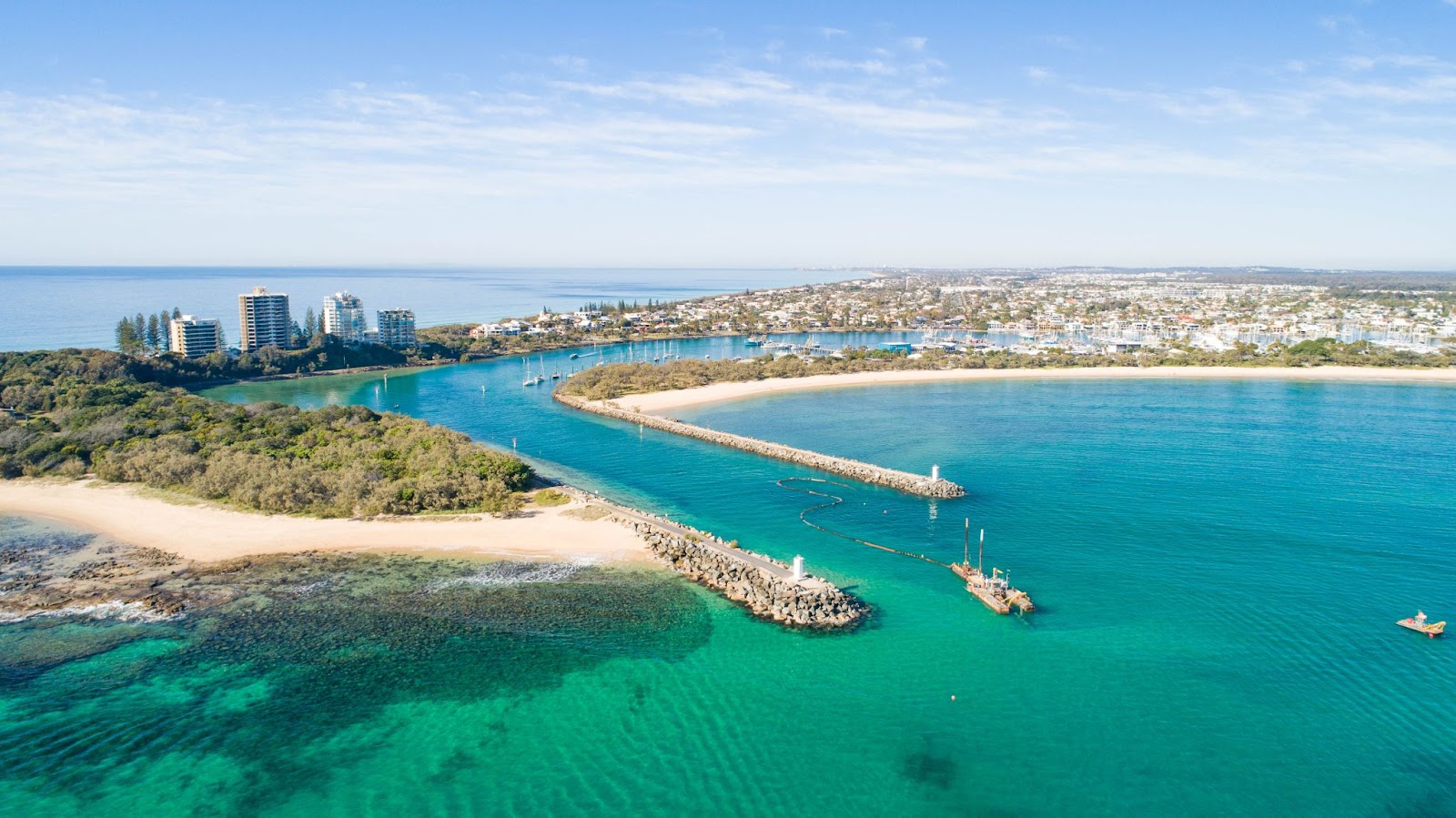
Mooloolaba, Sunshine Coast, Queensland, Australia.

*For clarity, I’m talking about how regions are performing relative to their pre-pandemic levels. In absolute terms there are many more job vacancies in Brisbane (29k) and some other regions than on the Sunshine Coast.

Please feel free to comment below. Alternatively, you can email comments, questions, suggestions, or hot tips to contact@queenslandeconomywatch.com. Also please check out my Economics Explored podcast, which has a new episode each week.
Posted in Labour market, Macroeconomy | Tagged , , , , , , , , | 2 Comments

One in every one thousand people in Qld in quarantine with more to come given sharply rising COVID numbers

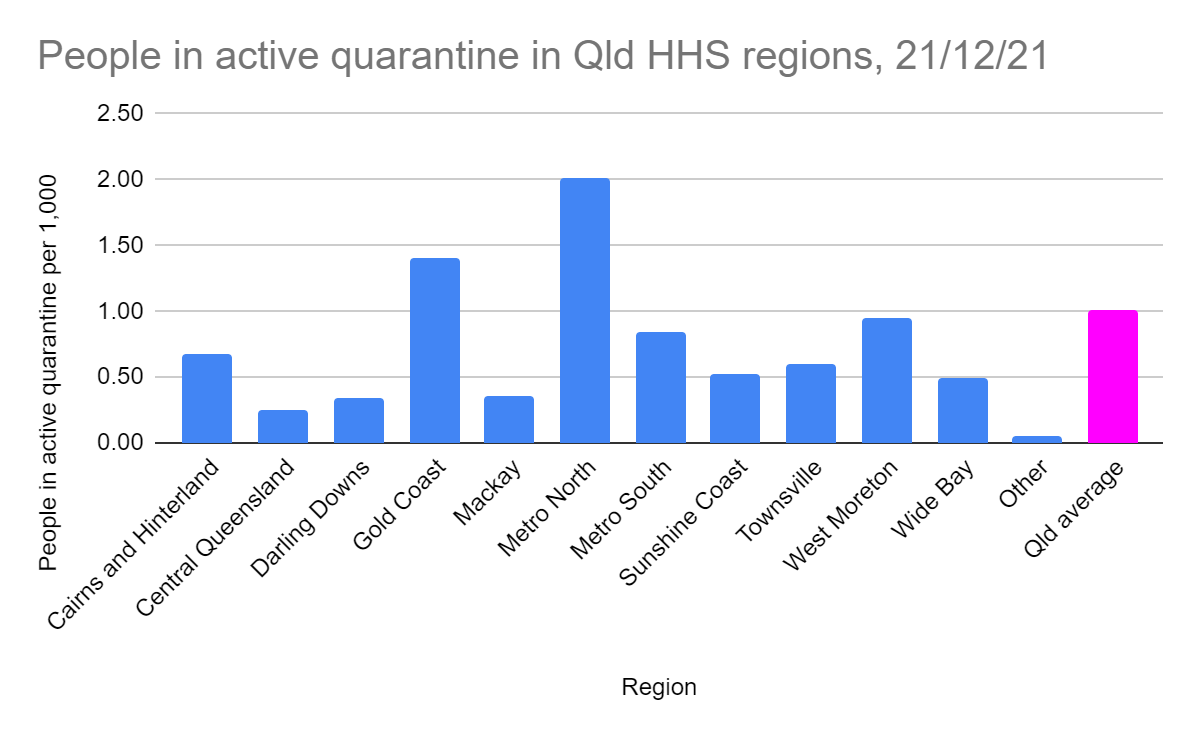
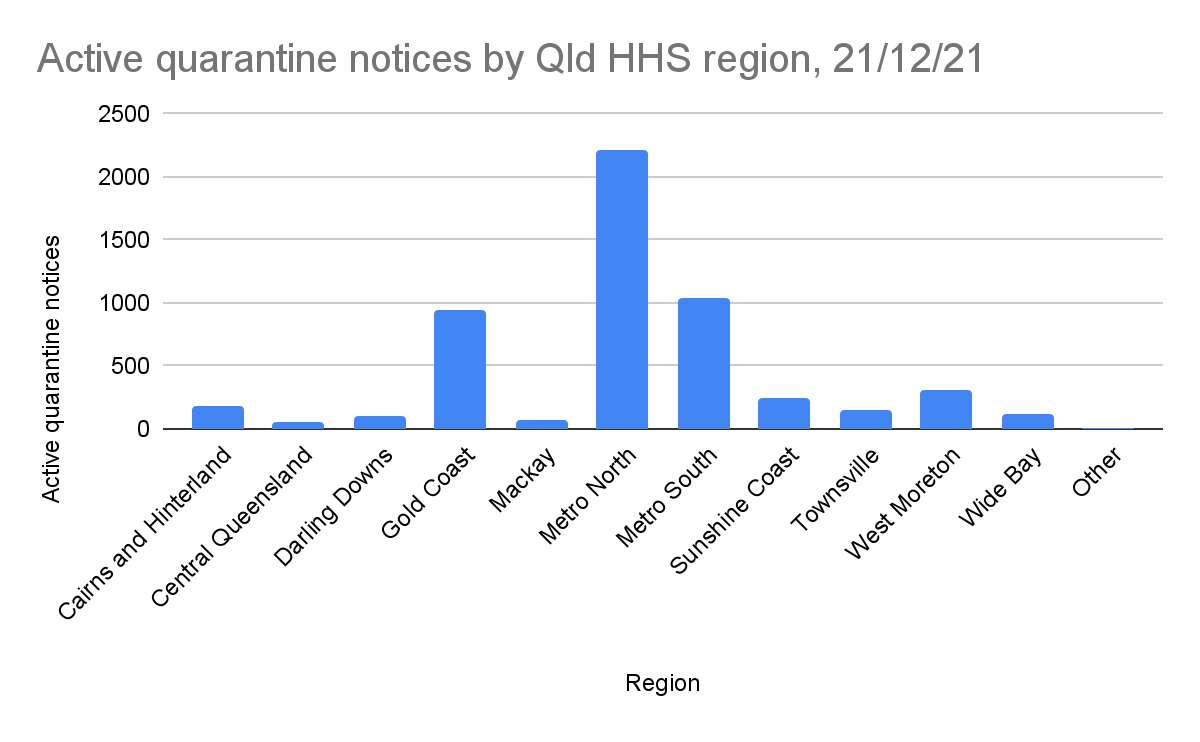
According to the Courier-Mail, over 5,400 people, or around one in every one thousand people in Queensland are in active quarantine, mostly because they’re close contacts of COVID cases (see the charts below with data for the Queensland Hospital and Health Service regions). I expect the number in active quarantine will increase substantially over the next few weeks, given our rapidly rising COVID case numbers. We will no doubt start to see short-staffed businesses as quarantined people are unable to turn up to work. Note the figures for Metro North in the charts below are most likely abnormally high due to the region including Brisbane CBD and Spring Hill, where a lot of quarantine hotels are located. 

Source: Qld Health data published by the Courier-Mail.

It didn’t take long for Queensland to record triple-digit COVID cases as we did today with 186 new cases, and we’ll probably be looking at daily cases of 1,000+ in a week or so, I guess. So far the Queensland Government appears to be keeping calm, but there’s much suspicion in the community that the Government will go further than re-imposing a mask mandate – i.e. possibly even a lockdown to “flatten the curve” – not long after Christmas. Let’s hope it remains calm, because tourism and hospitality businesses are counting on a strong Summer season. Anecdotal reports are that Gold Coast and Sunshine Coast accommodation bookings are very strong, partly because they benefit from the drive-in market from Brisbane, but the difficulties in traveling interstate (i.e. the PCR test requirement which hopefully will be relaxed) mean that North Queensland destinations may not experience as strong a season as they’d like. 

Source: Qld Health data published by the Courier-Mail. Incidence rates were calculated by adjusting HHS population estimates for 2019 to reflect Qld Treasury’s current population estimate boosted by 100k to account for additional people from interstate in the lead up to Christmas. 

The big unknown, with huge implications for policy, is how our public hospital system, which was already feeling the strain before the border re-opened, will cope with sharply rising cases which will surely bring sharply rising hospitalisations, even though at a lower number than if we didn’t have the vaccine coverage we do. I should note that Queensland’s vaccination coverage could be a bit higher, as at 85% double-vaxxed it’s third lowest among the states and territories, with Queensland only beating NT and the remote hermit kingdom of WA (see COVID-19 vaccine rollout update – 21 December 2021). Could we have done better if our former CHO, now Governor, hadn’t raised doubts about the safety of AstraZeneca earlier this year? Hard to say. But once we’re out of this pandemic, we need to examine government policy advice and decision making during the pandemic with a highly critical eye. Too many people have suffered from cruel and inconsistent government policies and those in power should be held accountable. 

Please feel free to comment below. Alternatively, you can email comments, questions, suggestions, or hot tips to contact@queenslandeconomywatch.com. Also please check out my Economics Explored podcast, which has a new episode each week.
Posted in Health, Macroeconomy, Tourism | Tagged , , , | Leave a comment

Optimism at home, big inflation concerns abroad – catch up with my livestream at 11.30am AEST

While Australian economic policy makers are forecasting a growing economy with moderate inflation, policy makers elsewhere are concerned about accelerating inflation. In the federal budget update released yesterday, the Treasury has forecast a growing economy with inflation within the RBA’s 2-3% target band over the next three years. The RBA is signalling it won’t increase the cash rate next year (Reserve Bank of Australia insists economic conditions ‘still a fair way’ from an official interest rate hike), but there’s always the possibility it could be forced to, if inflation accelerates further than policy makers are expecting.

Elsewhere, the Bank of England has finally increased Bank Rate from 0.1% to 0.25%, after inflation increased to a ten-year high of 5.1% (see Interest rates rise for first time in three years). And the US Federal Reserve has had what the Financial Times has described as a “hawkish pivot on inflation”, and it has signalled three interest rate increases next year. Also, somewhat bizarrely, Turkey is increasing its minimum wage 50% in response to an inflation rate of over 20%, a move which many economists have criticised as potentially contributing to an inflationary spiral. I’ll cover all these developments in my livestream later today (link below).

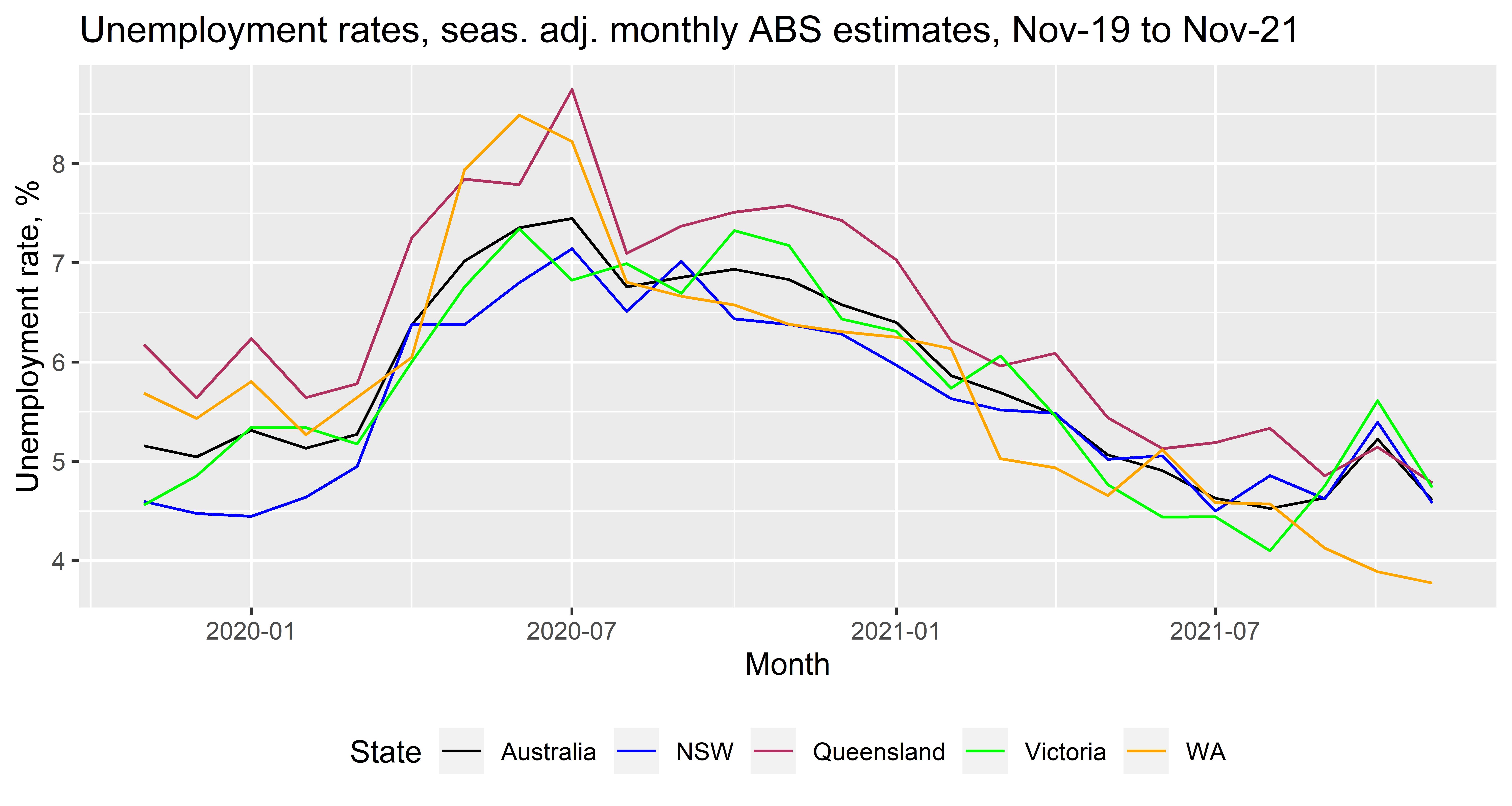
In Australia, the budget updates from the federal and state government yesterday reflected the general optimism about the domestic economy as we approach 2022. The November labour force numbers published yesterday by the ABS were extraordinary, with unemployment below 5% in all the states except Tasmania (where it was just over 5%) and below 4% in WA (see chart below). This is probably related to immigration not adding to labour supply during the pandemic. Once immigration resumes to near previous levels we may no longer be seeing unemployment rates with a 4 in front of them.

Unemployment rates in the major Australian states are below 5%, while WA is below 4%.

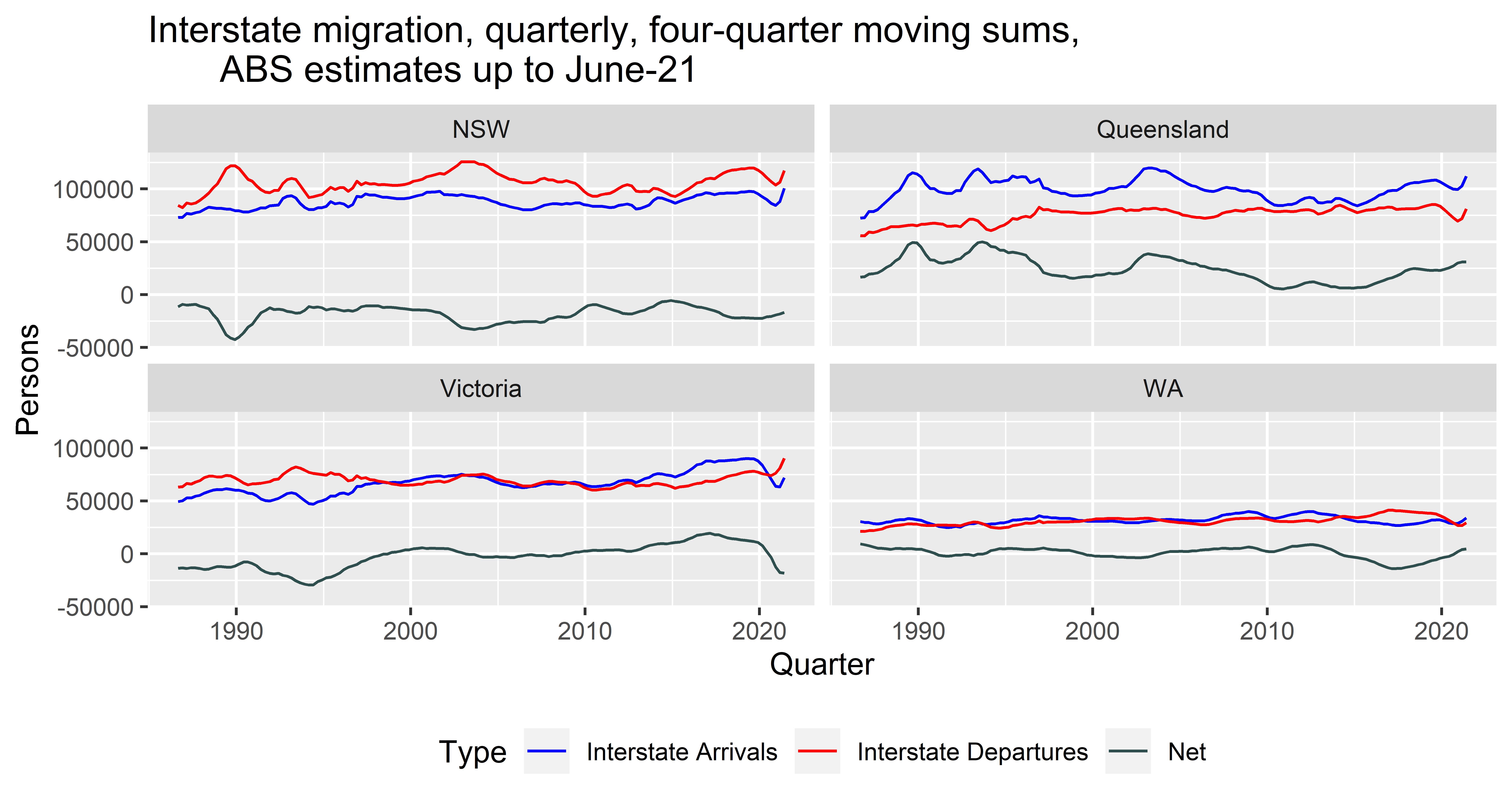
Yesterday, the ABS also published updated interstate migration data, confirming just how many people have relocated to Queensland during the pandemic, nearly 31,000 in the 2020-21 financial year. With interstate borders reopen, I suspect we’ll see strong interstate migration next year as more people flee from Sydney and Melbourne. Of course, COVID is coming to Queensland, so maybe we won’t look so good in a few months time. As always, the future is highly uncertain.

Queensland is gaining over 30k people from interstate each year, while NSW and Victoria are losing 17k and 18k respectively.

Please feel free to comment below. Alternatively, you can email comments, questions, suggestions, or hot tips to contact@queenslandeconomywatch.com. Also please check out my Economics Explored podcast, which has a new episode each week.
Posted in Budget, Macroeconomy | Tagged , , , , , , , , , , | Leave a comment

Coal the dirty secret behind Qld budget improvement

The super high coal price is the main reason Queensland Treasurer Cameron Dick will report a much improved state budget balance this week. However, yesterday the Brisbane Times reported:

Mr Dick said the silver lining of the pandemic was an increase in employment and a lower deficit of $937 million – the result of Queensland’s COVID response that allowed businesses to stay open.


But the state Treasury was never assuming in its budget forecasts we’d have prolonged lockdowns in Queensland, so the budget improvement can’t be due to our COVID response, which was already factored into the numbers. Instead, the budget improvement, which I take it is a reduction of the 2021-22 net operating deficit from $3.49 billion to $937 million, a $2.5 billion improvement, must largely be due to the super high coal price, a result of global economic recovery from the 2020 COVID recession and a global gas shortage (noting coal can be a substitute for gas in energy generation). I covered this on QEW a few months ago (e.g. Super high coal prices will boost royalties and slow the increase in Qld state debt). To keep you up to date, here’s the latest coking coal price chart, showing current month and 12-months ahead futures prices, which signal that coal prices are still much better than state Treasury expected.

Super high coking coal prices will slow the growth of Queensland state debt.

For 2021-22, Queensland Treasury assumed an average price for hard coking coal of 130 USD/tonne (see p. 253 of Budget Paper 2), while it’s ended up selling for 300-400 USD/tonne for the last few months. As Treasury notes (on p. 253 of Budget Paper 2):

A one per cent variation in the average price of export coal would lead to a change in royalty revenue of approximately $33 million.

I won’t do a back-of-the-envelope calculation because I’d need to consider the thermal coal price as well, but it’s pretty obvious coal price increases of the magnitude we’ve seen mean billions of extra dollars for the Treasury, and we should learn the Treasury’s precise estimates this week when the mid-year budget update is released.

Finally, I should observe that, today, Queensland’s cruel and shameful interstate border restrictions come to an end. It’s about time. It’s good news for the state economy, especially for our tourism operators, and let’s hope the state government holds it nerve as COVID cases climb, and we don’t see costly restrictions re-imposed.

Please feel free to comment below. Alternatively, you can email comments, questions, suggestions, or hot tips to contact@queenslandeconomywatch.com. Also please check out my Economics Explored podcast, which has a new episode each week.
Posted in Budget | Tagged , , , , , , | Leave a comment