Regulations rushed through in Qld, as revealed by QPC Annual Report 2019-20

The Queensland Productivity Commission’s 2019-20 Annual Report has revealed a huge increase in the number of state government regulatory changes which have been excluded from the rigour of the normal regulatory assessment process (see chart below, which is based on eyeballing Figure 1.3 on p. 15 of the QPC’s Annual Report). This process usually involves the preparation of a Regulatory Impact Statement (RIS) and public consultation. Note that PIA stands for Preliminary Impact Assessment, a much less rigorous review than a RIS, and PIR stands for Post-Implementation Review.
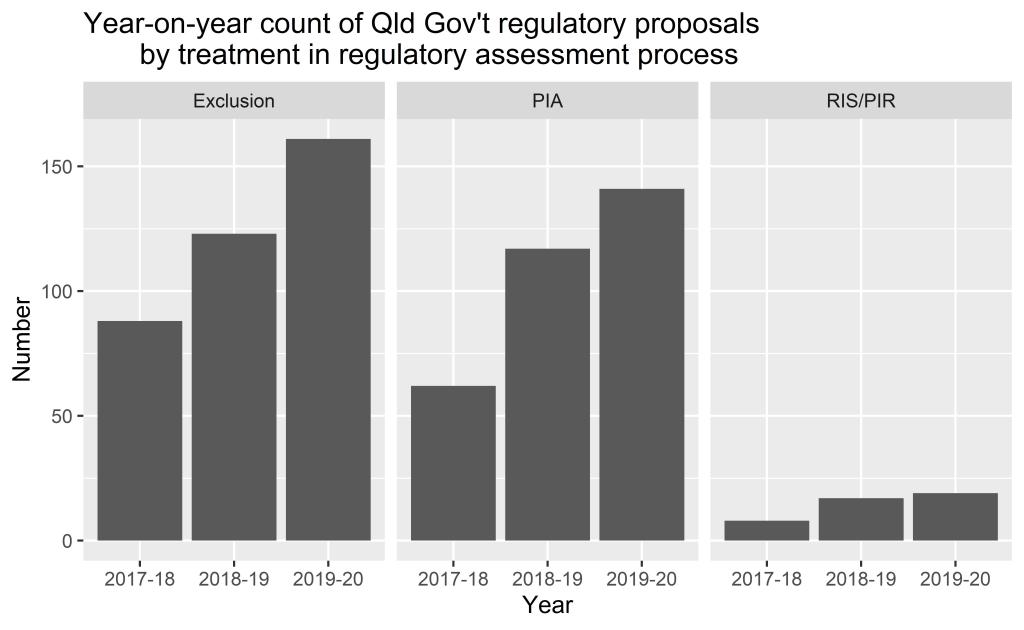
The number of proposals being excluded from the rigorous review process (because they are self-assessed by agencies as being minor) has grown by around 80% since 2017-18.* The number of proposals being subject to a PIA (i.e. a less rigorous review) has more than doubled since 2017-18, signalling a huge growth in red tape, and it appears only a fraction of regulations going through a PIA end up going through the full RIS process. Note that the huge growth in regulatory proposals started before COVID, with a big jump in 2018-19.

While the number of proposals undergoing a full RIS or PIA has more than doubled since 2017-18, that largely reflects the huge growth in regulatory proposals being advanced by Queensland Government agencies, and it’s still a relatively small number of proposals being fully assessed.

Overall, my reading of the data is that Queensland Government agencies have been over-active in creating new regulations over the last few years. It’s likely many of those regulations are unnecessary or poorly designed.

Incidentally, Joe Branigan and I commented on the upcoming transfer of the QPC into Queensland Treasury in our Queensland Budget update report prepared for the Australian Institute for Progress:

It is also disappointing that, at a time when high-quality independent economic policy advice is required more than ever before, the Queensland Productivity Commission…has been also absorbed back into Queensland Treasury.

I trust the Government will still release information on the number of proposals going through (or not going through) the RIS process after the QPC is moved into the Treasury.

For more on regulation, check out my recently published CIS Policy Paper Rationalising Regulation.

*Since I originally posted this, and following a look at previous QPC Annual Reports, it appears the number of exclusions is only for those regulatory changes the agencies submit to the QPC to get ticked off as exclusions. It looks like there may be a larger number of self-assessed minor changes that are simply logged by the agencies and do not require the tick of approval for an exclusion from the QPC. Unfortunately, the data are not presented in a very clear way.

Posted in Queensland Government | Tagged , , , , , , | Leave a comment

The Precautionary Principle and COVID-19 – podcast conversation with Joe Branigan

The Precautionary Principle, which recommends an extreme “safety first” approach, is being used to justify the closure of state borders in Australia to deal with COVID-19. For instance, Justice Rangiah explicitly referred to a “precautionary approach” in his decision against Clive Palmer over the WA border closure:

In view of the uncertainties involved in determining the probability that COVID-19 would be imported into Western Australia from elsewhere in Australia, and the potentially serious consequences if it were imported, a precautionary approach should be taken to decision-making about the measures required for the protection of the community.

But should the Precautionary Principle, which many argue is relevant to dealing with climate change, be extended to COVID-19? I consider this question with my good friend and former Treasury colleague Joe Branigan, Director of Tulipwood Economics, in my latest podcast episode.

We conclude that the Precautionary Principle shouldn’t be used in formulating policy recommendations regarding COVID-19, and we should stick with cost-benefit analysis. Toward the end of the episode, I quote Obama’s regulation czar Cass Sunstein from his book The Cost-benefit Revolution (p. 173) on the big problem with the Precautionary Principle:

…there is a serious, even devastating problem with the Precautionary Principle, at least in its crudest forms: risks are on all sides of social situations and efforts to reduce risks can themselves create risks.

Regarding the response to COVID-19, we are starting to see the adverse consequences from impacts on mental health, reduced cancer screenings, and lower heart attack and stroke presentations, which have been very noticeable in Victoria (check out the ABC News article linked to below). And, of course, there has been the massive adverse economic shock as well. The Precautionary Principle does not help us develop a rational policy response to COVID-19, as Joe and I discuss in the podcast episode. Please check it out and let us know what you think.

Links relevant to the conversation include:

The precautionary principle should not be used as a basis for decision-making

John Quiggin on Complexity, Climate Change and the Precautionary Principle

The Cost-benefit Revolution

COVID19: Getting Australia Safely Back to Work

Cancer screening, heart attack and stroke presentations down in Victoria during coronavirus pandemic

The silent death toll of COVID-19 revealed: Huge 25 per cent jump in suicides each year

Posted in Uncategorized | Tagged , , , , , , , , | 3 Comments

Gov’t claims police boost “fully funded”, but won’t release full budget forward estimates

Earlier today, in announcing a huge boost to police staffing, expected to cost $624 million over five years, Queensland Police Minister Mark Ryan commented (in the media release Palaszczuk Government to deliver an extra 2,025 police personnel):

“Unlike the commitments made by the Newman Government and the current LNP State Opposition, the additional police personnel and the associated resources to support these positions are fully funded by the Palaszczuk Government”.

The Minister makes a fair point about the Opposition’s unfunded commitments, but it’s pretty rich for a current Queensland Government Minister to deliver a sermon on financial accountability. The Government hasn’t released a full budget since June last year, and its 40-page COVID-19 update didn’t contain any forward estimates beyond the current financial year, breaking well-established practice which would have seen estimates produced out to 2023-24 (for further info, check out my conversation with 612 ABC Brisbane’s Steve Austin).

So how can the Government confidently claim its additional $624 million over five years for additional police is “fully funded”, when it can’t, or rather won’t, tell us what it expects the state of the budget to be over the next few years? As I told Steve Austin the day after the Government released its woefully inadequate COVID-19 Fiscal and Economic Review, the Treasury should be able to provide a range, with lower and upper bounds, for expected budget outcomes. This is something Joe Branigan and I have tried to do in a paper we’ve written for the Australian Institute for Progress:

Queensland Budget Update report

It’s pretty clear that, due to the huge adverse economic shock from COVID-19 and the economic response, the state government will run large deficits for several years and total state debt will climb further, probably to somewhere in the $113 billion to $118 billion range by 2023-24. Yet the government is committing to a large permanent increase in the size of the public service, albeit on arguably much-needed “frontline” police officers.

What strain will be placed on future budgets by this surge in police numbers, plus all the additional election commitments to come, plus the interest on the government’s additional borrowings? Will the state government need to increase taxes in the future to bring the operating balance into surplus? Quite possibly.

Alas, the Government has so far provided us little information on or analysis of the outlook for Queensland’s public finances. It hasn’t even provided a decent tabulation of the cost of all of its 2020 measures over the forward estimates as far as I can tell. So it’s very rich indeed for a current Queensland Minister to preach on financial accountability.

Posted in Budget | Tagged , , , , , , | Leave a comment

Auditor-General exposes deep flaws in Queensland’s governance

Queensland’s Auditor-General is having a big week, with the publication of hard-hitting reports into the latest Queensland Health IT bungle (see today’s Courier-Mail) and the Government’s economic response to COVID-19. The report on the economic response revealed a lack of central oversight of the Government’s $7 billion of emergency measures. As has been widely reported already, in the introduction to the report the Auditor-General Brendan Worrall wrote:

While collating this report, we were unable to obtain information on some aspects of the response measures. Both Queensland Treasury and the Department of the Premier and Cabinet told us that, although they are involved in coordinating the response, they do not have complete information about what the uptake rates of the individual measures are.

We recognise that government agencies have had to work under extraordinary circumstances during the pandemic, rapidly designing response measures to unprecedented events. However, it is critical that the effectiveness of the government’s response is monitored and assessed to determine whether program outcomes have been achieved. This requires fit-for-purpose governance and reporting arrangements at a whole-of-government level.

It sure does. Unfortunately, they don’t exist for the emergency response, and I’m unsure such arrangements are adequate even in the best of times. As leading Australian public policy thinker and entrepreneur Nicholas Gruen has suggested on many occasions, we need to have monitoring and evaluation built into government policy design and delivery, possibly via his concept of an Evaluator-General. According to Nicholas, in a 2018 Mandarin article, the Evaluator-General would be:

…an independent statutory agency having investigative and reporting powers similar to the auditor-general, though in the area of monitoring and evaluation rather than audit…

…However, its role goes well beyond sitting atop government monitoring and evaluation systems. This proposal envisaged as the institution through which a new demarcation would be operationalised between program delivery on the one hand and resourcing expert knowledge on program performance on the other. Thus a line agency might deliver a program – or commission third parties to deliver it – but the evaluator-general would direct and provide substantial resources to the monitoring and evaluation system constituting the program’s ‘nervous system’.

Thus, monitoring and evaluation would be designed and operated in the field by officers of the evaluator-general. For this to work well, they and the delivery agency would need to collaborate closely. However, the evaluator-general would have ultimate responsibility for monitoring and evaluation in the event of disagreement.

Given the multiple problems we’ve seen with the delivery of government programs in Queensland and nationwide over the years, trialling the Evaluator-General concept seems like a good idea. We need to do much better than we have been to ensure public money is spent wisely and effectively.

Incidentally, the ability of members of the public to understand what Government is doing during the crisis has been compromised by its failure to produce a proper state budget and departmental service delivery statements. They provide at least some degree of transparency and accountability.

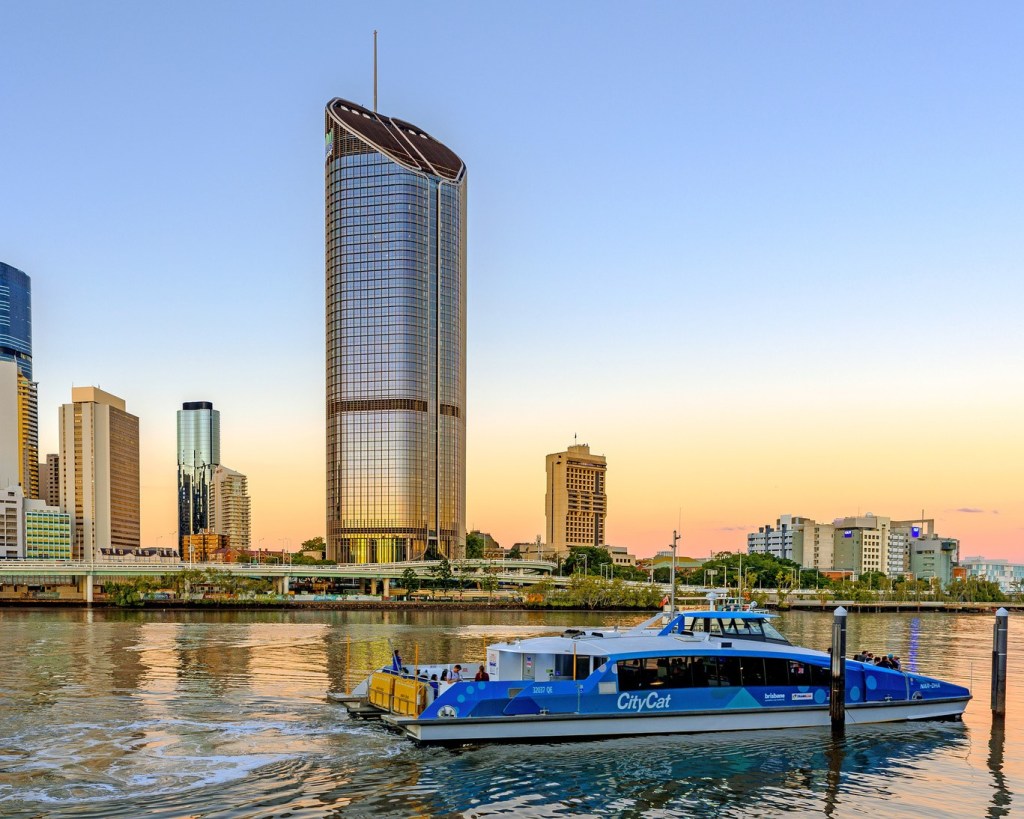
Let’s hope the Auditor-General’s reports are being widely read by the public servants in 1 William St, aka the Tower of Power.

Posted in Budget, Macroeconomy | Tagged , , , , , , , , , | 1 Comment

Defence should never have been on the Qld-NSW border in the first place

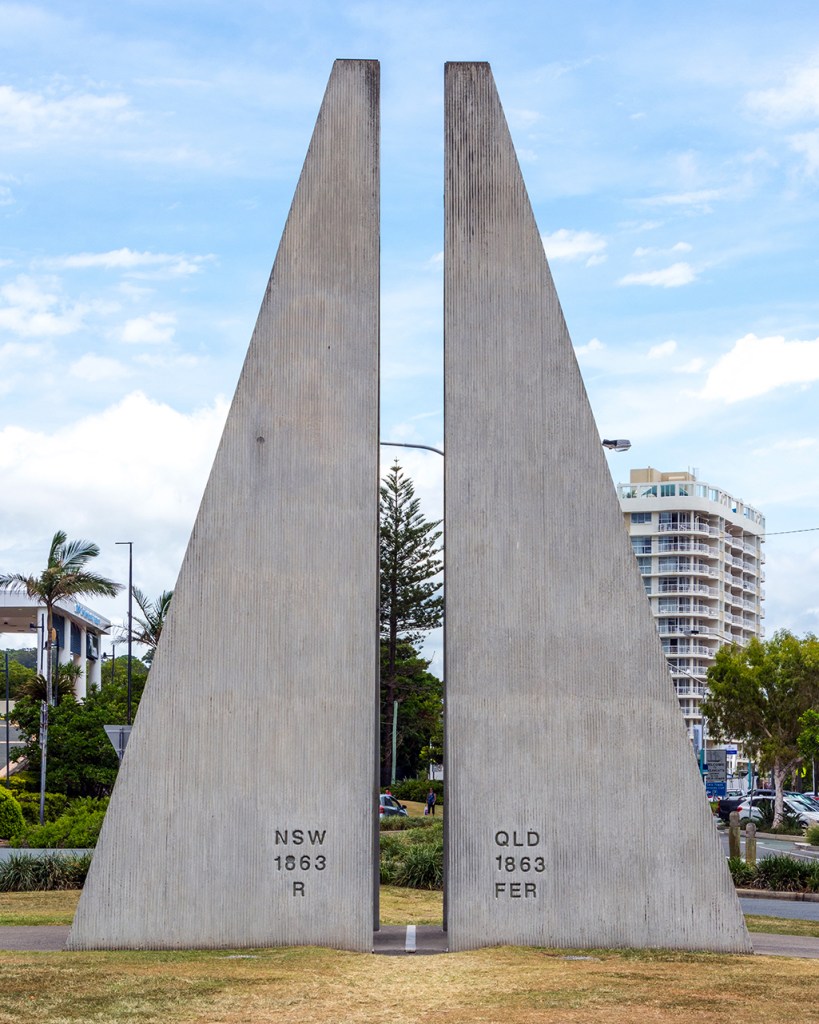
Earlier this month, I was shocked when I landed in Bundaberg and was greeted by a police officer wanting to check I was a Queensland resident, but I guess I would have been even more shocked if I tried to come into Queensland from NSW and was greeted by a soldier. Why the Australian Government is assisting the Queensland Government impose internal border controls that national health officials have previously suggested are undesirable is beyond me. But that is what has been occurring according to the Brisbane Times article Defence move from Queensland border raises police union concern:

Queensland’s police union has hit out at moves from the Australian Defence Force to pull troops from border checkpoints, as the state readies to further wind back domestic travel restrictions.

Defence personnel have been helping police on state borders and in hotel quarantine settings throughout the pandemic, with extra support requested to ease delays at the busy Gold Coast checkpoints in July.

We seem to have lost our previous notions of a) Australia being a free country and b) the clear dividing line between civilian life and the military. The military shouldn’t be used for internal policing in democratic countries. Yes, COVID-19 is a public health emergency, but we need to recognise fundamental principles we will never violate.

Our political leaders should have said some principles cannot be compromised, but we will do everything reasonable we can to control COVID-19 while respecting civil liberties. Many of the measures we have adopted, particularly the curfew in Melbourne and the re-closure of Queensland’s border with NSW and ACT, were completely disproportionate to the risk and violated fundamental civil liberties, and arguably the Australian Constitution. But we won’t know if the latter is true until the High Court hears arguments in November regarding Clive Palmer’s challenge to the WA border, and we probably won’t have a decision until early next year (see November showdown looms for Clive Palmer’s High Court border challenge).

Finally, I should say I welcome the latest relaxation of Queensland’s border restrictions, but as other commentators have noted we should just open up to the whole of NSW. There appears to be little reason not to do so, and it would provide some hope to our struggling tourism sector.

On the border battle, check out my recent interview with Joe Branigan:

Qld’s harsh border policy – a conversation with Joe Branigan

Posted in Tourism | Tagged , , , , , , , , , , , | 2 Comments

Second GC motorway should have been built decades ago – BODBTN extract

It was good to see in a media statement yesterday the state government’s commitment to a second M1:

The Palaszczuk Government’s economic recovery plan will be significantly boosted with a $755 million commitment to build the 16-kilometre stage one of the Coomera Connector – popularly known as the ‘second M1’ – between Nerang and Coomera.

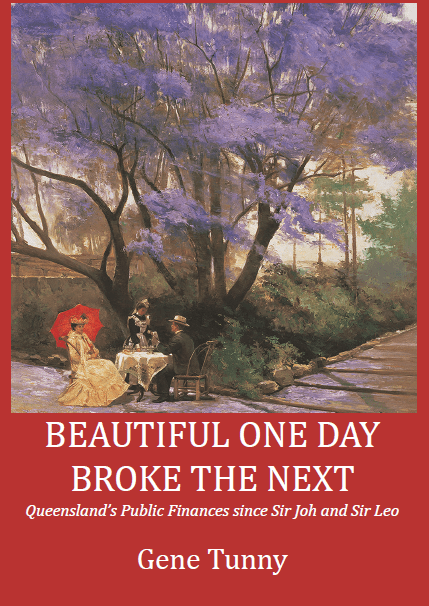
Arguably, a second highway between the Gold Coast and Brisbane should have been built in the late nineties. The Goss Government (1989-96) had proposed building a second highway, but it turned out to be politically toxic, as it would have cut through koala habitat in Daisy Hill (see this GC Bulletin article), and it arguably contributed to the Goss Government’s eventual fall and replacement by the Borbidge Government (1996-98). This is an issue I covered in my 2018 book Beautiful One Day, Broke the Next:

By rejecting the second motorway to the Gold Coast in favour of an upgrade of the current highway, [the Borbidge Government] arguably only temporarily forestalled the inevitable capacity constraints that would eventually emerge, and which Goss government Transport Minister David Hamill had warned about. Interviewed for this book, David Hamill noted he had seen a transport model forecast that a widened existing motorway would reach full capacity by 2012. This appears to have been a reasonably accurate forecast. In early 2016, the Gold Coast Mayor Tom Tate said there was merit in considering a second motorway to the Gold Coast. And, somewhat ironically, in the 2017 election campaign the Liberal National Party supported an alternative route to the M1.

If you’re interested in learning more about Queensland’s political and economic history since the days of Sir Joh, particularly in the lead up to the 31 October election, please consider getting a copy of my book, if you haven’t already done so:

Beautiful One Day, Broke the Next: Queensland’s Public Finances since Sir Joh and Sir Leo

Posted in Brisbane, Gold Coast, Infrastructure, Transport | Tagged , , , , , , , , , | 2 Comments

Red tape and regulation – CIS On Liberty podcast

Yesterday I spoke with Associate Professor Salvatore Babones from Sydney Uni on my forthcoming Centre for Independent Studies Policy Paper Rationalising Regulation. You can watch our conversation on YouTube via the player below. Thanks to those readers who I know tuned into the live-stream. Salvatore and I spoke about a wide range of issues including how excessive regulatory processes and so-called law-fare have constrained economic development, how vested interests support the retention of many regulations, how sunset clauses can be useful, and the importance of strengthening existing regulatory assessment processes.

Unfortunately, in Queensland, as we learned last week, the Queensland Productivity Commission, which has the role of overseeing regulatory impact analysis, is being moved into Queensland Treasury, meaning it won’t have the independence from Government it once did. The QPC didn’t win itself any friends in the Government when it published that research paper last month highlighting how the Queensland economy had been under-performing prior to COVID, which regular readers will know was a regular theme of this blog.

Posted in Productivity | Tagged , , , , , , , , , , , | Leave a comment

Qantas call for state gov’t incentives highlights the prisoners’ dilemma of interstate bidding wars

Queensland Government agencies such as Treasury and State Development will be busy developing an incentive package, no doubt containing payroll tax concessions and possibly a grant, to attract Qantas’s HQ. As the Australian reported yesterday:

Qantas is asking state governments what they are prepared to offer to accommodate the airline, as it considers pulling up stumps on its Sydney headquarters to save money.

In the short-term, Queensland could benefit from attracting Qantas’s HQ, so long as the incentive package doesn’t give too much away, but in the long-term we are worse off by participating in interstate bidding wars for footloose companies. Former Productivity Commission Chair Gary Banks explained why in an excellent speech Inter-state bidding wars: Calling a truce he gave to CEDA in Brisbane in 2002. It’s worthwhile reading the whole speech, but here’s a sample:

…the situation represents a classic prisoners’ dilemma, because while all States would be better off by cooperating, in some cases individual States will see benefits in defecting.

The need to avoid mutually impoverishing ‘beggar-thy-neighbour’ policies was an important reason for the formation of Australia’s Federation in the first place. Elimination of tariffs at State borders was critical in enabling a national economy to develop from early last century. Over time, regulatory and other impediments were also gradually removed or reduced, including through cooperative agreements on Mutual Recognition, National Competition Policy and Government procurement over the past decade or so. But selective assistance remains a growing threat to the realisation of this nationally beneficial goal…

…If governments can agree to a truce on inter-State bidding wars and other selective corporate support, they can then concentrate their forces on a much more worthy and productive battle: improving further their economic governance, tax regimes, infrastructure and other service delivery. These are the real mainstays of the contribution of State and Territory Governments to economic performance in the long term.

That 2002 speech is still highly relevant, and I’ve used the above quote before on this blog (see Qld Gov’t needs to avoid costly inter-state bidding wars). As is the Queensland Competition Authority’s 2015 report on Industry Assistance in Queensland, which was also critical of inter-state bidding wars (see my post Sweetheart deal to lure Land 400 “war machine” contract winner to Qld undesirable).

Our state and territory governments should reach an agreement not to engage in costly inter-state bidding wars. Of course, the COVID-crisis has revealed that some state governments, including Queensland’s, don’t care much for inter-state cooperation or the national interest, or even what’s in their own state’s interest beyond the current election cycle. So, it’s probably too much to expect we’ll see a truce on inter-state bidding wars in the future.

Source: Qantas.

Posted in Industry policy | Tagged , , , , , , , | Leave a comment

Upcoming CIS livestream on Regulation and COVID this Thursday

This Thursday at 10am (AEST) I will appear on a CIS On Liberty livestream with Associate Professor Salvatore Babones (pictured on the thumbnail below) to discuss a forthcoming paper I’ve co-authored on Rationalising Regulation, part of the CIS’s Pandemic to Prosperity series. There are many costly regulations imposed on businesses by various levels of government which we should reduce or remove. We should do this regardless of the pandemic, but the COVID-induced recession makes streamlining regulations on business much more urgent. Check out some of the other papers in the CIS’s Pandemic to Prosperity series, including papers by Judith Sloan on industrial relations, Rob Carling on state public finances, and Tony Makin, Jeff Bennett, and Michael Potter on company tax at the CIS website. Finally, please consider tuning in on Thursday at 10am to watch my conversation with Salvatore.

Posted in Macroeconomy | Tagged , , , , , , , | Leave a comment

Qld’s harsh border policy – a conversation with Joe Branigan

The biggest issue in Queensland right now is our harsh border policy, which I discussed earlier today with my good friend and former Treasury colleague Joe Branigan of Tulipwood Economics. Joe is the co-author with Dr Henry Ergas of the Menzies Research Centre paper COVID19: Getting Australia Safely Back to Work. You can download the MP3 file here or listen via the audio player above (on the QEW website).

Among other observations, Joe noted:

A couple of weeks ago, I pointed out that the Premier basically handed over responsibility for running the state to the Chief Health Officer. And what she’s done is she’s given up on the fundamental advantages of democracy and of Cabinet government where people can get together and sit around a table and talk about the potential impacts, the potential costs and benefits of these decisions, and try and balance it so that we find a way through this. And I just think we’ve gotten to a very sad state of affairs. And I’ve said to you before that I just don’t think this will hold for another 60 days to the election. I don’t think the government can hold on to this crazy costly policy until the 31st of October.

Items mentioned in our conversation include:

The Triumvirate’s Stratagem cannot stand – guest post by Joe Branigan

Nick Behrens’s excellent briefing on the COVID-19 Fiscal and Economic Review

Posted in Macroeconomy | Tagged , , , , , , , , | Leave a comment