Young Economist Award winner Lionel Page to explain how people can be “optimally irrational”

Last year, the Prime Minister launched a behavioural economics or “Nudge” unit in his Department (see my post from last November), following similar initiatives in the US and UK. The Government is looking at how it can use the insights of behavioural economics to improve public policy. One of the most well-known applications of behavioural economics is to prompt people to pay their taxes on time, by advising them that most of their fellow citizens do so.

Queensland is fortunate to have world-leading experts on behavioural economics at QUT in the Queensland Behavioural Economics group, known as QuBE. The group’s Research Director Professor Lionel Page was recently awarded the 2016 Young Economist Award by the Economic Society of Australia. The Queensland branch of the Society, of which I am the Secretary, is fortunate that Professor Page has agreed to present a lunchtime seminar to the Society on Friday 16 September at Morgans at the Riverside Centre in Brisbane CBD:

Optimally Irrational: An Insight into Behavioural Economics

The Economic Society of Australia (Qld) invites you to a luncheon address by Prof. Lionel Page.

Behavioural economists have gathered a large amount of evidence undermining the model of the cold (often selfish) rational economic man (Homo Economicus). From this accumulated evidence it appears that people often make mistakes: they have inconsistent preferences; they fail to commit to their plans; they are influenced by their emotions.

A deeper understanding of decision making processes shows that in many cases “irrational behaviours” have good reasons to exist. In many ways the old standard model of Homo Economicus is not the optimal solution to the complex world the Homo Sapiens evolved to live in. Many of the seemingly “irrational” deviations are better adaptations to the real world than what was considered the “rational” standard of behaviour in simplified models considered by economists.

The insights arising from behavioural science is that people are very good at using their limited cognitive resources to making decisions in a highly complex environment.

This presentation will review a few of these situations and show why, in many ways, our “defaults” make us smarter than we think.

This should be a very interesting seminar, and I expect some lively discussion given that behavioural economics is a relatively new and still somewhat controversial field, so please consider attending.

lionel_page

Professor Lionel Page of QuBE

Posted in Social policy, Tax, Uncategorized | Tagged , , , | Leave a comment

No substitute for experience

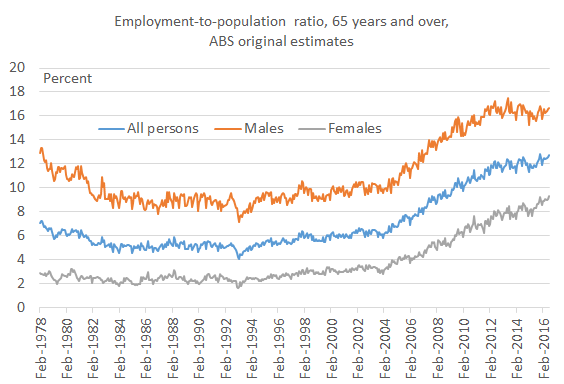
There is a very interesting story at the Huffington Post titled 15 Photos Show You Can Be Awesome At Your Job, No Matter Your Age. That this is the case should not be surprising. Winston Churchill’s finest years, for example, were as wartime Prime Minister while in his late sixties. As the Huffington Post article notes, older people who remain in the workforce do so for a variety of reasons, including the obvious economic one, but also for social reasons and to feel they are making a contribution. In Australia, the employment-to-population ratio for people aged 65 years and over has increased since the early 2000s (see chart below). The upward trend will probably continue, as no doubt many ageing baby boomers will want to maintain their contact with the workforce and community.

Empl_pop_65+

Stories and data such as these make me wonder about the tendency of our political leaders to retire after a defeat, even if they are relatively young, which was the case for Peter Costello and Julia Gillard, for example. After the Government’s near death experience at the 2016 election and the debacle of the last day of Parliament last week, Government MPs would probably be very grateful if an experienced player like Peter Costello returned. There is no substitute for experience, which is why we should look positively at rising workforce participation among older Australians.

Posted in Labour market, Uncategorized | Tagged , , , , , | 2 Comments

Be careful what you wish for on infrastructure spending

The Brisbane Times this morning draws attention to the relatively low level of heavy or engineering construction activity (e.g. on roads, bridges, dams, etc) being undertaken for the public sector in Queensland at the moment, based on analysis by RPS’s Mark Wallace. It is reported that:

“Future generations will rue present governments’ reluctance to borrow money to fund infrastructure, a multinational consultancy has warned as Queensland’s public spending sank to a 10-year low.

An RPS Group analysis of Australian Bureau of Statistics data showed the public sector spent $1.3 billion on infrastructure in the March quarter, which was the lowest level since 2006 and half the rate of expenditure seen five years ago.”

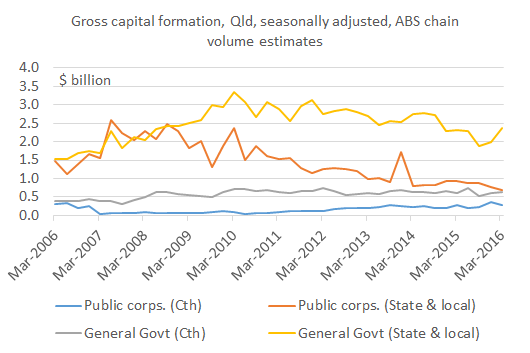
Public infrastructure spending is certainly at relatively low levels, but some context is needed. First, the very high levels of expenditure in the years around 2010 were unsustainable. Second, focusing on engineering construction ignores the full range of capital expenditures by government, including on schools and hospitals, for example. Indeed, the broader National Accounts measure of public capital expenditure, public gross fixed capital formation, has recently started growing again in Queensland (see charts below).

We should not make a fetish of heavy infrastructure and consider it superior to other types of infrastructure, the so-called social infrastructure represented by schools and hospitals, for example. Indeed, a lot of heavy infrastructure investments made by government in recent years have turned out to be questionable, including desalination and recycled water plants we do not need, and a new dam, Wyaralong, that is not connected to the SEQ water grid. So commentators should be careful what they wish for regarding infrastructure. We do not need more white elephants in Queensland.

Public_investment_chart1

Public_investment_chart2

Posted in Infrastructure, Uncategorized | Tagged , , , | 9 Comments

Ex-Holden boss confirms that Carr’s car cash was excessive

Lately I have been hearing a number of people lamenting the loss of car manufacturing in Australia. The loss of jobs is certainly devastating for many former assembly line workers of Holden, Ford and Toyota, who may struggle to find new well-paying jobs. But the loss of the industry was always inevitable, as Australia’s small domestic market, high labour costs and highly variable currency meant that domestic car producers were going to find life difficult without high levels of ongoing taxpayer support. That support, which amounted to many hundreds of millions of dollars annually, was unsustainable. Even the industry recognised that. This was confirmed by comments by former Holden CEO Peter Hanenberger, reported in News Ltd papers today. The Gold Coast Bulletin reports:

HOLDEN had planned to stop taking taxpayer cash 15 years ago — but a change to the Rudd Government saw the car giant ask for more.

The manufacturer received more than $2.17 billion in government subsidies over 12 years — double the amount Ford and Toyota received in the same period — but it was still not enough to save the planned closure of its car assembly line next year.

The bombshell revelation to end government handouts to the car industry is made in a book to be released this week called “Holden: Our Car”.

The book quotes former Holden boss Peter Hanenberger, who led the company between 1999 and 2003, a period of record sales for Holden and the Commodore — and also the last time Holden was the top-selling car brand, in 2002.

“It was under the Howard Government with (industry minister Ian) Macfarlane that we negotiated a deal at that time — in 2000 or 2002, it was — that we committed to have no more support by the Australian government. For that, we got $2.5 billion to make this industry a modern, globally based industry,” said Mr Hanenberger, who hinged his plans on exporting the Commodore to Europe and the USA.

In the early 2000s, Holden and the other car manufacturers had agreed with the Howard Government that assistance was meant to be transitional only. At the time, the industry thought it might be able to eventually survive without government assistance, given the then relatively low value of the Australian dollar, which made the industry’s exports more competitive internationally. But the mining boom led to a currency appreciation that brought into question the viability of the car manufacturers. Ignoring the car industry’s lack of long-term economic viability, in 2008, the Rudd Government agreed to increase assistance to the car manufacturers, as I discussed and criticised in my 2011 article in the CIS’s Policy magazine:

Carr’s car cash and Australia’s reform malaise

Most Australians now realise that it made no sense to waste hundreds of millions of dollars each year buying ourselves a car industry. If we want a thriving manufacturing sector, we will need to promote one through encouraging more flexible labour market arrangements and improving our education and training systems.

Posted in Industry policy, Uncategorized | Tagged , , , , , , | 4 Comments

Upcoming CIS Liberty & Society weekend in Melbourne

The Centre for Independent Studies sent a reminder note yesterday regarding its upcoming Liberty & Society weekend conference in Melbourne on October 14-16. This is a great opportunity for university students and recent graduates to have fun chatting about important economic and political issues and getting to know a wide range of interesting and promising people from across Australia and New Zealand. I was lucky enough to attend what I recall was the second ever L&S conference held by CIS back in 1997 in Sydney.

Queensland is traditionally under-represented at the L&S weekend, so I would encourage any readers who broadly fit into the target audience to apply, and I encourage anyone who knows anyone who might be interested to let them know about it. We certainly need more people in Queensland with a commitment to free markets, as the legacy of colonial socialism is strong. Successive governments continue to intervene in the Queensland economy in ways that make little economic sense.

While Queensland is traditionally under-represented at L&S, I must say that Queensland has some distinguished L&S alumni, including, among others, John Humphreys, Director of the Human Capital Project, Paul Martyn, Deputy Director-General of the Queensland Science, IT and Innovation department, and Alex Robson, Griffith academic and adviser to PM Turnbull.

Through its commitment to rigorous analysis and a non-partisan approach, the CIS has remained one of Australia’s leading public policy think tanks for several decades. I would encourage any university students or recent graduates who have not attended an L&S weekend so far to apply. Here is the blurb from the CIS:

If you are at university or have recently moved into the workplace and you want to be involved in serious discussions about the future direction of western liberal democracies then this is the weekend conference for you.

The Liberty & Society weekend conferences are a unique opportunity to learn about classical liberalism with live-in lecturers from various universities around Australia.  Come and discuss how these ideas can be used to build a stronger, freer society.

The Melbourne conference is FREE for successful applicants and travel support is available. Conference starts on Friday night.

14 – 16 October, 2016

Applications close on 2 Sept 2016

Posted in Industry policy, Uncategorized | Tagged , , , , | 2 Comments

NZ not only beating us in Rugby, but in economic and demographic games, too

A recent article at the Conversation is titled New Zealand is letting economics rule its environmental policies, which I suppose is meant to shock most Conversation readers. Reading the article it appears to me that NZ mostly appears to have struck a sensible balance between economic development and environmental protection, and that environmental policy is one more area, in addition to labour market policies, where NZ is superior to Australia. Certainly, NZ is doing something right, as HSBC’s Paul Bloxham last year named it a “rock star economy” (see Three things that make NZ better).

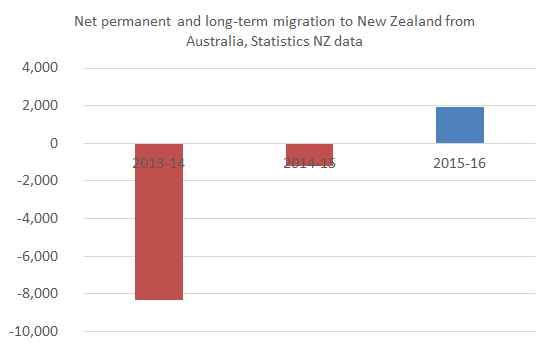
The strong NZ economy has meant that NZ has become a much more attractive destination to international migrants and has meant that many Australians are moving to NZ and many expat New Zealanders are returning home. Indeed, as I read in the latest Monocle magazine (September 2016, p. 54) last night:

“For the first time in about a quarter of a century, more Australians are moving to New Zealand than vice versa.”

Statistics NZ data confirm this is indeed the case (see chart below).

NZperm_migration

So NZ is not just beating us in Rugby; it is beating us in the economic and demographic games, too. For the sake of our national pride, economic reforms have become much more urgent.

Posted in Migration, Uncategorized | Tagged , , , , , , , | 6 Comments

Ragnarok in Brissywood

Next week, the Brisbane CBD road closures for the filming of scenes for Thor: Ragnarok will obviously, through the disruption to traffic and local businesses, add to the already large multi-million dollar cost to the Queensland community of hosting the production. I had a good chat with Ben Davis on 4BC’s Brisbane Live radio program on Thursday afternoon regarding the economics of assisting the film industry, which you can listen to at this link:

Brissywood

In the interview, I questioned the purportedly large long-term economic benefits to the State of  government-subsidised international film productions, as they do not provide sustainable, long-term jobs. Ben noted that a Gold Coast Bunnings saw an increase in turnover of $100,000 per week when Pirates of the Caribbean 5 was filming on the Coast. But that is obviously only a temporary impact and one mostly beneficial to Wesfarmers’s shareholders, and of limited benefit to the broader Australian economy, given much of the product purchased was probably imported.

Our State and Federal Governments have forgone many millions of dollars in tax revenue to attract the Thor: Ragnarok production, and our State Government has probably added a few other sweeteners to a Queensland Government assistance package to the production which is reportedly in the order of $3 million (see this Gold Coast Bulletin report from last year). Disappointingly, the State Government will not disclose just how much assistance it is providing this production and the nature of that assistance. Typically governments claim such information is “commercial-in-confidence.” But, if film studios are going to receive large subsidies paid for by taxpayers, they should accept public scrutiny. Of course, film studios are probably worried that the public would realise just what a terrible deal it is getting.

Take for instance the Mega Sound Stage at Village Roadshow Studios on the Gold Coast, a $15.5 million sound stage which the State Government contributed $11 million to funding (see this media release from May). The Government described this as a “win-win” because the Sound Stage could be used for some Commonwealth Games events, including squash, boxing and table tennis. It was certainly a winning deal for Village Roadshow, which had the Queensland Government paying 70% of the cost of the largest sound stage in the Southern hemisphere. Why should a government pay such a large share of the cost of an investment that will largely benefit its private sector owners?

We need to stop wasting taxpayer dollars on luring international film productions. Instead of subsidising the film industry and benefiting film studios, highly paid stars, and apparently Wesfarmers, governments should instead focus on lowering taxes for all businesses.

Last year, the Queensland Competition Authority was highly critical of film industry assistance in the final report of its Industry Assistance Review (Final-Report-Industry-Assistance-Volume-1). After reviewing the international and Australian evidence, the QCA concluded (p. 168):

“…the Queensland Government should not provide incentives for major film productions as the benefits of doing so are likely outweighed by the costs.”

The disruption to Brisbane CBD next week from Thor: Ragnarok makes it much more likely that the costs outweigh the benefits in the case of this production.

Posted in Industry policy, Uncategorized | Tagged , , , , , , , , , , , , | Leave a comment

Gig economy and baby boomers easing into retirement would partly explain why jobs growth mostly part-time

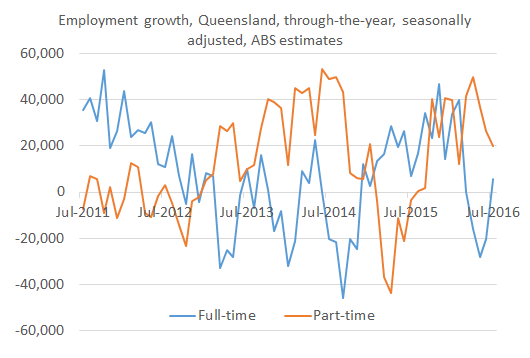
Qld_ft_pt_Jul16

The July labour force data released by the ABS yesterday were good news for Australia and Queensland, with the unemployment rate falling in seasonally adjusted terms for both Australia, from 5.8% to 5.7%, and for Queensland, from 6.4% to 6.1%. But many commentators have noted that much of the apparent jobs growth was part-time. For example, through-the-year to July, employment in Queensland increased by nearly 26,000 people, but the increase in full-time employed was only around 6,000 people, while the increase in part-time employed was around 20,000 people (see the chart above and Queensland Treasury’s labour force brief). We need to be careful in interpreting these data as meaning that much of recent jobs growth has been inferior, however, as there is likely an underlying structural shift towards part-time employment, reflecting an increased desire among many Australians to be part-time employed, that is being reflected in the data.

I suspect a large proportion of the part-time jobs growth is due to baby boomers easing into retirement by moving from full-time work (35 hours per week or more) into part-time work. Also, the rise of the so-called gig economy, with the growth of freelancers and self-employed people, including Uber drivers, will be showing up in the data. The gig economy is allowing many people to work the hours they choose and to combine part-time employment with raising children, or another business or hobby, for example. We need to know more about the extent to which these trends are influencing the composition of employment growth before we can draw firm conclusions about the quality of new jobs.

On yesterday’s labour force data, see the latest post from Pete Faulkner:

Jobs data surprises on the upside; even QLD does better

Posted in Uncategorized | Tagged , , , , , , , , , , , , , | 9 Comments

Driverless cars and congestion charging up for discussion at IAQ Qld Infrastructure Summit 2016

The well-known fatal crash involving a self-driving Tesla car and a lorry suggests a completely driverless future is some time away, but nonetheless regulators and businesses need to start preparing for it. Hence it is great to see driverless cars are on the agenda for the upcoming Queensland Infrastructure Summit, which is being organised by the Infrastructure Association of Queensland (IAQ) and is being held on the 15th of September at the Brisbane Convention and Exhibition Centre.

The Summit features an impressive list of speakers including leading demographer Bernard Salt from KPMG, the head of Queensland’s Infrastructure Department Frankie Carroll, two Deputy Under-Treasurers from Queensland Treasury, and Damian Gould of Advisian, among others.

Other topics for discussion at the Summit include one of my favourite urban policy measures: congestion charging. As the cost of building new roads, bridges and tunnels grows ever larger, it is imperative that we consider transport demand management options such as congestion charging, which I have previously posted on:

Productivity Commission re-litigates road pricing reform

Based on the current Summit agenda, CEDA Chief Economist Nathan Taylor looks set to give an interesting presentation on congestion charging titled From Adam Smith to Now:

“Despite the importance of roads as a business input and as an amenity for urban centres, they are among the least reformed of all infrastructure sectors. The funding and delivery institutional arrangements have been unchanged for decades. A lack of road pricing results in inefficient investment, poor incentives for consumers and distorts usage choices. This presentation will discuss congestion pricing from Adam Smith’s time to the present, and explain why it has never been more likely nor more critical than now.”

Alas, the Summit registration fee is nearly $1,500 (excluding GST) for non-members. Local Government officials are being charged a much lower rate, so I expect a high proportion of attendees will be from Councils. I hope IAQ will eventually make the presentations publicly available, because I am sure they will be of interest to many and will be highly policy-relevant.

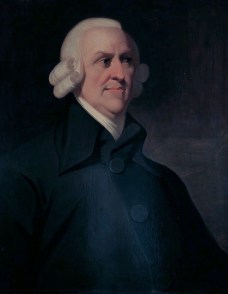
Adam_Smith_The_Muir_portrait

A good question for economists to ask themselves: What would Adam Smith recommend in this situation?

Posted in Infrastructure, Uncategorized | Tagged , , , , , , , , , | 4 Comments

Fantastic news about Uber legalisation – now Government needs to resist calls for compensation of taxi industry

It is fantastic news that the Queensland Government will, finally, legalise Uber, as reported in both the Courier-Mail and Brisbane Times this morning, although the option the Government apparently prefers is somewhat less than full deregulation, as taxis will continue to have exclusive access to the rank and hail market. Also, it is reported in the Brisbane Times that:

Many expect the government to follow the example of New South Wales and add a levy to rides undertaken on services such as Uber to help compensate the established industry.

This would be unfortunate, as consumers have been getting ripped off by the taxi industry for decades and the industry arguably does not deserve compensation. The total compensation bill could be very large, certainly at least several tens of millions of dollars, if not $100 million or more, as the introduction of Uber has massively reduced the value of taxi licences by reducing the monopoly profits that were being earned as a result of the supply restriction. Any compensation would, of course, be for political purposes, and would not have an economic justification (although it may be politically necessary in order to get Uber legalised).

In a very popular post, and one that was assigned as a reading in a QUT Economics course, regulatory economics expert and former Productivity Commission economist Rod Bogaards argued strongly that taxi licence owners should not be compensated:

Should Qld taxi plate owners be compensated for the recent disruption to the taxi industry?

Rod noted in his guest post that:

The purchase of a taxi plate is an investment like any other financial investment. Investors in taxi plates should have been aware of the risks associated with the relatively large investment they made. Similar to other investments, due diligence was required to assess whether the risk-return trade-off of owning a taxi plate was a sound investment. Taxi plate ownership was never a risk-free investment since there was always a risk that technological change or regulatory reform would reshape the taxi industry.

If compensation is paid in such circumstances it would set a very expensive precedent. There are many industries experiencing rapid technological change and many investors in these industries will not recoup their investments.

Rod makes some other excellent points in his guest post, which I very much recommend to readers, particularly any in Queensland Treasury who may end up having to fight against excessive compensation for the taxi industry.

Posted in Transport, Uncategorized | Tagged , , , , | 5 Comments