Chat with Joe Branigan on LNP’s New Bradfield Scheme and 5% jobless target and Labor’s $600M Council cash splash

Yesterday afternoon I caught up with my good friend and former Treasury colleague Joe Branigan to chat about the upcoming Queensland election, and you can listen to our wide-ranging conversation via the player/link below.

Among other issues, we chatted about the Opposition’s proposed New Bradfield Scheme, it’s 5% jobless target, and the additional $600 million announced by the Premier for local governments if she wins re-election, a funding boost she announced at the LGAQ conference on the Gold Coast yesterday.

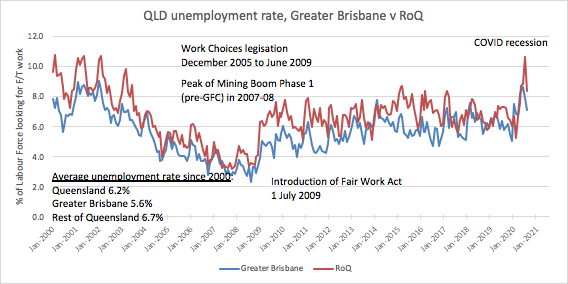
On the Opposition’s 5% unemployment rate target, in addition to his comments in our discussion yesterday, Joe provided me the following summary of his thoughts and the chart below.

Historically, Queensland has had a higher rate of unemployment than other states because of: (i) a combination of regionally based (disaggregated) labour markets and a relatively more pronounced boom/bust economic cycle (ie. resources and to a lesser extent tourism), and (ii) generally, Queensland has a higher participation rate than other states because of the net interstate migration effect. That is, people moving to Queensland are more likely to be of working age looking for work.

As a result, regional Queensland has a higher rate of frictional unemployment and structural unemployment compared to the big deep labour markets of Brisbane, Sydney and Melbourne. Since 2000, the average unemployment rate in Greater Brisbane has been 5.6% compared to 6.7% in the Rest of Queensland. That’s a difference of 1.1 percentage points. The overall average unemployment rate for Queensland since 2000 has been 6.2%.

Of course, in the middle of the once-in-a-century mining boom, the unemployment rate in regional Queensland reached a low of 3.2% by the end of phase 1 of the boom in late 2007. This was also during the Work Choices period of maximum labour market flexibility. However, regional unemployment rose sharply in 2008-09 and again after the end of the mining boom from 2012.

In terms of the LNP’s 5% unemployment rate target, there’s a big difference between a 5.9% unemployment rate, which I think is achievable by 2024, and a 5.0% unemployment rate, which in my view would be difficult to achieve for the reasons explained above outside of a booming economy (where it’s clearly possible to achieve a rate in the low 3’s). I suspect that, when the economy eventually returns to full capacity and is in equilibrium, the natural (or minimum) rate of unemployment possible in regional Queensland (under the current Fair Work Act legislation) is 6% to 6.5% and in Brisbane about 5%, with the combined rate for the whole of Queensland around 5.5% to 6%.

That said, policies that help to connect regional labour markets, especially regions immediately adjacent to SEQ, and policies that, in effect, lower the minimum wage hurdle that must be paid by employers (eg. by providing wage subsidies or subsidised training to low skilled workers) will help to drive down the natural rate of unemployment. These policies of course must be funded by the Queensland taxpayer. At the end of the day, despite all policy efforts, in my view Queensland’s overall natural rate of unemployment rate will continue to be a little higher than the more densely populated southern states.
Posted in Infrastructure, Labour market, Macroeconomy | Tagged , , , , , , , , , , , , , , | Leave a comment

Qld’s surging public service – clarification of Australian article comments

I’m quoted in today’s Australian article Polls back Labor’s jobs push, and I need to clarify this reported comment:

Economist Gene Tunny said that Queensland’s public sector had been stable through the pandemic and that had steadied the state’s job market, but he expected future employment growth to come from tourism as travel restrictions were lifted.

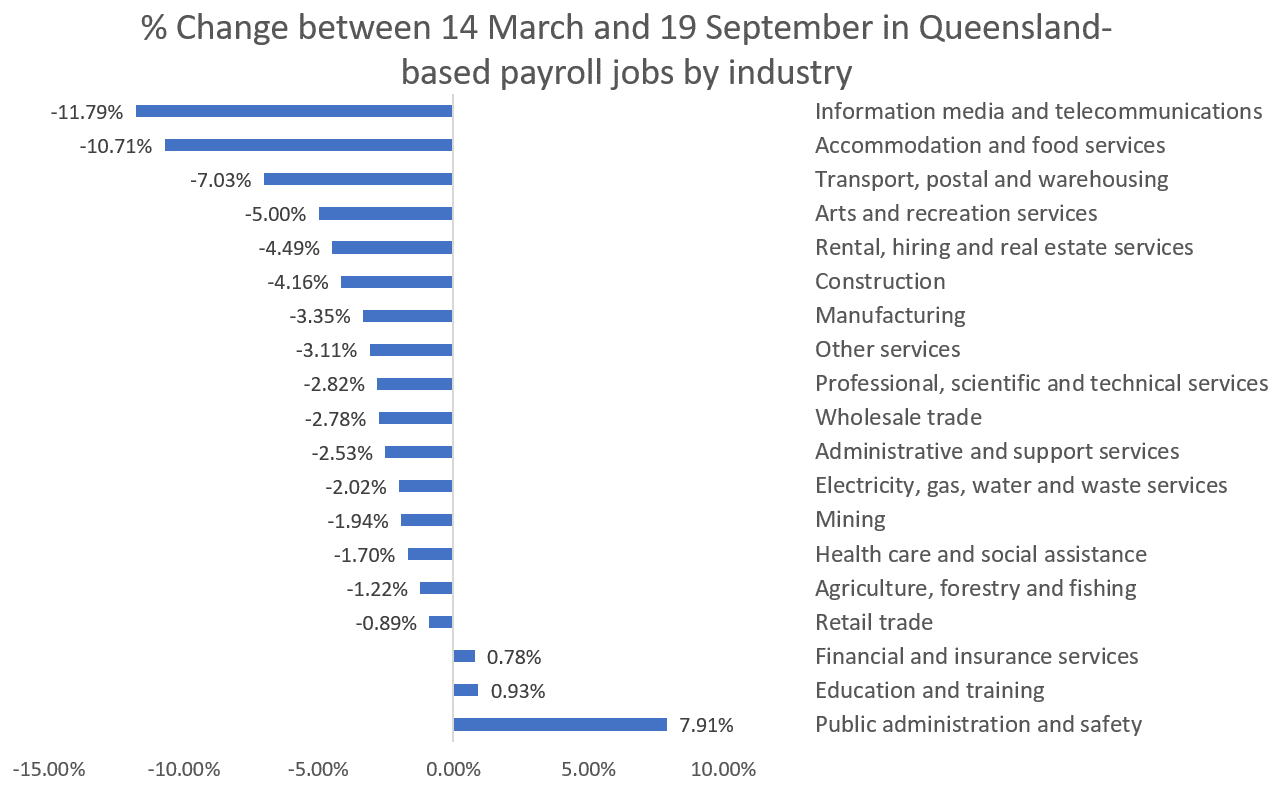
It’s not a direct quote and I can’t remember exactly what I told the Australian journalist when we spoke last Thursday – possibly I said the public sector has been a stabilising influence on the economy – but I doubt I would have said the public sector itself has been stable, when it’s actually been surging. The Public administration and safety industry division, which includes many state public servants, is one of the few industries to have grown since March (see chart below based on the ABS estimates of payroll jobs from Single Touch Payroll data from the ATO, and note these data aren’t seasonally adjusted).

According to the state government’s COVID-19 Fiscal and Economic Review, Queensland general government employee expenses grew 6.8% in 2019-20 compared with population growth of 1.5%. There was obviously a big surge in public sector employment in the June quarter (April to June), but we don’t know the number of extra public servants yet as the Government’s latest public service snapshot was taken in March. We don’t have the June quarter estimates yet. Again, the lack of transparency from the state government going into this election campaign is very concerning and disappointing.

Posted in Budget | Tagged , , | Leave a comment

My Courier-Mail comments on Qld Economic Recovery Plan and lack of Budget transparency

Yesterday afternoon I spoke with Courier-Mail journalist Michael Wray about the depressing nature of the state election campaign, which is being held without a full set of budget forward estimates having been published by the Queensland Government. I’m grateful to Michael for quoting me at length in his article in today’s paper: Palaszczuk Government’s economic recovery plan ‘just a glossy document’. Here’s an excerpt, but please buy the paper or read it as a subscriber online to support local journalism:

It’s been used repeatedly [by] Annastacia Palaszczuk and her senior ministers throughout the campaign, but Labor’s hyped economic recovery plan has been slammed as a “glossy document” lacking details by a former Treasury official…

Adept Economics director and former Treasury official Gene Tunny said the economic recovery plan was “just a glossy document with lots of nice icons and descriptions of what (the Government is) doing but it’s not strong analysis of what’s happening in the economy”.

And he rejected the Government’s argument that the COVID-19 Fiscal and Economic Review released in September provided enough detail for voters to make informed choices about spending promises.

As I’ve written previously, the Queensland Treasury should release its forward estimates of the state budget out to 2023-24, or best case and worst case estimates given all the uncertainty, so we can have a well-informed debate on important economic and fiscal issues in the lead up to the state election.

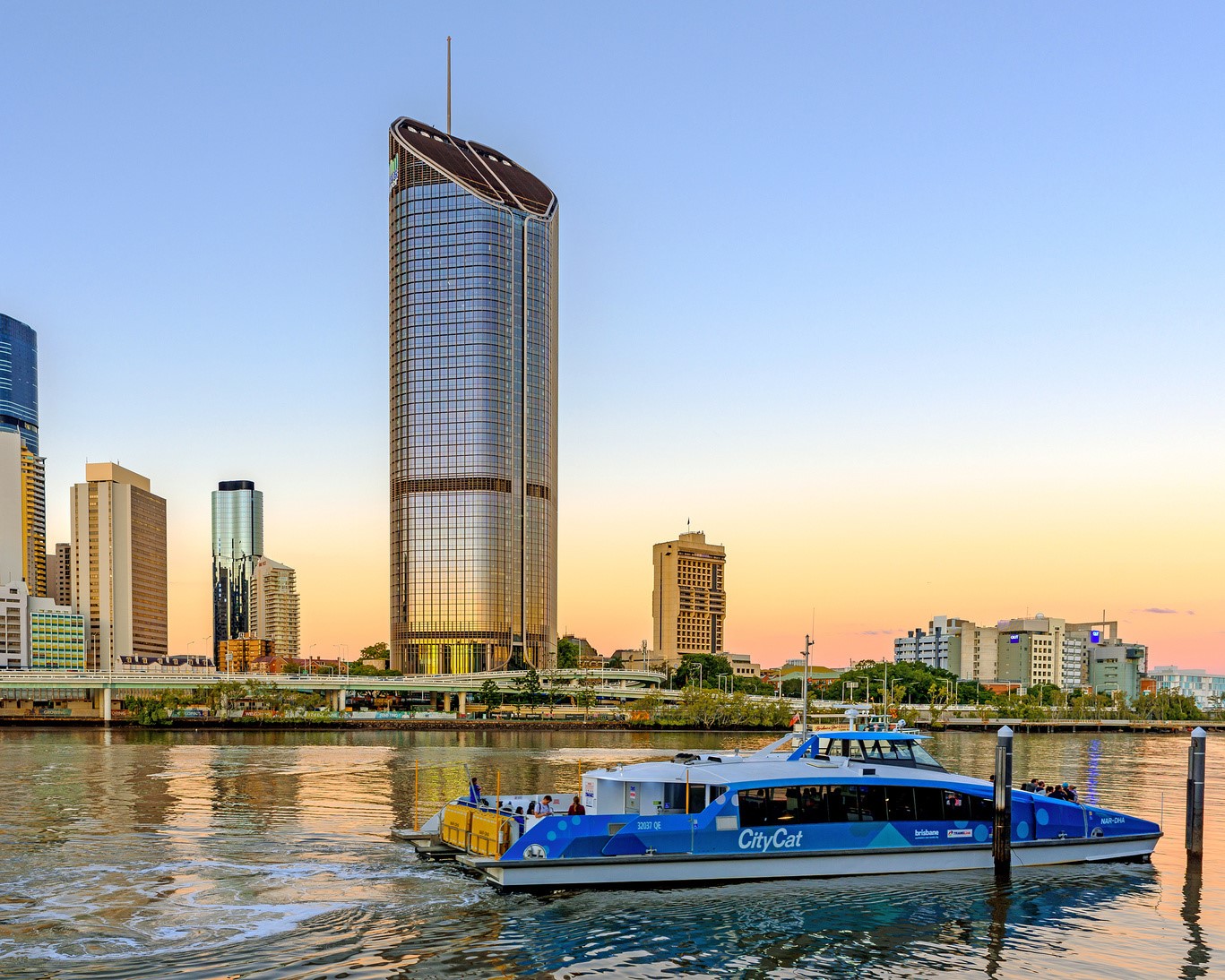
1 William St, the Tower of Power, home to Cabinet Ministers and various departments, including Queensland Treasury, which should release its budget forward estimates in the interests of an informed election debate.

Posted in Budget | Tagged , , , , , | Leave a comment

Qld has highest unemployment rate, but we’ve actually coped with COVID-shock better than most states

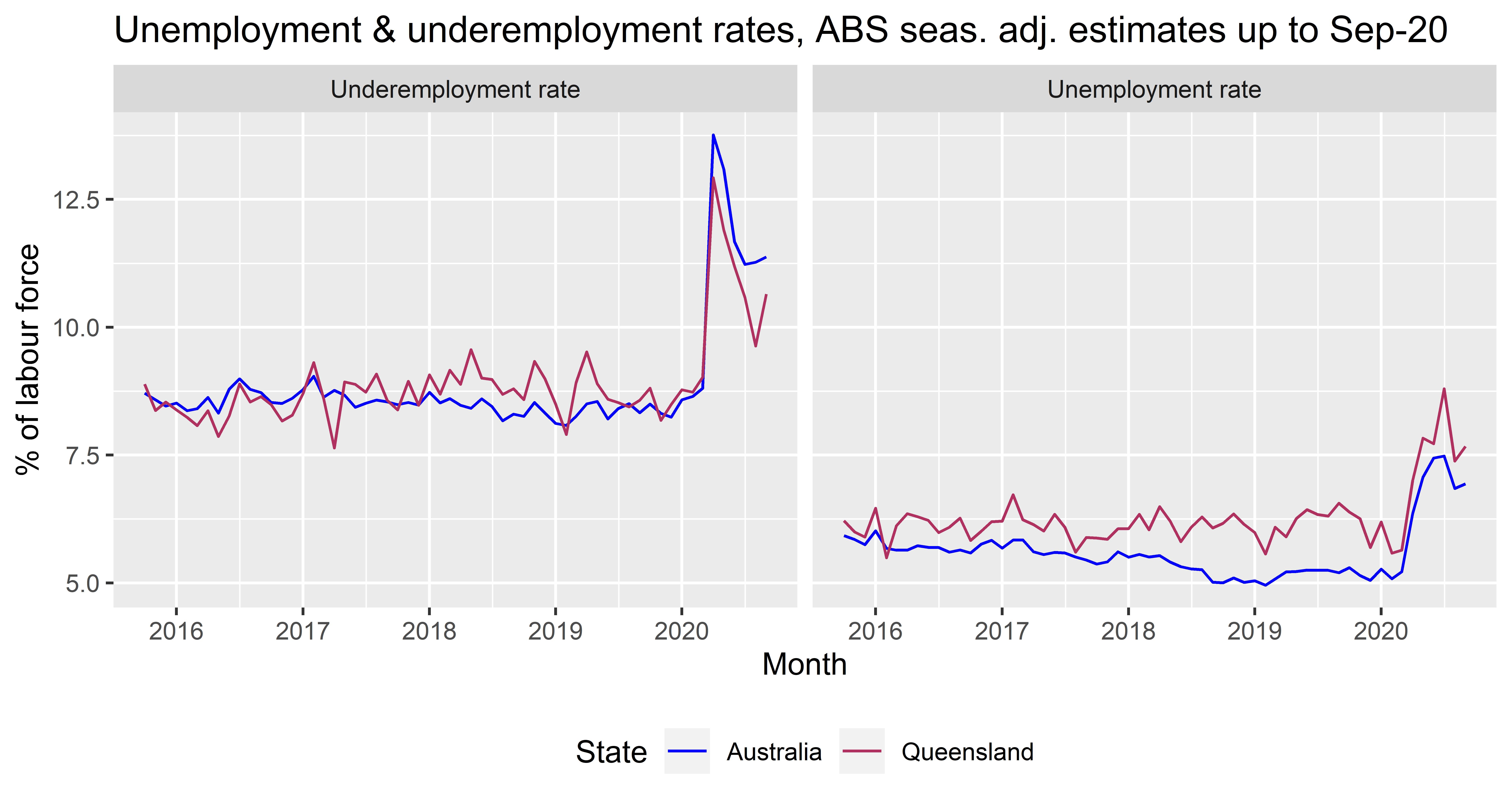
Queensland once again has the highest unemployment rate in Australia (7.7% compared with a national average of 6.9%), as revealed by the September Labour Force Survey data released by the ABS yesterday, but we need to be careful in jumping to conclusions regarding what that means. It’s a combination of a) previous under-performance, which meant we had a higher unemployment rate than the national average pre-COVID (around half a percentage point) and b) now having a higher participation rate in Queensland, at 65.5%, than the national average, which is 64.8%. In September, Queensland’s participation rate surged by 1 percentage point, meaning the reported 1.3% growth in employment wasn’t able to lower the unemployment rate.

Also, we should keep in mind the unemployment rate doesn’t tell the full story and we should consider the underemployment rate (i.e. those employed but working fewer than their desired hours). Queensland’s underemployment rate is below the national average which is being kept much higher than otherwise by Victoria’s disastrous performance (see chart below).

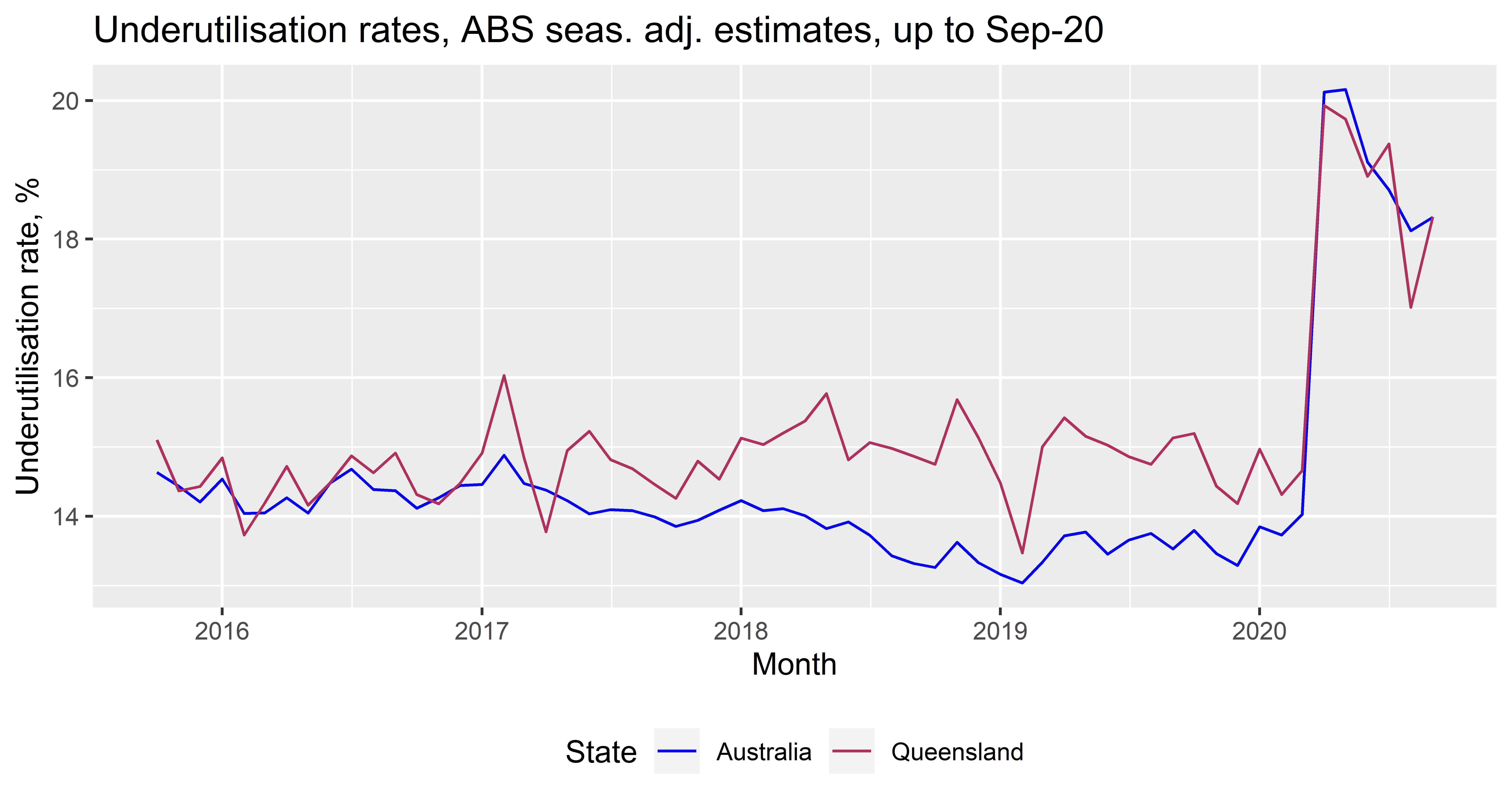
Hence, Queensland’s total labour underutilisation rate, the sum of the unemployment and underemployment rates, is similar to the national average (see chart below).

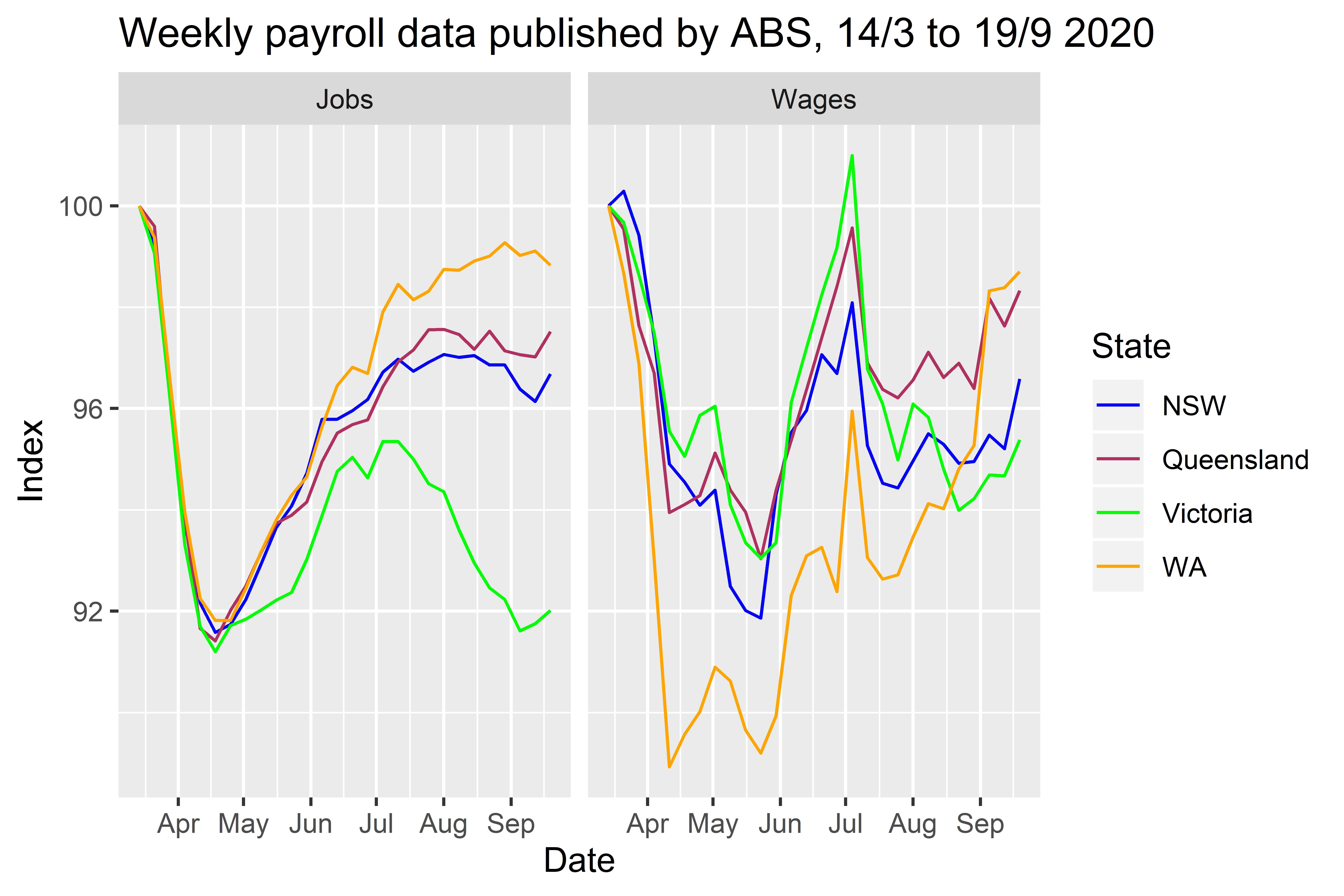
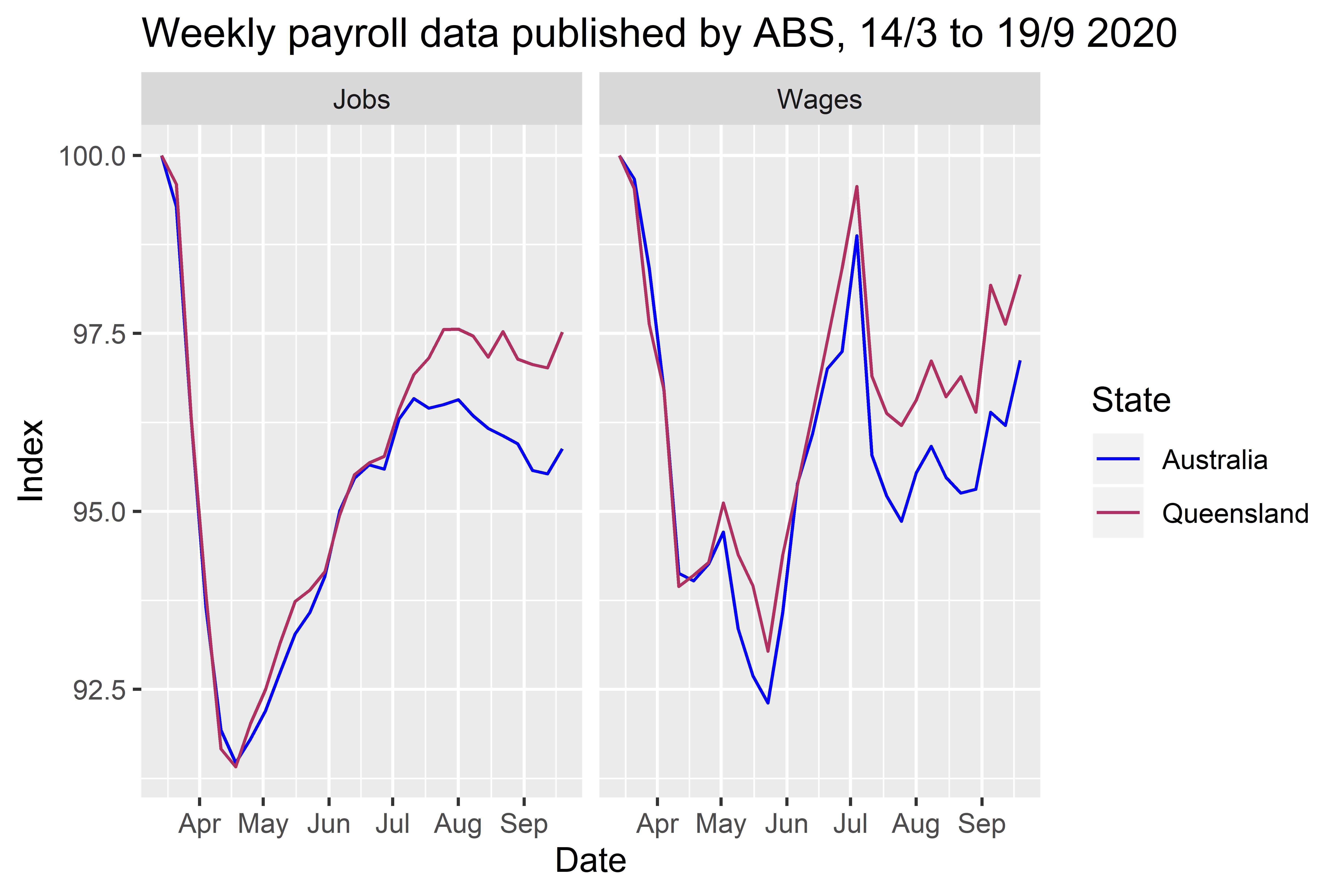
Queensland has lost fewer jobs (proportionally) following the COVID-shock than the rest of Australia (e.g. see the chart below based on the payroll data published last week), and I’ve previously attributed that to the importance of mining and agriculture which have proven resilient, and it’s also no doubt due to COVID being less of a problem here than in some other states (which is a point Pete Faulkner makes in Pretty good jobs numbers for QLD; despite the headline unemployment rate moving higher again). As Queensland Treasury’s labour force briefing reports, according to the September Labour Force Survey data, employment in Queensland is down 1.8% since March, compared with a 3.3% decline nationwide, a 2.3% decline in NSW, and a 6.4% decline in Victoria. So, although we have the highest unemployment rate in Australia, Queensland has actually coped with the COVID-shock better than the larger states (and Tasmania), although not as well as Western Australia or South Australia it appears.

On Queensland’s economic under-performance pre-COVID, check out the new hard-hitting article from former CCIQ Chief Economist Marcus Smith and former media man Dan Petrie which they prepared for the Institute of Public Affairs:

Still the Sunshine State?

The Queensland Productivity Commission also highlighted Queensland’s pre-COVID economic under-performance in its economic resilience report published earlier this year. The QPC has been rewarded for its independence of thought and expression by being absorbed into Queensland Treasury, which is a real shame.

Posted in Labour market, Macroeconomy | Tagged , , , , , , , , | 1 Comment

Corporate Governance podcast chat with Stephen Howell from Effective Governance

In my latest Economics Explored podcast episode, I speak with Stephen Howell, Principal Advisor of Effective Governance, part of the Hopgood Ganim Advisory Group, regarding the importance of good corporate governance to a well-functioning economy.

One of the leading textbooks on corporate governance Directors at Work notes:

The dot-com bubble of 2000 led to the demise of Enron, WorldCom, HIH Insurance, One.Tel and Ansett Airlines, among others, while the Global Financial Crisis of 2008 resulted in casualties such as ABC Learning Centres, Centro Properties Group and Lehman Brothers. As each crash occurred, the calls for better corporate governance have increased. The question – where were the directors? – has been a common refrain after each economic crisis.

As Stephen and I discuss, the Royal Commission into banking revealed some big recent failures of corporate governance in Australian banks, notably at NAB, whose chairman, former Treasury Secretary Ken Henry, was eviscerated by Senior Counsel Rowena Orr, a graduate of UQ Law School, incidentally. Stephen and I also discuss corporate social responsibility, beginning with a consideration of Milton Friedman’s doctrine that companies should be run solely for the interests of their shareholders. Finally, we discuss broader governance issues in this time of COVID, including the massive failure of the Victorian Government on hotel quarantine.

Incidentally, the book Directors at Work has EG colleagues of Stephen’s as co-authors, including Director James Beck and Jennifer Tunny, my mother. If you’re interested in corporate governance or sitting on a board as a director, it is definitely a great book to read.

Posted in Uncategorized | Tagged , , , , , , , , , , , , | Leave a comment

Qld Treasurer trying to have it both ways on budget outlook

Queensland Treasurer Cameron Dick is trying to have it both ways regarding Queensland’s budget outlook. He is arguing the Opposition’s target of a budget surplus by 2023-24 is unattainable, but he has previously argued the budget outlook is so uncertain it was impossible to publish a full set of budget forward estimates prior to the election. The debate about the Opposition’s surplus target re-started yesterday when the Prime Minister appeared to support the state Opposition’s objective, as reported by the Brisbane Times: PM’s cameo has LNP banging surplus drum amid spat with Deputy Premier.

For clarity, based on the comments of the Opposition and the Treasurer the debate around the budget surplus relates to the operating balance, the difference between general government receipts and recurrent expenses. The fiscal balance, which includes net capital expenditures, is usually in deficit, because the government “borrows to build”. The fiscal balance won’t be returning to surplus any time soon so debt will continue to rise over the forward estimates and no doubt beyond them.

But it is conceivable the operating balance could return to surplus by 2023-24 and, indeed, in our report for the Australian Institute for Progress, Joe Branigan and I projected a very slim operating surplus, of $250-300 million, in 2023-24, with operating deficits in the years prior, in our main scenario. The Government would still be running a fiscal deficit that year of nearly $3 billion, so it would still be incurring additional debt, but an operating surplus in 2023-24 is not impossible, unless the economic outlook and the budget outlook are so much worse than what the Government has suggested so far. Of course, that’s entirely plausible given all the bad news we’ve heard recently about COVID around the world and rumoured Chinese restrictions on Aussie coal.

Based on Treasurer Dick’s recent comments, and recent bad news from around the world, I’m starting to think the worst-case scenario that Joe and I presented in our report is looking more like what should be the central scenario, with operating deficits for the foreseeable future, and with general government debt climbing to $77 billion, and total state government debt climbing to $118 billion, by 2023-24. So we could end up with general government debt around 140% higher than it was in 2018-19. Admittedly, it’s all very uncertain which is why Joe and I presented ranges for our estimates in our report. I’d be really interested to see what ranges for the budget aggregates Treasury is estimating.

So we can have an informed public debate in the lead up to this very important election, Queensland’s first for a four-year term, Queensland Treasury should immediately release its budget forward estimates out to 2023-24, which it is no doubt using internally and has obviously provided to the Treasurer in the past. The Treasurer’s confident claim the Opposition cannot achieve its surplus target suggests to me those forward estimates exist, and it’s time for the Treasury to produce them.

The battle is underway for control of the House for the next four years.

Posted in Budget, Uncategorized | Tagged , , , , , , | Leave a comment

Election campaign debate needed on border and other restrictions

The family of a well-known Brisbane businessman has cancelled a Halloween/election night party because there is still a limit on gatherings to 30 people in private residences (see the healthdirect website). Is it still necessary to have this restriction in place? The Government is happy to let 30,000 people attend the AFL Grand Final at the Gabba the weekend before the election, but it still imposes a range of costly restrictions on our lives, including the interstate border restrictions. As I’ve discussed on this blog before, the decision making framework being used by Queensland’s Chief Health Officer is unclear, and the public deserves greater clarity and transparency (e.g. check out this QEW post from mid-September).

The ongoing restrictions on our freedom of movement should be the central issue for debate during this election campaign. Instead we’ve seen the usual, trite photo ops in high-vis vests and a range of lavish funding announcements, even though the Queensland Government has failed to produce a full budget and it’s unclear what the state of the budget will be beyond the end of this financial year. I was critical of this failure on Steve Austin’s Drive program the day after the Government released its woefully inadequate fiscal update (check out the interview), and Joe Branigan and I reiterated this point in a report we prepared for the Australian Institute for Progress (check out Qld Budget update report).

The need to debate ongoing restrictions is amplified by the huge revelation that the WHO only ever saw lockdowns as a temporary measure, to allow governments time to put in place adequate coronavirus testing and contact tracing, and to provide relief to over-whelmed public health services (e.g. see WHO doctor says lockdowns should not be main coronavirus defence). ABC reporter Michael Doyle summarises the latest message from the WHO as:

“…health measures which involve strict personal hygiene, effective contact tracing and isolating when ill are the essential measures to be taken.”

With our economy still operating substantially below where it was pre-COVID (see chart below), we really should be focussed on removing all costly and unnecessary restrictions, and this should be a key issue in the election campaign debate.

Posted in Macroeconomy | Tagged , , , , , , , | 2 Comments

Campaigning pollies recognise importance of resources sector to Qld economy

The Guardian Australia’s Queensland correspondent Ben Smee has a nice summary of our Premier’s first week of election campaigning in his article on the Queensland paradox, whereby politicians have to appeal to voters in both Townsville and Toowong:

The premier, Annastacia Palaszczuk, began her hi-vis “jobs, jobs and more jobs” campaign by hopping across north Queensland, pushing a pro-mining message.

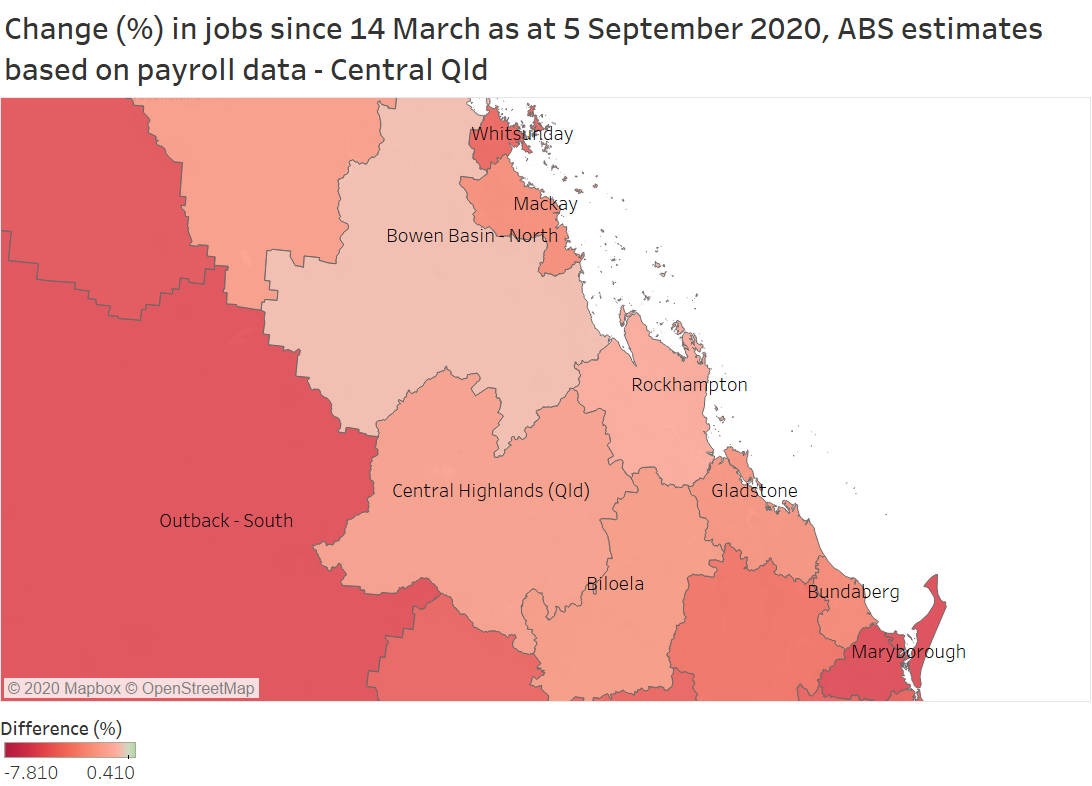
The Premier is right to acknowledge the importance of the mining sector to Queensland. For instance, it has undoubtedly helped mining-dependent Central Queensland regions cope with the COVID-shock better than many other regions (e.g. see the map below based on ABS data).

Incidentally, I’ll be travelling up to Central Queensland later this month, to give a presentation to the Capricorn Enterprise Annual Major Projects Forum in Rockhampton on Thursday 29 October, just two days before the state election. Also presenting will be Queensland Resources Council head Ian Macfarlane.

The ABS SA3 region worst-affected by the COVID-shock in Queensland has been Surfers Paradise, where, early last month, there were nearly 8% fewer payroll jobs than there were in mid-March, before the social distancing measures began (see map below).

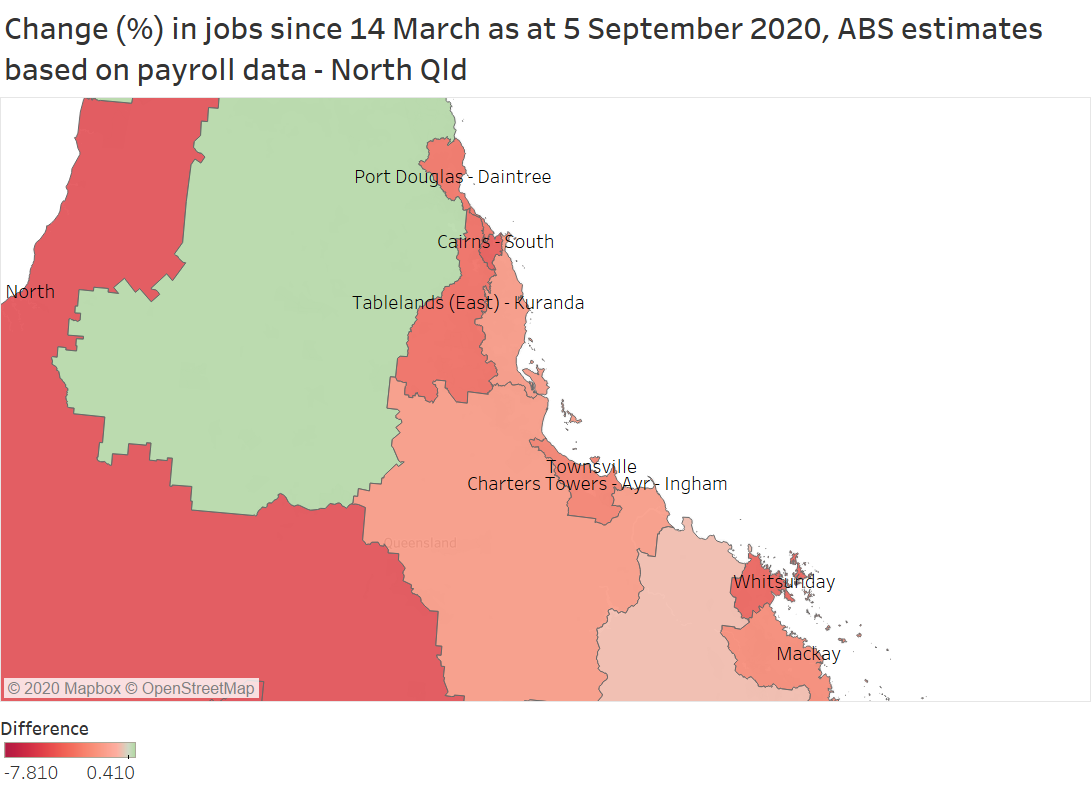
Here’s how North Queensland has fared (see map below). The marginal rise in employment in the Far North SA3 (shaded light green) may be due to some additional positions in remote Indigenous communities, although it’s impossible to know for sure based on the data.

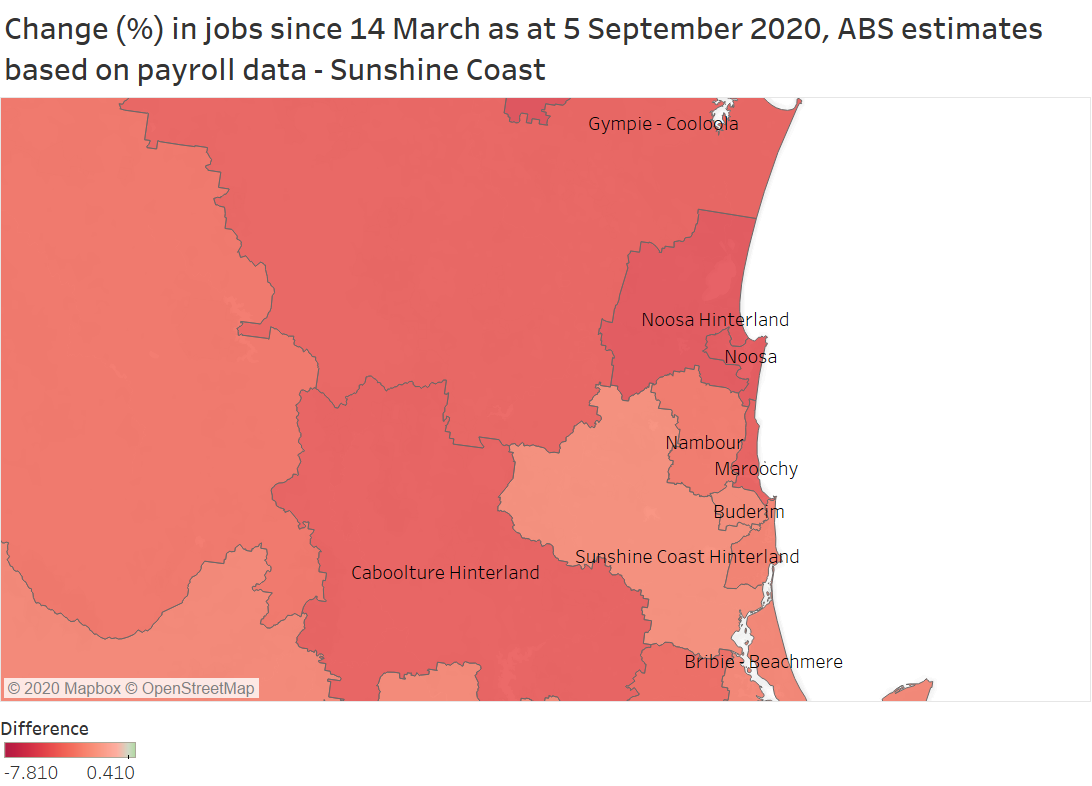
And here’s the map for the Sunshine Coast and surrounds.

Posted in Mining | Tagged , , , , , , , | Leave a comment

Michael Knox on Quantitative Easing as a long-term strategy

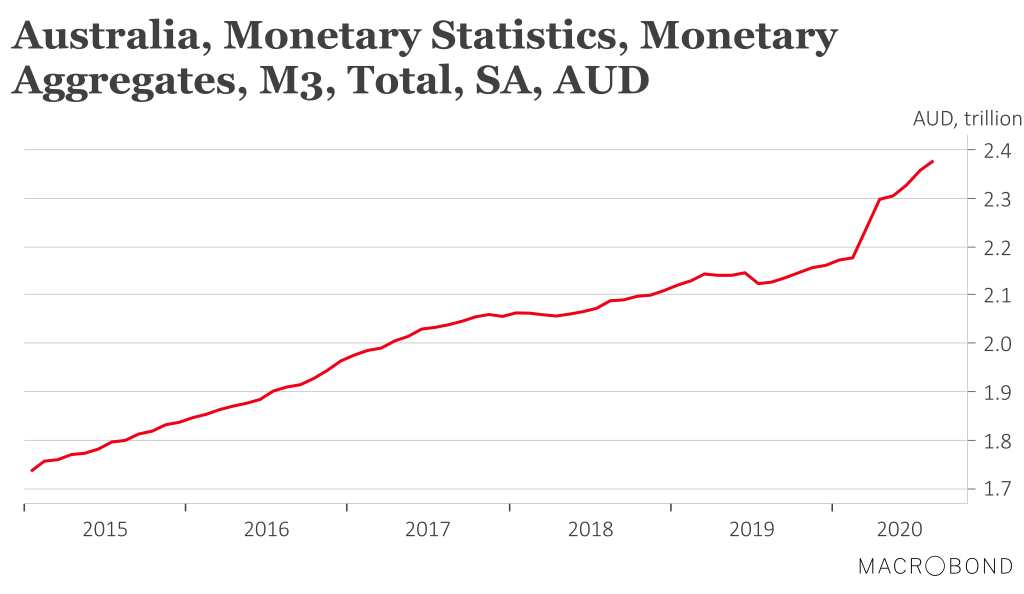
Australia’s money supply has surged over the year as the RBA has undertaken Quantitative Easing (QE), electronically printing new money to buy Australian and state government bonds and to lend to the banks (see the chart of M3, a measure of the money supply, below). Leading Australian market economist Michael Knox, Chief Economist and Director of Strategy at Morgans, wrote in his recent note QE as a long-term strategy:

Quantitative easing is new in Australia, so we tend to think of it as a short-term action that won’t be sustained for very long. Experiences in other countries though have been very different…In the US, quantitative easing was not a short-term strategy, but it was in practice a long-term strategy.

Last Friday afternoon, I interviewed Michael Knox about his note and our conversation is now available as my latest podcast episode Quantitative Easing as a long-term strategy with Michael Knox.

In Michael’s opinion, Aussie QE will last at least until 2024, and he expects it will become part of the RBA’s standard response to recessions. I hope you enjoy our conversation.

Posted in Macroeconomy | Tagged , , , , , , , , , , | 1 Comment

Frydenberg’s won’t-die-wondering Budget

Treasurer Josh Frydenberg delivered a strong speech tonight in handing down what I’d label as his won’t-die-wondering budget, or possibly as the Nixon-goes-to-China budget, a federal budget with an expected current financial year deficit of $214 billion and projected total debt of over $1 trillion. Josh Frydenberg and his Morrison Government colleagues have decided they aren’t going to die wondering whether they could have done more to bolster the economy and protect jobs in this time of crisis.

The scale and breadth of new spending and tax measures the Morrison Government has adopted in response to the COVID-19 crisis are extraordinary. The substantial temporary expansion of the instant asset write off, which we learned about tonight, will hopefully stimulate some much needed additional business investment, although how much remains to be seen. Even with the additional incentive, many businesses are probably reluctant to invest given the uncertain economic outlook. JobMaker is another program that may not live up to expectations for the same reason. I also suspect that JobMaker may end up subsidising the wages of apprentices and trainees who would have been taken on anyway, and hence its “additionality”, to use the jargon, would be small.   

I’d also label the federal budget as the Nixon-goes-to-China budget, because it’s possibly only a conservative government that could get away with massive fiscal measures and huge deficits of this magnitude – without being pilloried by the media and the Opposition, which to its credit has been reasonably supportive of the government’s policy measures. In contrast, I recall how the Opposition at the time of the GFC heavily criticised the Rudd Government’s Nation Building and Jobs Plan and then Opposition Leader Malcolm Turnbull attempted to block the lifting of the debt ceiling to
$200 billion. That was eleven-and-a-half years ago. Now Australian Government debt will soar past $1 trillion, as the Government and I expect its Treasury officials look at government borrowing rates of less than 1% p.a. for ten years and say “whatever”. There may be a risk of refinancing a massive amount of debt at higher interest rates one day, but that will be a new government many years in the future, they must be thinking.

Finally, full credit to the Government and its Treasury for producing a full budget with four years of forward estimates despite all the economic uncertainty, including over the availability of a vaccine, which is expected to be rolled out across Australia by late 2021. If there’s no vaccine, then the economy could be worse, the deficits larger, and the debt higher than expected in the budget. There is a lot of guesswork in the budget, but at least we now have some idea of the economic and fiscal outlook.

Alas, unlike the Australian Government, the Queensland Government has not provided budget forward estimates out to 2023-24. The election campaign officially started today, but we don’t have a state budget which would help us get a sense of whether policy announcements by both the Government and Opposition are affordable over the long-term. Regular readers will know Joe Branigan and I attempted to produce some Queensland budget forward estimates in a recent report commissioned by the Australian Institute for Progress, and I’m glad the Financial Review’s Mark Ludlow has covered the report in a new article: Economists warn of $118b Qld debt bomb.

Posted in Budget | Tagged , , , , , , , , , | Leave a comment