Yesterday afternoon I had a great chat with 612 ABC Brisbane’s Steven Austin about season 4 of The Crown, specifically about its depiction of Margaret Thatcher, which was a topic of conversation in my last Economics Explored podcast episode. Below is a link to the audio of my interview with Steve. You can hear our conversation from 2:39:50:
I spoke about how Thatcher’s economic measures turned Britain’s economy around in the 1980s and cemented London’s position as arguably the leading global financial centre, and how the measures were necessitated by the dire economic circumstances of 1970s Britain (e.g. 1976 IMF crisis, 1978-79 Winter of Discontent, and high unemployment and double-digit inflation). I also noted I would have liked the Netflix series to have done more to explain the necessity of Thatcher’s Monetarist and free-market measures.
That said, I told Steve I did enjoy The Crown season 4, especially Helena Bonham Carter’s performance as Princess Margaret, and it does need to be acknowledged that, despite Thatcher’s measures ultimately being for the good of Britain, they did impose a large amount of pain, with a doubling of unemployment in the early 1980s and an increase in inequality. I just wish The Crown had tried to put the cost of the economic measures into perspective, as the Fagan episode of season 4 is very effective at painting Thatcher as a villain.
Thatcher wasn’t a villain, but a strong leader who had to make hard decisions, and she was one of the UK’s three most consequential leaders of the twentieth century, in the same league as Churchill and Attlee.
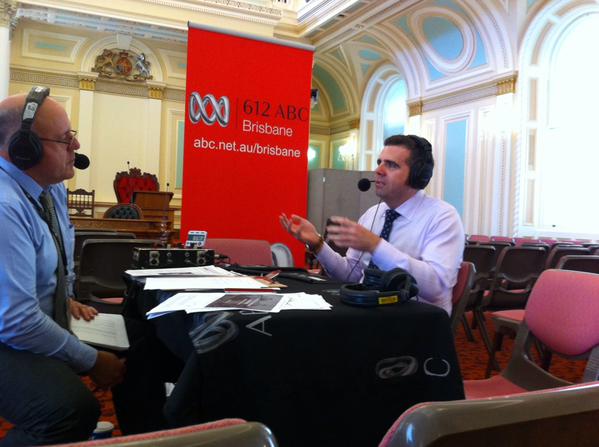
Chatting with 612 ABC Brisbane’s Steve Austin five years ago on the first day of Parliament of the Palaszczuk Government, broadcasting from the chamber of Queensland’s defunct upper house, the Legislative Council.
The Queensland Government is facing big questions over the closeness of two prominent lobbyists to the highest levels of government in the state (e.g. see this Brisbane Times report). I don’t necessarily have a problem with lobbyists, so long as:
they operate within the law, as both lobbyists appear to be doing, and
any representations they make on behalf of their clients are rigorously assessed by the state Treasury and relevant line agencies.
I was actually quoted by Courier-Mail investigative journalist Kelmeny Fraser today in an article mentioning one of the prominent lobbyists currently in the spotlight:
Taxpayers will likely never know how much extra they will pay for new trains promised under a $600 million build-it-at-home election pledge benefiting a client of a Labor-linked lobbying firm.
The story relates to a pledge from the Premier during the middle of the election campaign to have new trains built in Maryborough, meaning she effectively awarded a contract to local train builder Downer EDI without a competitive tender process. For the sake of appearances, the Government will run a tender process, but according to Rail Express:
Queensland Transport and Main Roads Minister Mark Bailey said the tender process would require the trains to be built in Maryborough.
So, in my view, there is effectively no competitive tension in the procurement process and Downer is guaranteed the work, which I’m guessing the workers at Downer in Maryborough understood when the Premier made the announcement at their workplace in October (also check out this Facebook post).
Later on in her Courier-Mail article Kelmeny Fraser quotes me on the economics of regional industry assistance of this nature. I accept that there could be a legitimate regional economic development objective for doing a special deal, as otherwise the workers could end up long-term unemployed in a high unemployment region, which we know the Wide Bay Burnett is. But we should rigorously assess the merits of awarding contracts outside of competitive tender processes, as the Government would very likely end up paying more than otherwise, to the detriment of Queensland taxpayers. Here’s how Kelmeny summarised my views:
Economist Gene Tunny was doubtful a full cost-benefit-analysis showing the extra cost of stipulating local production for the number of jobs created by the train building project had been done.
He said the best deal for taxpayers was where trains were built to the quality and specifications needed for the lowest cost, but the project was more a political decision than about efficiency.
“It’s almost guaranteed not to be the lowest cost solution to getting the purchasing outcome we want, which is to get these trains. But does it meet some other legitimate policy objectives? Quite possibly? But then you have to ask a question is that the best way to do it or are there other ways to do it. I would argue there are other ways to do it.”
The Courier-Mail article is an excellent piece of investigative journalism. Keep up the good work, Kelmeny!
Last Friday, the US House of Representatives passed a law decriminalising cannabis at the federal level. Unfortunately, as noted in this CNN report, the law has very little chance of being upheld by the US Senate, but it was good to see lower house support for decriminalisation. Surely, it is only a matter of time now before widespread decriminalisation of cannabis and other drugs in western nations, as it’s pretty apparent the war on drugs has failed and community attitudes have changed massively in the last few decades.
Moreover, there would likely be large economic and social benefits from decriminalisation of cannabis and allowing for its recreational use in Australia. The Queensland Productivity Commission recommended decriminalisation of drugs earlier this year, but alas the Government rejected its recommendation. This was despite the potential savings of hundreds of millions of dollars per annum in justice system costs and billions in future capital spending for new prisons, as noted by the ABC’s Matt Wordsworth in in January: Drug decriminalisation would ‘save hundreds of millions’, but Queensland Premier rules it out. With the state government now at the beginning of a four-year term, it should consider reforming our out-of-date and costly drug laws.
For previous coverage of the issue on this blog, check out:
State Treasurer Cameron Dick, who handed down the 2020-21 Queensland Budget earlier this week, has impressed me with his chutzpah, demonstrated, for example, by this audacious statement in his Budget speech (on p. 38):
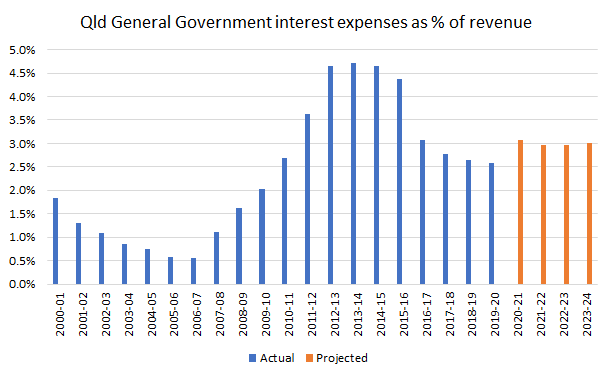
Not only are our interest costs lower than the peak of 4.7% they reached in the 2013-14 financial year during the term of the Newman LNP Government, they are also more than offset by our interest income.
Criticising the Newman Government for having to pay a large interest bill on borrowings it largely inherited from the Bligh Government was a bold play to say the least. It also ignores the fact that interest rates that governments borrowed at were several percentage points higher back then.
The chart of general government borrowing costs to revenue presented in Budget Paper 2 (p. 68) conveniently starts the time series at 2013-14, at the peak. But it leaves out the large increase in the annual interest bill which occurred during the late-2000s, when the Bligh Government abandoned the state’s previous commitment to sound fiscal principles and went on a debt-funded spending spree, a story I told in my 2018 book Beautiful One Day, Broke the Next. So, in the chart below, I present the same chart as shown in the Budget with the time series extended back to the early 2000s. We should also consider how much higher interest expenses, which are approaching $2 billion annually by 2023-24, will be if interest rates rise in the future.
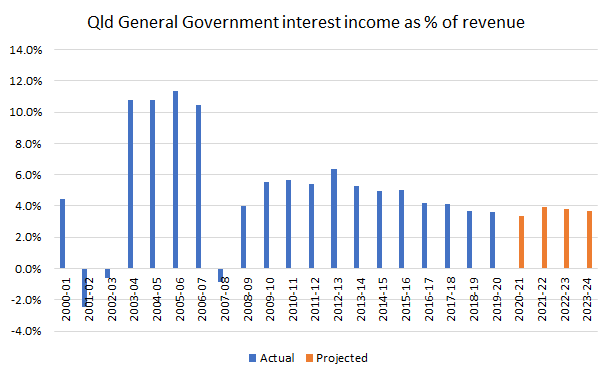
What about the second element of the Treasurer’s bold statement, that interest costs “are also more than offset by our interest income”? Here, interest income refers to the income the government receives on its investments (excluding earnings from government-owned corporations). Regarding the statement, I would say, sure, but so what? The state government has always received income from its investments which historically were made to match the state government’s defined benefit superannuation liability. That is part of the legacy of Queensland’s legendary former Under Treasurer Sir Leo Hielscher. Furthermore, Queensland Government interest income is now a lower percentage of revenue than it has been in the past (see the chart below), partly because the current Queensland Government has drawn down on the state’s investments to support its budget.
Note how the earlier years in the time series are more volatile than later years. That is because the interest income on assets managed by QIC is now guaranteed to be a certain rate by the Queensland Treasury Corporation which assumes the risk of investment earnings differing in any year from what it has promised to pay the general government sector. Here’s what the 2019-20 Queensland Treasury Corporation Annual Report says about this arrangement (on p. 30):
QTC also holds a portfolio of assets that were transferred by the State Government in 2008 (the Long-Term Assets). These assets are held to fund the long-term superannuation obligations of the State…
…In return for the transfer of assets, QTC issued the state government fixed rate notes with an interest rate currently at 6.5 per cent (2019: 6.5 per cent) on the book value of the notes.
Prior to 1 July 2018, that interest rate was set at 7%, but the rate was reduced to reflect slightly lower expected annual returns. This arrangement reduces the volatility of government revenue which is good for the Government in developing its budgets. I don’t necessarily have a problem with this arrangement, as there is some logic to it, but I’ll try to consider it in more detail in a future post.
Please feel free to comment below. Alternatively, you can email comments, suggestions, or hot tips to contact@queenslandeconomywatch.com
First, I should say that Gillian Anderson nailed Margaret Thatcher’s voice and mannerisms in season 4 of the Crown, but she had to work with some pretty dreadful scripts at times. Thatcher was cast as the villain responsible for high unemployment and social dislocation in 1980s Britain, but we weren’t reminded of crisis-ridden 1970s Britain which Thatcher inherited and needed to repair. There was the 1976 IMF Crisis and the 1978-79 Winter of Discontent, among other debacles. During the latter, with council workers on strike, Leicester square in London’s West End was turned into a temporary garbage tip. The country was literally a mess, and the heavy state intervention, which Thatcher partly wound back in the 1980s, was to blame. Certainly, the Iron Lady had her flaws, but she deserved a much fairer portrayal than was given her in the Crown.
I recently spoke about Margaret Thatcher, and Adam Smith, too, with Dr Eamonn Butler, Director of the Adam Smith Institute, and our recorded conversation is now available as Episode 64 of my Economics Explored podcast. We spoke about the lessons of Adam Smith, why Thatcher’s economic measures were necessary, why the Adam Smith Institute is unashamedly neoliberal, and finally about the deleterious consequences of wage and price controls which have been observed since Babylonian and Roman times. I hope you enjoy our conversation.
Please feel free to comment below. Alternatively, you can email comments, suggestions, or hot tips to contact@queenslandeconomywatch.com
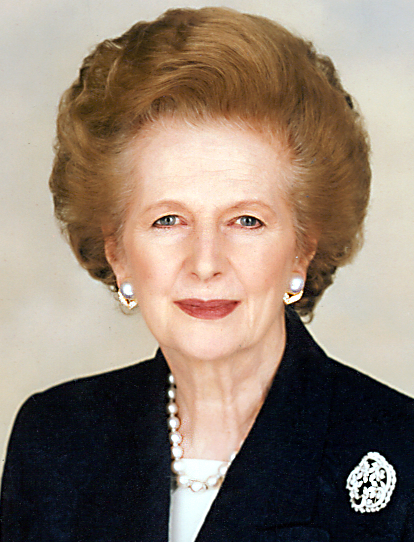
Baroness Margaret Thatcher (1925-2013), UK Prime Minister from 1979 to 1990
I was pleased to speak with 4BC Drive host Scott Emerson yesterday about the 2020-21 Queensland Budget. Among other issues, Scott and I chatted about the Government’s abandonment or, more charitably, nuancing of its fiscal principle around keeping public service growth at the same rate as population growth. I also spoke about how the Government appears to be taking the opportunity to boost spending on a permanent basis and how, unlike the NSW Government, it doesn’t appear to have a plan for stabilising and then reducing debt metrics over the course of the decade. You can listen to our conversation from around 51:50 on the audio recording of:
I also made the point that the bulk of the additional debt the Queensland Government is accumulating is to fund the large operating deficits over the forward estimates. This is a point Nick Behrens nicely made in his QEAS Qld Budget Update, in which he wrote:
…the reality is Queensland will add another $60 billion in debt over just six years. That is on average $10 billion each year and of this two thirds are being accumulated through bad debt where we are spending more than we are earning to run government each day. The other third is good debt being invested in infrastructure that will deliver economic growth in future years.
Last Thursday I had a great time moderating a webinar on Women and the Budget hosted by the Griffith Department of Accounting, Finance and Economics. Presenters included Dr Leonora Risse of RMIT who has been a visiting fellow at the Harvard Kennedy School, Dr Tracey West from Griffith, and Sally Moyle from ANU who was once head of the Australian Government Office for Women. The speakers argued that our budgets and government policies would look a lot different if we fully considered their impacts on women.
For instance, Leonora argued that government responses to the COVID-recession have disproportionately benefited the male-dominated industry of construction. The federal government introduced HomeBuilder to stimulate the building industry and federal and state governments have boosted infrastructure spending. At the same time, the federal government excluded the female-dominated childcare sector from JobKeeper halfway through the first round of the program. Check out more of what Leonora, Tracey, and Sally had to say via the YouTube player below.
Queensland Treasurer Cameron Dick has handed down the long-awaited 2020-21 state budget and it contains bigger deficits and much higher debt over the forward estimates than I expected, with nearly $89 billion of general government debt and around $130 billion of total state debt projected by 30 June 2024. The Government is keeping spending at a higher level than the pre-COVID trajectory and is making no attempt to return the operating budget to balance over the forward estimates, so in 2023-24 the Queensland Government will still be borrowing to pay wages or keep the lights on, as they say. The Treasurer argues this is necessary given the economy will still be scarred by the COVID-recession for several years, which may well be the case. Let’s wait and see.
A test for the Government will be whether it makes a genuine commitment to return the operating balance to surplus if the economy turns out to be stronger than expected. Given the Government is set to abandon, or “nuance” using its language (p. 101), the fiscal principle around keeping public service growth at the same rate as population growth, I don’t have much hope the Government would start aiming for an operating surplus if the recovery turns out stronger than expected.
There are quite a few good summaries of the state budget out there, including on the Brisbane Times website. I found Lydia Lynch and Felicity Caldwell’s article on The winners and losers in the Queensland budget very useful, and it was good they observed the losers included:
Future generations: Total debt will hit almost $130 billion in three years, leaving each Queenslander to shoulder about $25,000 worth of public debt.
It’s not just future generations, though. Current generations will also be paying to service the debt. The general government interest bill will increase from $1.5 billion in 2019-20 to nearly $2 billion in 2023-24. That’s an additional drain on the budget. In the long-term, it means higher taxes and charges than otherwise or less money spent on health and education, for example. The Government and Queensland taxpayers are lucky that state governments can currently borrow at historically low rates, at around 1¼ percent per annum for ten years. While borrowing rates are expected to remain low for a few years at least, it’s possible the Government will have to refinance its rapidly escalating debt at higher rates in the future, and that $2 billion interest bill will be much higher, creating big budgetary challenges for the state government in the future.
Finally, the Government can legitimately be criticised as having been less than forthcoming in the lead up to the 31 October election. Although it did admit there would be new borrowings to cover future deficits, it didn’t disclose that the total additional borrowings, over those revealed in the September update, would be $28 billion for the general government sector – i.e. seven times the $4 billion it admitted it would have to borrow to finance its election commitments. I’m sure it had its own internal projections from the Treasury and arguably it should have disclosed them at the time.
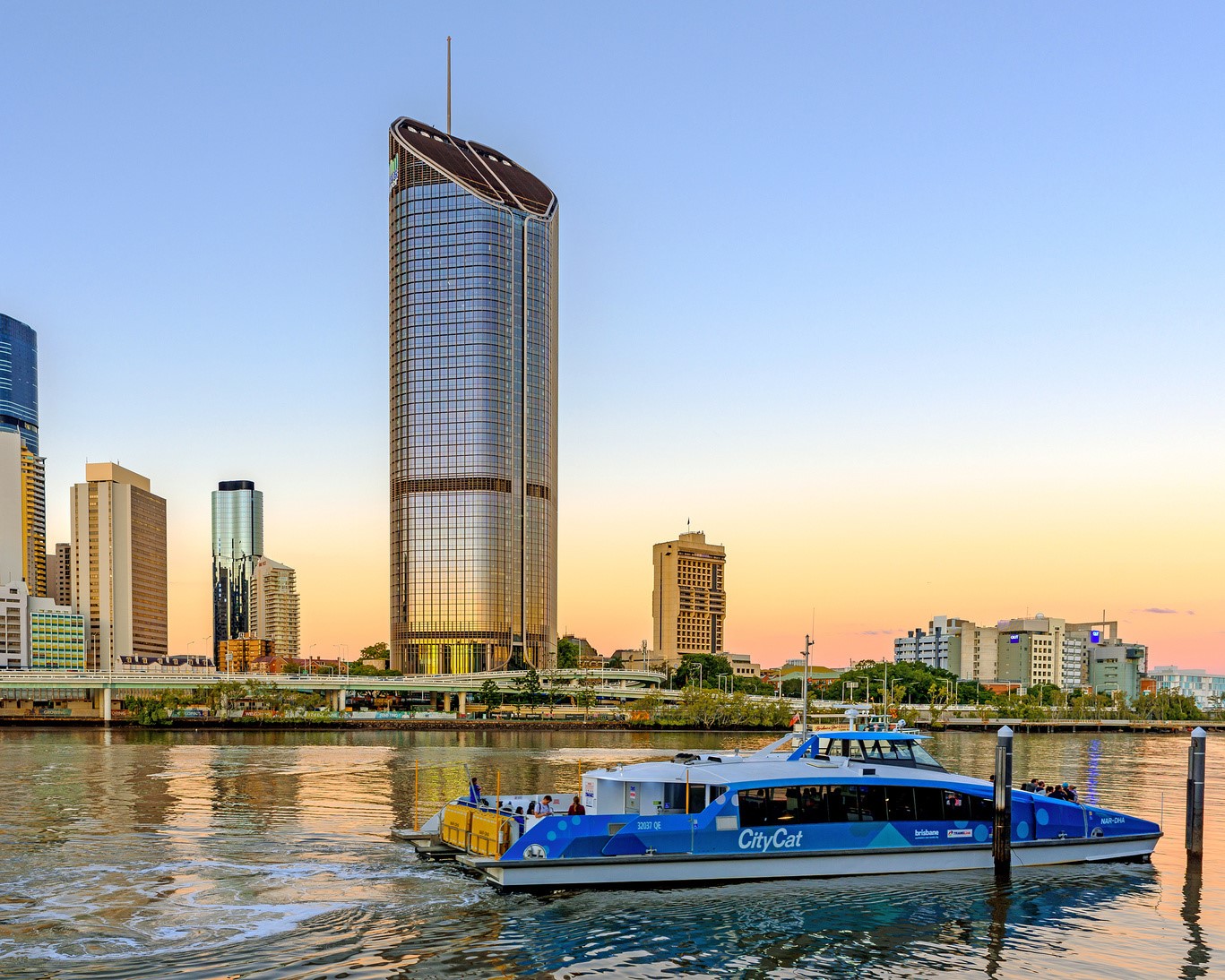
1 William St, where the Treasurer and state Treasury prepared the 2020-21 Budget, which was finally released today
The Queensland Productivity Commission has written a pretty damning draft report (Inquiry into the NDIS market in Queensland) covering the state government’s rollout of the National Disability Insurance Scheme in Queensland, even though the Commission buries the lead and doesn’t directly criticise the government. But, reading between the lines, you can see the Commission is suggesting poor program administration was a contributing factor to a massive delay in the NDIS rollout. This report deserves wide readership and a serious response from the Government to the findings and recommendations.
In the overview, the QPC observes the problem of a delayed rollout (p. xiv):
As at September 2020, 78,811 participants have been transitioned into the NDIS in Queensland, with a further 2,327 children aged under seven years receiving supports through the Early Childhood Early Intervention (ECEI) program. This is fewer than the 91,217 participants that were expected to be transitioned by June 2019…
…Queensland’s rate of transitioning people with a disability into the scheme was slower than most other jurisdictions, with the state having to face various implementation challenges. One of these challenges was that about half of participants were not receiving disability supports prior to the NDIS.
According to the QPC, the KPI for participation won’t be achieved until the first half of 2021, meaning the rollout is around two years behind schedule (see p. 20). Later on in the draft report (on p. 34) we get a sense of what went wrong, notably the lack of a trial phase for the NDIS rollout in Queensland:
The Department of Communities, Disability Services and Seniors (DCDSS) coordinated the whole-of-government transition to the NDIS in Queensland—establishing a dedicated program management office to coordinate cross-agency transition and to support the transition out of the direct delivery of disability services (QAO 2018, p. 5).
Transition was a challenging task, with large number of participants entering over a short time frame, disability providers faced with transitioning from block-funded models to a market-based approach, and all stakeholders learning how to navigate the processes of the new scheme (PC 2017b, p. 10). Unlike other jurisdictions, Queensland’s transition was not preceded by a formal trial… [Emphasis added]
I wish the QPC had explicitly joined the dots on how the lack of a formal trial was a contributing factor to the massive delay in the scheme rollout, but they were probably worried about appearing critical of the government, particularly given the QPC is about to be absorbed into Treasury. That said, the report provides high quality information and analysis that allows its readers to understand what’s going on. Let’s hope the QPC keeps producing high quality objective analysis when it’s absorbed into state Treasury.
I’m still working my way through the report, and I will aim to provide additional commentary in future posts. The NDIS is a hugely important social policy institution and we need to ensure its rollout is successful.
Please feel free to comment below. Alternatively you can email comments, suggestions, or hot tips to contact@queenslandeconomywatch.com
I raised my eyebrows when I read Queensland Treasurer Cameron Dick’s acknowledgement to the media today that there would be new “significant borrowings” in the forthcoming 2020-21 state budget (see the Courier-Mail report). Describing the additional borrowings to be revealed on Tuesday as “significant” is a bit of an understatement. It’s pretty clear the budget will have to reveal at least $10-15 billion in additional borrowings out to 2023-24, as Joe Branigan and I projected in our Qld Budget Update Report for the Australian Institute for Progress back in September. It could be an even greater amount, say an additional $20 billion, if there are new spending programs or state Treasury makes relatively pessimistic assumptions about the economic outlook. China trade tensions are a major concern, obviously.
I should note there appears to be some confusion in the media around what the Treasury has revealed about the budget outlook so far. The media often reports the $4 billion of borrowings associated with the funding of the Government’s election commitments, as if that was all the additional borrowing the Government was undertaking. But that $4 billion was just for the new loan initiatives revealed in the September COVID-19 Fiscal and Economic Review and for $3 billion of election commitment which at the time were not announced. It was additional to the borrowing necessary to pay for the emergency measures the government had previously announced and to cover the loss of revenue associated with the COVID-recession. The total additional borrowing the Government revealed in its COVID-19 Fiscal and Economic Review, relative to the Mid Year Fiscal and Economic Review from last December, was actually $18 billion. The $4 billion was part of that much larger amount.
The $18 billion in additional debt (more-or-less all in the general government sector, I should add) gives us a good indication of the starting point for Queensland’s state debt to be revealed in the forthcoming budget. In the December 2019 MYFER, Queensland Treasury projected total (non-financial public sector) debt would rise to around $92 billion by 2022-23. Add the $18 billion debt blow out (revealed in the September update) on to that and you get $110 billion by 2022-23. Then you need to add at least a few billion to cover the deficit in 2023-24, a year which is now included in the forward estimates, as well as borrowings to make up for revenue shortfalls in 2021-22 and 2022-23.
So, the 2023-24 total state debt will be at least $10-15 billion higher than the $102 billion total for 2020-21 revealed in September. Based on our budget projections model, which also accounted for loan repayments by businesses to the state government, the range Joe and I gave for total state debt in 2023-24 was $113-118 billion. It could end up being much higher, but there is very little chance it would be any lower than this.
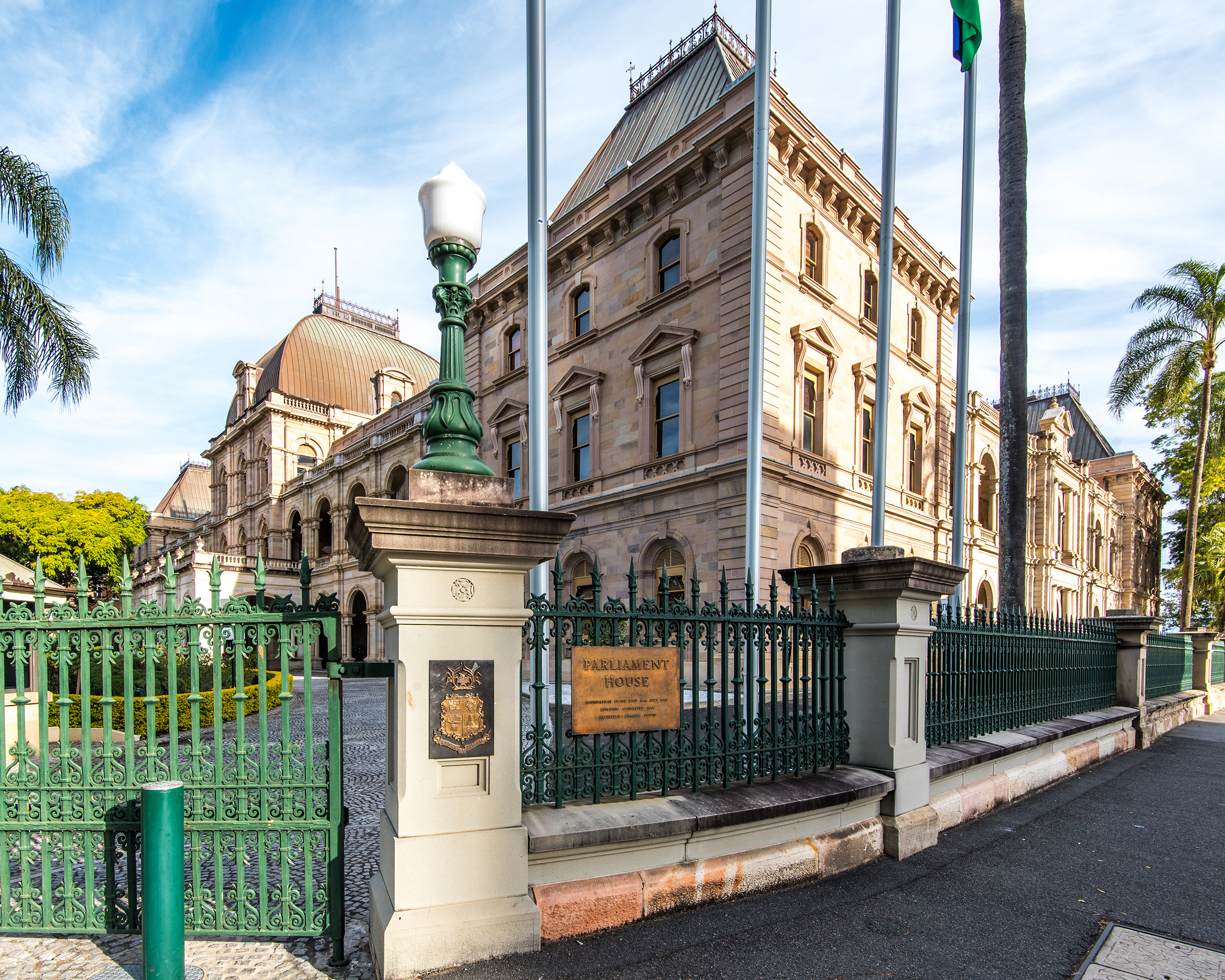
Queensland Treasurer Cameron Dick will hand down the long-awaited/overdue 2020-21 state budget at Parliament House on Tuesday 1 December 2020.
Please feel free to comment below. Alternatively you can email comments, suggestions, or hot tips to contact@queenslandeconomywatch.com

 Queensland Economy Watch