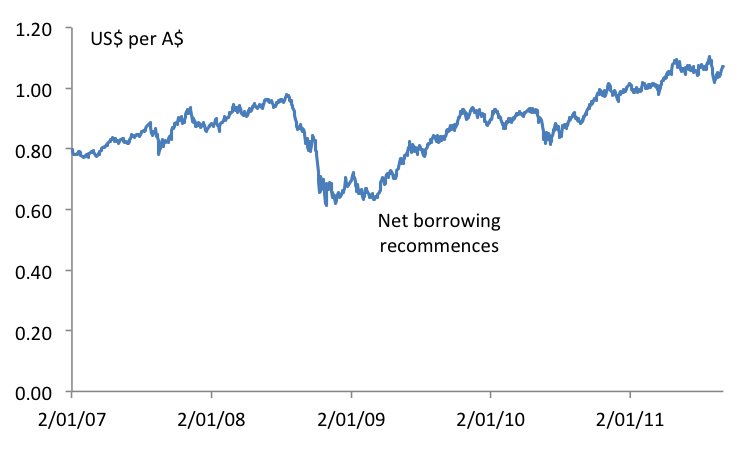
One of the major implications of the 1983 floating of the Australian dollar was that fiscal policy became less powerful than monetary policy. Any fiscal expansion (i.e. stimulus) would put pressure on domestic interest rates, attracting money into Australia (some of which is purchasing the bonds financing the stimulus), raising the Australian dollar and ultimately suppressing activity in trade-exposed sectors. This was obvious to a number of observers at the time of the Government’s stimulus packages in 2008-09, including Professor Warwick McKibbin, formerly of the RBA Board, who is quoted in the Australian this morning (Labor’s great financial crisis split with RBA):
…Professor McKibbin – who has argued that the scale of Labor’s stimulus had contributed to overheating the economy during its recovery from the GFC – said Australia’s performance during and since the crisis vindicated his position at the time.
“That’s why you want the Reserve Bank to be independent from both Treasury and government,” Professor McKibbin said. “It would have been good if the government had listened to my advice on fiscal policy at the time. We wouldn’t be facing what we do now, which is an exacerbation of the two-speed economy.
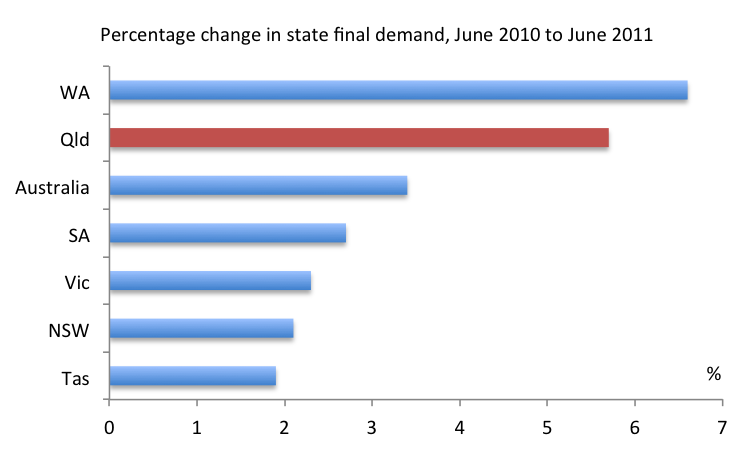
“Right now we should be running surpluses and extracting demand from the economy to reduce pressures on the non-mining sectors.”
McKibbin is spot on, though I can understand it would have required more than the usual sang froid among Treasury officials not to go along with the stimulus package, given that it truly did appear to many at the time that the world was on the brink of another depression.

 Queensland Economy Watch