Here we go again (without JobKeeper) + Cross River Rail looking like an even worse investment now

Firstly, what more can we say about the latest border restrictions other than here we go again, although this time without JobKeeper. Needless to say, this will bring more economic hardship to tourism businesses who need all the trade they can get in peak times such as school holidays to make up for the weak trade they have experienced in other periods.

It’s looking like the once highly revered National Cabinet process has been a total failure. States are imposing costly parochial border restrictions and lockdowns, and they can blame the federal government for the slow vaccine rollout and for not having built regional quarantine facilities.

The economy had looked like it was recovering spectacularly and had shrugged off the ending of JobKeeper, but the spread of COVID and harsh state government public health responses across Australia could severely compromise that recovery. I was looking forward to hearing about the economic recovery from RBA Governor Philip Lowe who was scheduled to speak in Brisbane at the Economic Society lunch on Thursday 8 July, but that surely now must be in question given the closure of the state border to people from Greater Sydney. Sorry, Governor!

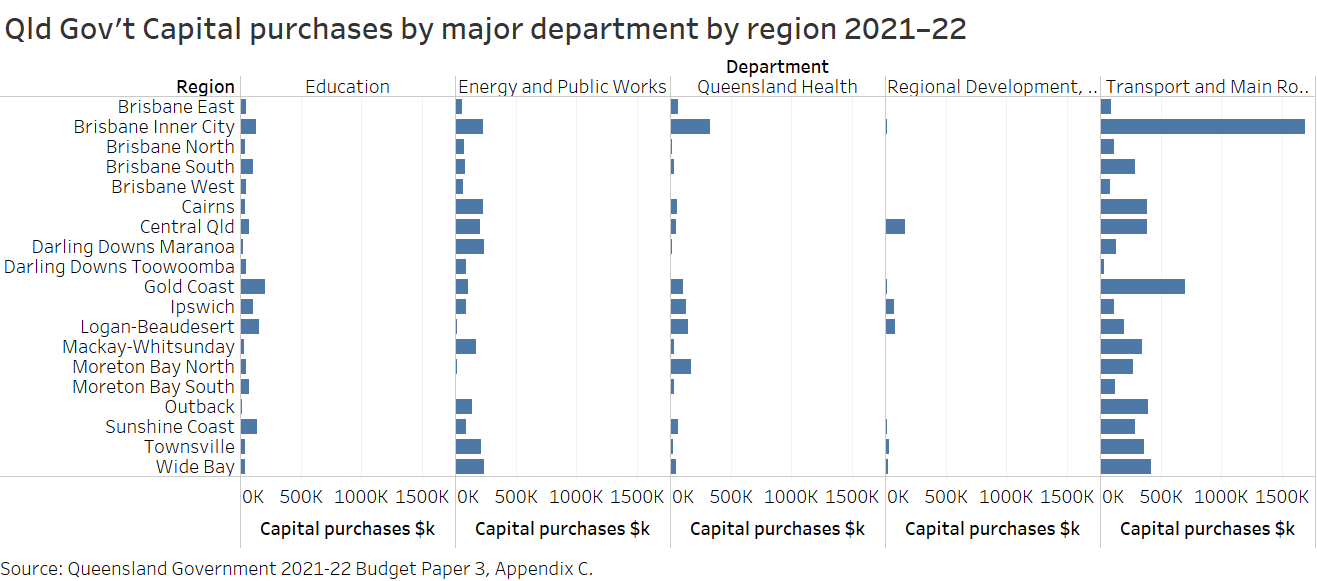
Secondly, the Queensland state budget papers handed down last week reminded me of just what a colossal waste of taxpayers’ money Cross River Rail is. It was always only ever going to be marginally economic when the assessment was done pre-COVID, and now, post-COVID with high rates of people now working from home at least a couple of days per week, the economics of the project must be abysmal. Cross River Rail means that nearly one in every seven dollars of Queensland Government capital purchases in 2021-22 is going to transport projects in inner city Brisbane, approximately $1.69 billion out of total capital purchases of $12.61 billion (see chart below). That money could probably be better spent in regions adversely affected by the government’s COVID restrictions such as Cairns and the Whitsundays.

A chart showing $1.7 billion of Queensland Government capital purchases in Inner Brisbane on transport projects, out of a total of $12.6 billion.

Please feel free to comment below. Alternatively, you can email comments, questions, suggestions, or hot tips to contact@queenslandeconomywatch.com.

Posted in Transport | Tagged , , , , , , | Leave a comment

The role of nuclear energy in decarbonising economies – my latest podcast episode

Last Wednesday, I recorded a conversation with my Adept Economics colleague Ben Scott about the research project he completed on nuclear energy as part of an ANU Parliamentary Internship, a program which saw him placed in Queensland Senator Matt Canavan’s office. Episode 92 of Economics Explored considers how nuclear energy can provide zero-carbon, reliable energy and why it should potentially be considered as a key part of the world’s and Australia’s response to climate change. I’ve previously discussed Ben’s research on QEW in the post Does nuclear energy have a future in Australia?

In our conversation, Ben and I discuss how advances in nuclear technology, specifically the development of Small Modular Reactors (SMRs), improve the case for nuclear power in Australia. Highly relevant to Queensland and other Australian states, given we have a number of regional towns (e.g. Biloela) highly dependent on coal-fired power plants for jobs, US company NuScale proposes that coal-fired power plants can be re-purposed for nuclear energy, a point Ben makes in our conversation. Check out NuScale’s Repurposing Coal Plant Sites for Nuclear web page for further information.

There appears to be growing interest in the potential for nuclear energy in Australia, although I suspect it will be politically impossible to develop an Australian nuclear energy industry in the foreseeable future. The COVID-19 pandemic has demonstrated that the majority of Australians appear to have very high levels of risk aversion, and it’s easy to point to fear-inducing historical incidents of nuclear accidents such as Chernobyl and Fukushima.

Please feel free to comment below. Alternatively, you can email comments, questions, suggestions, or hot tips to contact@queenslandeconomywatch.com.
Posted in Energy | Tagged , , , , , | 2 Comments

Brisbane Council CEO $700k pay chat with Scott Emerson on 4BC

I had a good chat with Scott Emerson on his 4BC Drive program on Tuesday afternoon about the fat pay packet of Brisbane City Council boss Colin Jensen, who is paid over $700k each year, placing him easily in the top 1% of earners. First I noted that it’s comparable to salaries paid to people with similar levels of responsibility (i.e. heads of department at state or federal levels or university VCs, some of whom are paid $1M) and that even some school principals (e.g. of Brisbane Grammar) are paid $500k. Scott noted Brisbane City Council is almost like a state government given its size.

That said, I did note I’d want to do a benchmarking exercise of salaries of people in similar positions around the world to determine if it was an appropriate salary. Such a comparison may not necessarily be favourable for Mr Jensen. For instance, I was surprised to learn that the head of the New York Port Authority makes under US$300k per year (see Port Authority’s Bloated Payroll Grew $150 Million Last Year: Report).

Finally, I told Scott that with bureaucracies we need to worry about the Principal-Agent Problem. It’s very possible the management of organisations can exert undue influence on the organisation and extract excessive salaries for themselves. This may be more likely to occur in taxpayer-funded institutions (including councils, universities, and, peculiarly in Australia, private schools), which are less subject to market discipline.

You can listen to my conversation with Scott via this link:

Brisbane City Council CEO paid eyewatering salary higher than PM and US President

Please feel free to comment below. Alternatively, you can email comments, questions, suggestions, or hot tips to contact@queenslandeconomywatch.com.

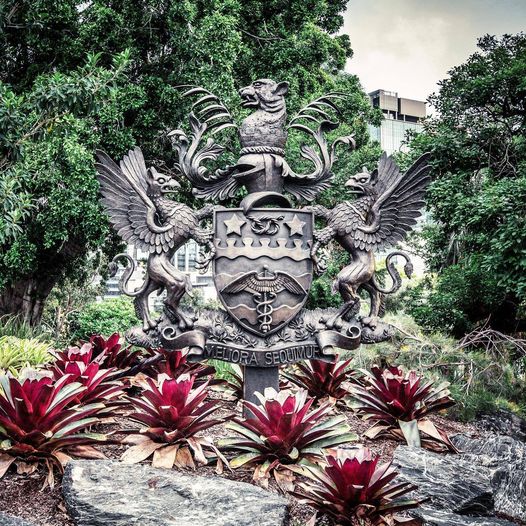
Brisbane City Council coat of arms, on the corner of Wickham Terrace and Albert St, Spring Hill.
Posted in Brisbane | Tagged , , , | 3 Comments

Qld Treasurer gives a master class in budget shenanigans

Queensland Treasurer Cameron Dick has soared to previously unattained heights of state budget creative accounting, and I must admit I’m rather impressed by the cleverness of it all, while at the same time being appalled the Treasury would let him get away with it. For instance, I’m struggling to understand how any competent senior Queensland Treasury official could have cleared for publication such a completely nonsensical passage as this one found in the 2021-22 state budget handed down today (p. 69 of Budget Paper 2):

Separate to the contribution to the DRF [Debt Retirement Fund], the government is retaining approximately $1.8 billion from the transfer of the Titles Registry to support a number of long-term government priorities, including the establishment of the $1 billion Housing Investment Fund, the $300 million Path to Treaty Fund and a $500 million Carbon Reduction Investment Fund.

The Government claims it has an additional $1.8 billion to play with because the Titles Registry is now worth so much more than it originally expected and it can “retain” part of the revaluation for its budget. When it was initially planning its Debt Retirement Fund, the Government thought the Fund would be worth $5.7 billion, with $4 billion coming from the Titles Registry. But now the Titles Registry appears to be worth $7.8 billion. Adding in $1.5 billion from Defined Benefit Super assets (previously only $1 billion was coming from here) and $200 million in other assets, the value of the Fund would now end up at $9.5 billion, but the Government has decided to “retain” $1.8 billion from the Titles Registry transfer, so only $6 billion of the Titles Registry is going into the Fund, which will now be worth $7.7 billion in total at the end of the financial year. Completely confusing isn’t it? This is a good sign the Government is up to something fishy!

Since last year, the Titles Registry, which looks after land title searches and registrations in Queensland, has conveniently increased in value from around $4 billion to what appears to be $7.8 billion (with, as noted above, $6 billion of it going into the DRF and $1.8 billion “retained” by the Government), even though this seems totally absurd. It is now worth more than Bank of Queensland, which has a current market capitalisation of $5.62 billion, according to the ASX. Let’s hope the Government publicly releases whatever valuations it has received for public scrutiny.

The Government is pretending it is creating $1.8 billion in additional cash for the budget simply by transferring the deed or whatever the relevant paperwork is for the Titles Registry to its asset manager QIC, to go into the pointless Debt Retirement Fund. Incidentally, I doubt the Debt Retirement Fund (part of the larger fanciful Queensland Future Fund) will fool the rating agencies into thinking Queensland’s debt is lower than it is as the Government intends (see my submission to the Queensland Future Fund Bill inquiry). To claim that it is retaining $1.8 billion from a transfer of paper to its asset manager QIC, a transfer which does not generate any new cash for the government, is absurd. The Government is not selling the Titles Registry, even to QIC, so how is new cash being generated to fund the initiatives indicated?

What may be happening is that the Government has instructed QIC to pay it, from its Debt Retirement Fund, $1.8 billion in cash, which is roughly the amount of liquid assets it claims it is putting into the Fund (i.e. $1.5 billion in funds out of the Defined Benefit super scheme assets and $206 million in securities). QIC may simply be selling those assets for cash on the Government’s behalf and letting it withdraw the money. This helps the Government reduce its overall debt level because this cash can make a contribution to financing its deficits. The additional cash the Government has to play with appears to be coming from the liquidation of financial assets including $1.5 billion set aside to meet the Defined Benefits super liability. I’m unsure if this is exactly what is going on because the Government has provided so little information in the budget on this clever scheme. But, given the level of creativity on show, there is no doubt something dubious is occurring.

Please feel free to comment below. Alternatively, you can email comments, questions, suggestions, or hot tips to contact@queenslandeconomywatch.com.
Posted in Budget | Tagged , , , | Leave a comment

Qld Gov’t to waste $53M attracting temporary film industry activity

After the Queensland Government was willing to spend $8 million to attract a one-night State of Origin game to Townsville last week, it’s unsurprising it will be willing to spend $53 million attracting film productions providing only temporary economic activity and jobs to Queensland. The $53 million Production Attraction Strategy is part of a larger $71 million screen industry “cash splash” to be revealed in the Queensland state budget tomorrow, according to this Courier-Mail report. Surely there would be better things to spend $53 million on, including on capital projects which would deliver benefits for many years into the future.

What is the return on investment for the government’s contribution to the film industry? The government won’t tell us, as it would very likely be embarrassed. I’ve never seen a study showing Queenslanders are better off as a result of all these incentives. Back in 2015, the Queensland Competition Authority was certainly critical of assistance to the film industry in its Industry Assistance Review report, as I discussed in my post QCA review suggests major budget savings available from slashing wasteful industry assistance. The QCA recommended the Queensland Government should “cease providing attraction incentives for major film productions that deliver benefits largely appropriated by international production companies” (p. x).

My previous posts on film industry assistance include:

Hollywood subsidies by Qld Gov’t kept hidden – Qld Right-To-Info process a huge joke

ABC radio story on Hollywood blockbusters crowding out local productions featuring David Williamson and me

Hollywood grabbing excessive film industry support

Thankfully, it’s been revealed the state debt won’t be blowing out to the previously projected $130 billion, partly because a booming property market is bolstering stamp duty receipts. The state government should arguably be reducing future deficits further by avoiding wasteful spending such as the Production Attraction Strategy.

Photo by Paul Deetman, via Canva.

Please feel free to comment below. Alternatively, you can email comments, questions, suggestions, or hot tips to contact@queenslandeconomywatch.com.

Posted in Queensland Government | Tagged , , , , , | Leave a comment

Cash-strapped Qld Gov’t to charge interstate migrants

Once upon a time, the Queensland Government tried to attract people from interstate by cutting taxes and charges. For instance, Sir Joh famously abolished death duties in the seventies. But times have changed. Now we have a cash-strapped state government planning to charge interstate migrants for moving to Queensland, as the Brisbane Times reports:

Southerners crossing the border for a new life in Queensland will have to pay for the privilege, with a new charge expected to raise $17 million.

Treasurer Cameron Dick will announce a new driver’s licence transfer fee of $78.75 in next week’s budget, aimed at people who move to Queensland from interstate.

What a terrible way to welcome new Queenslanders, and one which doesn’t raise a lot of revenue in the greater scheme of things. It appears the Government needs to do everything it can to compensate for its obvious inability to keep its public service expenses under control, so this sort of thing is to be expected, alas.

One other thing raised my eyebrows in the Brisbane Times report. Treasurer Cameron Dick is quoted as saying:

“We think it’s only fair for them to pay a small price for the privilege of becoming new Queenslanders, where of course they will pay less tax than anywhere else in Australia, particularly NSW.”

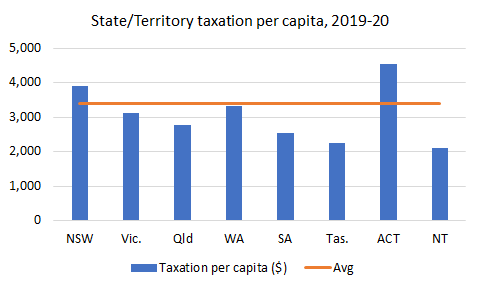
But, if the Treasurer looked at his own state budget papers (e.g. last year’s Budget Paper 2, p. 84), he’d see that Queensland doesn’t have the lowest state taxes and charges in Australia. Queensland state taxes and charges per capita are lower than the national average, for sure, but they are higher than in SA, Tasmania, and the NT. Queensland once had the lowest taxes and charges among the states, but that hasn’t been the case for over a decade now. For my take on Queensland’s public finances since the era of Sir Joh and Sir Leo Hielscher, check out my 2018 book Beautiful One Day, Broke the Next.

Source: Queensland Budget Paper 2, 2020-21, p. 85.

Please feel free to comment below. Alternatively, you can email comments, questions, suggestions, or hot tips to contact@queenslandeconomywatch.com.
Posted in Budget | Tagged , , , , | 1 Comment

The downside of Australia’s isolation strategy

To political leaders, it often seems easier and less risky to stick with current restrictions, and a lesson from history is that government restrictions often last much longer than is justifiable. Hence, four years after the end of the War, petrol rationing was still imposed in Australia, and Bob Menzies’s message of Free Enterprise was all the more appealing at the 1949 election (see Issues that swung elections: Petrol shortages and the dawn of the Menzies era).

The persistence of restrictions is one of the reasons I’ve been critical of these so-called circuit breaker lockdowns that have been imposed in Victoria, Queensland, and WA. They can so easily be extended unnecessarily, and I’m concerned that, despite all the hopeful messages coming from Victorian authorities, the latest lockdown will be extended and the economic costs will continue to mount.

There is also the risk that Fortress Australia will be maintained much longer than is desirable. The head of public emergencies at the WHO, Dr Mike Ryan, has rightly identified the “genuine dilemma” Australia now faces regarding when and how to reopen, as reported by the Brisbane Times. We need to have the vast bulk of the population vaccinated to achieve herd immunity, but we’ve had a dreadfully slow vaccination program so far.

The downside of Australia’s isolation strategy was nicely summarised by Canadian Professor Douglas Allen of Simon Fraser University in my conversation with him on the costs and benefits of lockdowns (Lockdown CBA podcast discussion):

With isolation, your population always remains vulnerable. And so with isolation, you must permanently remain isolated until you can become vaccinated. And you’re actually lucky that the vaccine came as quickly as it did…in sort of world record time, because if it had taken the normal rate of time of five years, can you imagine being isolated for five years in Australia, or part of those 40,000 Australians that are out of the country and can’t return? …So it’s not clear that isolation was even a smart policy last March. It may look like it turned out maybe to be a good policy, but again…you would not have experienced the apocalyptic deaths that were predicted last March, either.

I suspect a lot of Australians will get really angry if our Premier and reportedly the Brisbane Lord Mayor and the PM actually attend the Tokyo Olympics next month, which was Premier Palaszczuk’s defence for getting the Pfizer jab yesterday even though she is over fifty and should have got AstraZeneca. While our political leaders have often lived by different rules than the rest of the country, this would be an especially egregious case. Alas, Andrew Cooper of LibertyWorks lost his challenge to Australia’s “draconian” international travel restrictions (see Australian court upholds ban on most international travel). It will be up to our political leaders to remove these restrictions, but history suggests our leaders will leave them in place far too long.

Please feel free to comment below. Alternatively, you can email comments, questions, suggestions, or hot tips to contact@queenslandeconomywatch.com.
Posted in Uncategorized | Tagged , , , , , , , , , | 4 Comments

Coal comeback good news for Qld economy

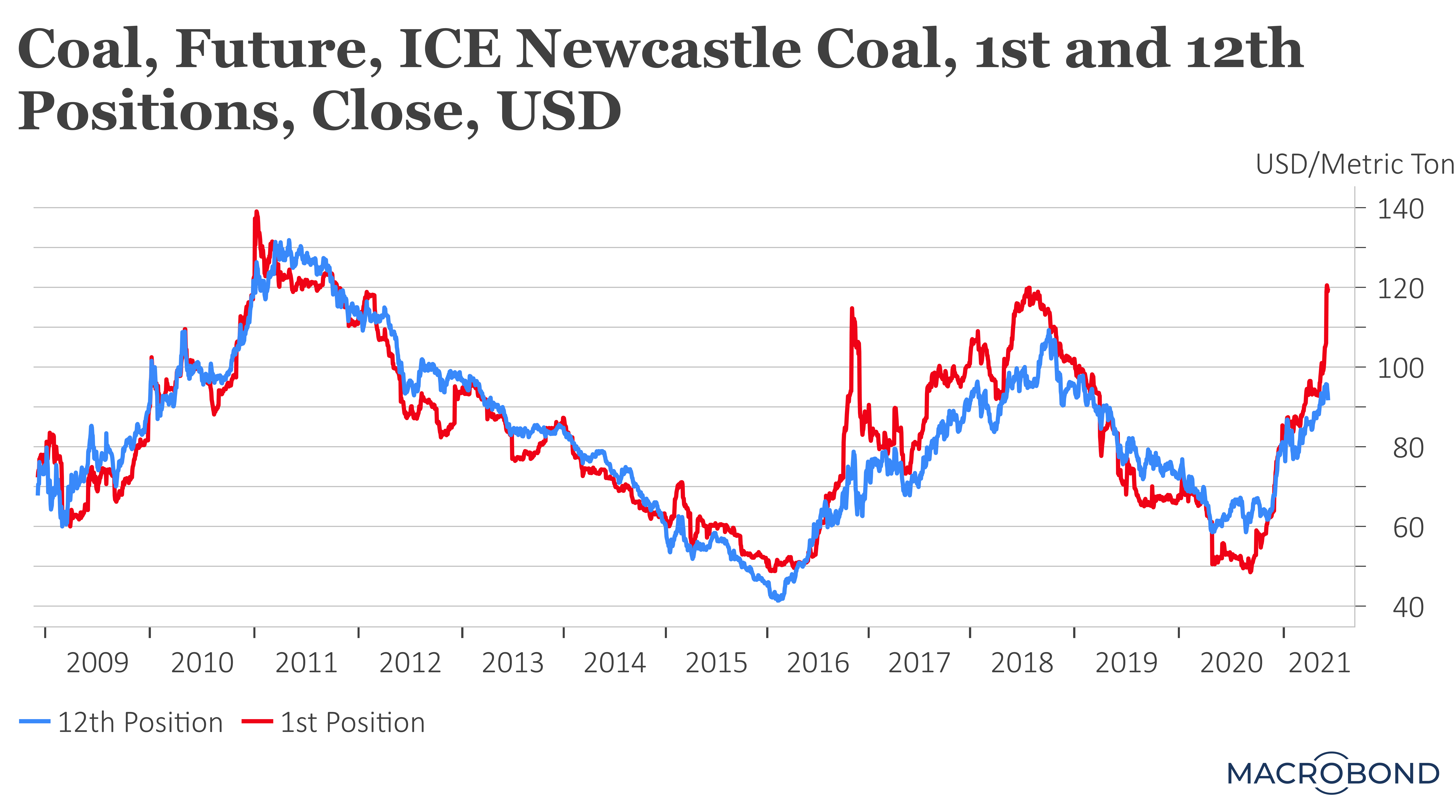
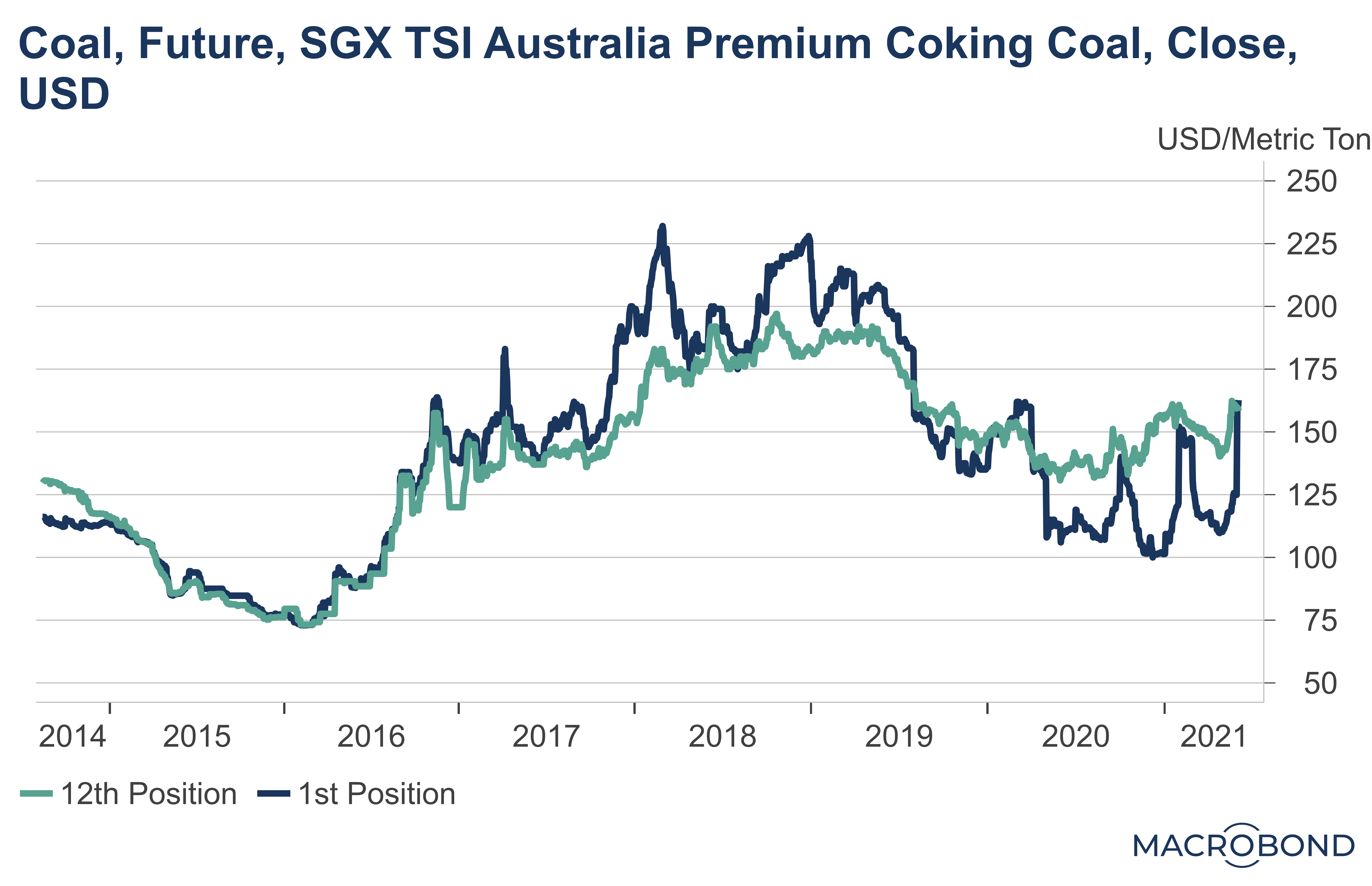
Last week saw a surge in coal prices due to global demand and supply factors (some of which are likely only temporary), as discussed in a nice piece by Bloomberg journalists reprinted by the Brisbane Times It’s not over for coal as global prices surge on hot demand. Queensland Senator Matt Canavan has told Alan Jones on Sky Australia that Aussie coal is ‘high quality, in demand’. If it lasts, the coal price surge would be really good news for Queensland’s economy and state budget, although the highly uncertain long-term outlook for coal remains, given growing pressures globally to decarbonise.

Here’s a chart showing the price surge for thermal coal (see chart below, noting 1st position refers to the futures price for delivery in one month’s time and 12th position the futures price for delivery in 12-months’ time).

While the Bloomberg article discussed the thermal coal price, coking coal, which accounts for the majority of Queensland’s coal exports, also saw a price surge, at least for the short-term (see chart below).

I doubt last week’s price surges will have any impact on Queensland Treasury’s budget forecasts as they may well be temporary. At the moment, I don’t have a strong sense of how much Treasury will revise its coal royalty revenue forecasts in the upcoming state budget (to be handed down Tuesday next week, 15 June), but I will endeavour to address this question in a future QEW post.

Please feel free to comment below. Alternatively, you can email comments, questions, suggestions, or hot tips to contact@queenslandeconomywatch.com.
Posted in Mining | Tagged , , , | Leave a comment

Lockdown CBA podcast discussion with Prof. Douglas Allen of Simon Fraser University

If you’ve seen any of Alan Jones’s recent commentary on Sky Australia you may have heard him talk about a recent cost-benefit analysis (CBA) of Canada’s COVID lockdown. Episode 90 of my Economics Explored podcast features a discussion regarding COVID lockdown costs versus benefits with the author of that study, Professor Douglas Allen from Simon Fraser University. Professor Allen has concluded COVID lockdowns have been the greatest peacetime policy failure in Canada’s history.

Professor Allen argues that lockdowns haven’t been that effective, due to substantial non-compliance (and given that, in the no-lockdowns counterfactual, people would have changed their behaviour anyway), and the initial projections of a huge number of COVID infections and deaths were based on simplistic and inaccurate models.

Note that Professor Allen carefully distinguishes between countries in which COVID had already taken off (i.e. US, UK, Canada) and countries which had the option of pursuing an isolation strategy (i.e. Australia and NZ), where an initial lockdown to eliminate COVID may have had some merit. That said, Professor Allen notes in our conversation that an isolation strategy is risky, and we talked about how Australia’s slow progress on vaccinations is now having a big cost.

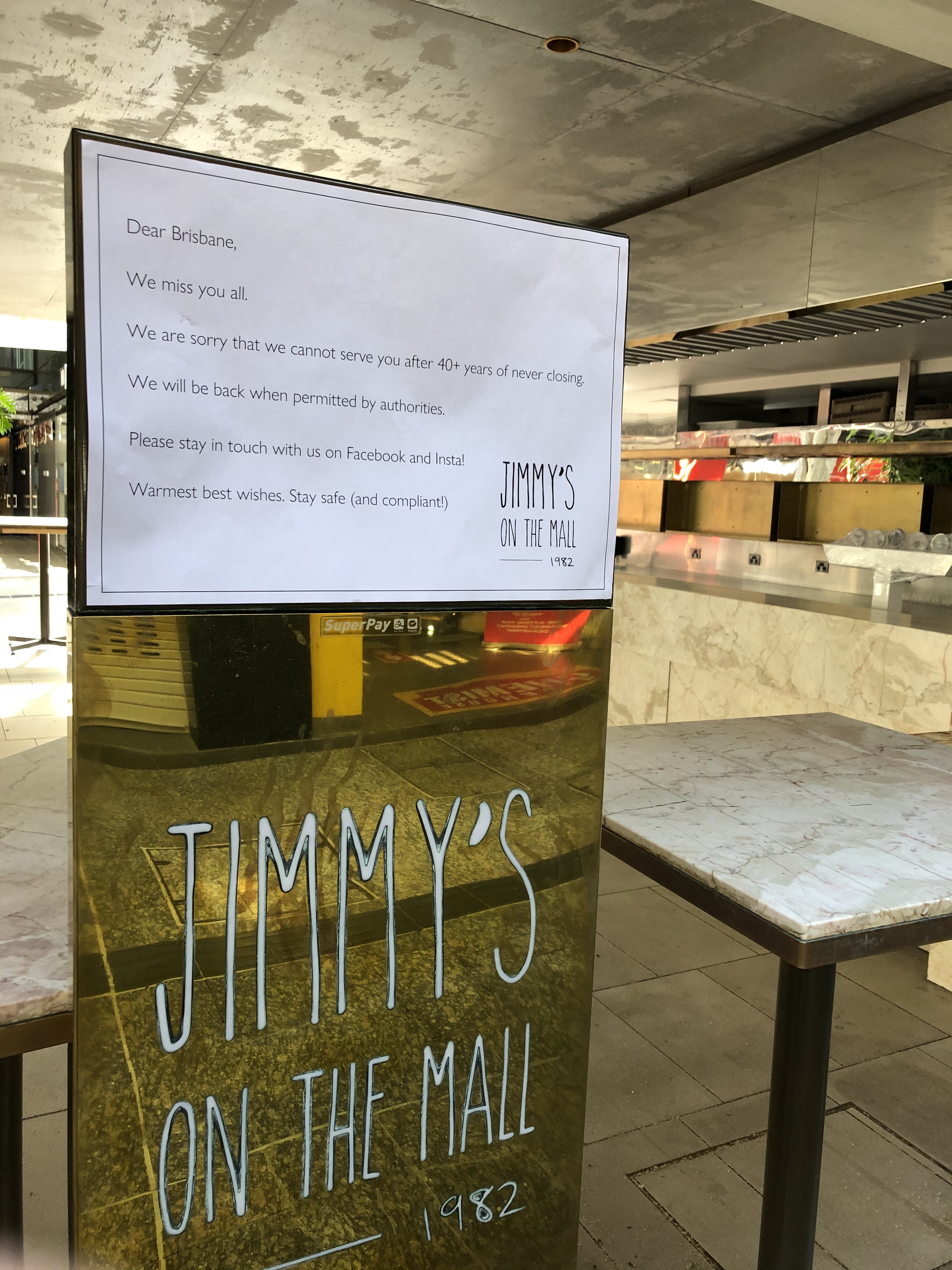
A photo taken during the time of Brisbane's first lockdown during April 2020 of a deserted Jimmy's on the Mall restaurant, with a sign saying they will be back when permitted by authorities.

A photo taken during the time of Brisbane’s first lockdown during April 2020 of a deserted Jimmy’s on the Mall restaurant, with a sign saying they will be back when permitted by authorities.

Please feel free to comment below. Alternatively, you can email comments, questions, suggestions, or hot tips to contact@queenslandeconomywatch.com.
Posted in Macroeconomy | Tagged , , , , , , , , , | Leave a comment

Does nuclear energy have a future in Australia?

In my Economics Explored episode on decarbonisation, I quoted Bill Gates from his latest book regarding the one-sentence case for nuclear energy:

…it’s the only carbon-free energy source that can reliably deliver power day and night, through every season, almost anywhere on earth, that has been proven to work on a large scale.

One of my Adept Economics crew members Ben Scott has recently undertaken a research project on the potential for nuclear energy in Australia, and he’s posted a short summary on the Adept website:

Does nuclear energy have a future in Australia?

Ben concludes his summary article by noting:

Nuclear reactors are a prospect worth investigating and potentially developing in Australia. Technological advancements in SMRs [Small Modular Reactors] that offer enhanced safety, more efficient construction processes, and employability opportunities for former coal-fired power plant workers mean that nuclear energy is becoming more appealing, especially in the Australian context.

Ben’s research was supported by the Australian National Internships Program, which arranged for Ben to be placed in Senator Matt Canavan’s office. Senator Canavan has argued that Australia must keep nuclear power ‘on the table’, which is fair enough. Politically, it’s going to be an uphill battle arguing for nuclear power in Australia I suspect, but we ought to start having a national conversation about it.

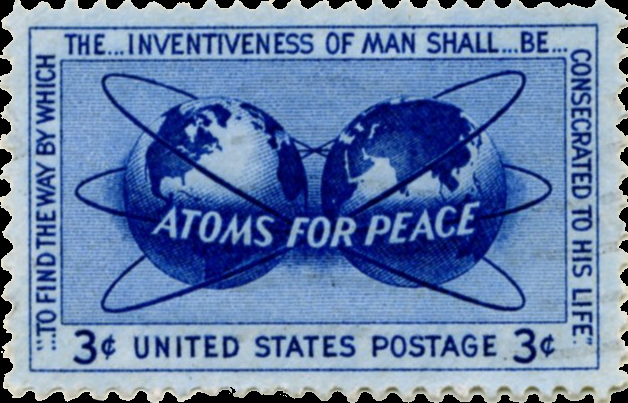
1955 Atoms for Peace stamp from US Postal Service.

Please feel free to comment below. Alternatively, you can email comments, questions, suggestions, or hot tips to contact@queenslandeconomywatch.com.
Posted in Energy | Tagged , , , , | Leave a comment